

What Are Peptides, and Why Is Everyone in the Wellness World Talking About Them?
Ozempic changed everything. When GLP-1 receptor agonists entered the mainstream, millions of people discovered that a small protein fragment injected weekly could reshape the body. That moment cracked open a door. Now a broader category of compounds — peptides — is stepping through it. Scientists have studied peptides for decades, with peer reviewed research on therapeutic peptides spanning multiple clinical domains. Clinicians have quietly used them for years. The general public is just catching up.
| Key Takeaway | What It Means |
|---|---|
| Peptides are short chains of amino acids | They are naturally occurring signaling molecules the body already makes |
| GLP-1 is a peptide | The Ozempic revolution was already a peptide story |
| Synthetic peptides target specific receptors | Their precision distinguishes them from broader pharmaceutical drugs |
| Prescription required | Peptides are not supplements — a licensed provider must prescribe them |
| Compounding pharmacy sourcing matters | Licensed 503A or 503B pharmacies offer the highest quality and safety standards |
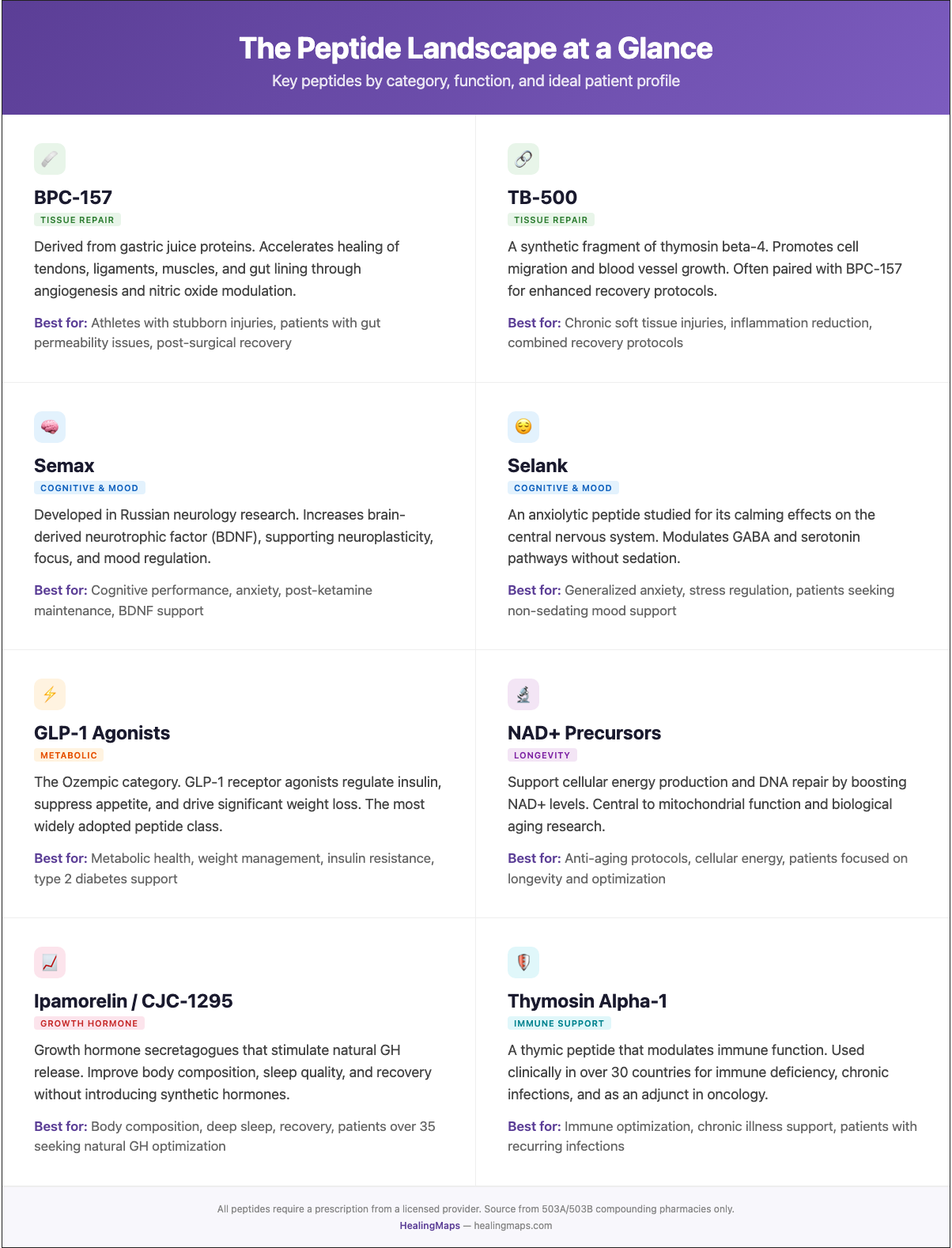
The Peptide Landscape at a Glance
The peptide category extends far beyond GLP-1s. Here is a closer look at the most discussed peptides right now, organized by category, function, and ideal patient profile.
What a Peptide Actually Is
A peptide is a short chain of amino acids. Amino acids are the building blocks of protein. When two or more amino acids link together, they form a peptide. When hundreds chain together, they form a full protein. The body produces thousands of peptides naturally. Insulin is one. So is the hormone oxytocin. GLP-1 itself is a peptide.
Most clinics spend 4-6 weeks navigating Spravato REMS certification — chasing paperwork, decoding FDA requirements, and wondering if they missed a step. Our AI-powered REMS Certification Assistant cuts that to one sitting. Get a personalized checklist of exactly what you need, and walk into the REMS portal ready to submit.
Get the REMS Certification Assistant →Synthetic peptides mimic or amplify the body’s own signaling molecules. They bind to specific receptors and trigger targeted biological responses. That specificity is what makes them appealing to researchers and clinicians. Unlike many drugs, peptides do not broadly disrupt the whole system to achieve one effect.
Why Peptides Are Having a Moment
Three forces are converging. First, compounding pharmacies have made a wider range of peptides accessible to licensed prescribers. Second, the GLP-1 phenomenon proved that the public will embrace injectable therapies when results are clear. Third, a growing number of patients are seeking treatments that optimize function rather than just treat disease.
Peptides fit that demand precisely. They are used for everything from accelerating tissue repair to sharpening cognitive performance. Recent neuroplasticity research has only accelerated interest in compounds that support brain function. Some support immune function. Others promote growth hormone release. The range is wide enough that practitioners across many specialties are paying attention.
The Most Discussed Peptides Right Now
BPC-157 has become a flagship example. Short for Body Protection Compound 157, it is derived from a protein found in gastric juice. Research suggests it accelerates healing of tendons, muscles, and the gut lining. Athletes and biohackers championed it for years. Clinical interest is now growing.
Semax and Selank originated in Russian neurological research. Both are studied for their effects on mood, anxiety, and cognition. TB-500 is another healing compound, often paired with BPC-157 for injury recovery. NAD+ precursor peptides support cellular energy production and are popular in longevity medicine circles.
How Peptides Differ From Steroids and Hormones
This question comes up often — and the distinction matters. Peptides signal the body to produce or release substances. Steroids and synthetic hormones introduce those substances directly. That difference has practical implications. Peptides tend to work with the body’s existing feedback systems. The risk profile is generally considered lower than exogenous hormone therapy, though research is still evolving.
Peptides are not a free pass. They are prescription compounds in the United States. A licensed provider must evaluate the patient and issue a prescription. Anyone offering peptides without a valid prescription is operating outside the law.
Where to Get Peptide Therapy
Patients have several options. Functional medicine doctors, anti-aging clinics, and integrative health practices have been early adopters. Ketamine clinics are increasingly adding peptide protocols as a complement to existing mental health and neurological treatments. The infrastructure overlaps significantly — injections, IV access, careful patient monitoring, and a cash pay model.
The key is working with a provider who sources compounds from a licensed 503A or 503B compounding pharmacy. Quality control in peptide therapy is a real concern. Patients should ask about sourcing before starting any protocol.
The Bottom Line
Peptides are not a trend born on social media. They are a legitimate and expanding area of clinical research. GLP-1s showed what a peptide could do at scale. The rest of the category is now moving into the spotlight. For patients already engaged in proactive health care, peptide therapy deserves a serious look.
