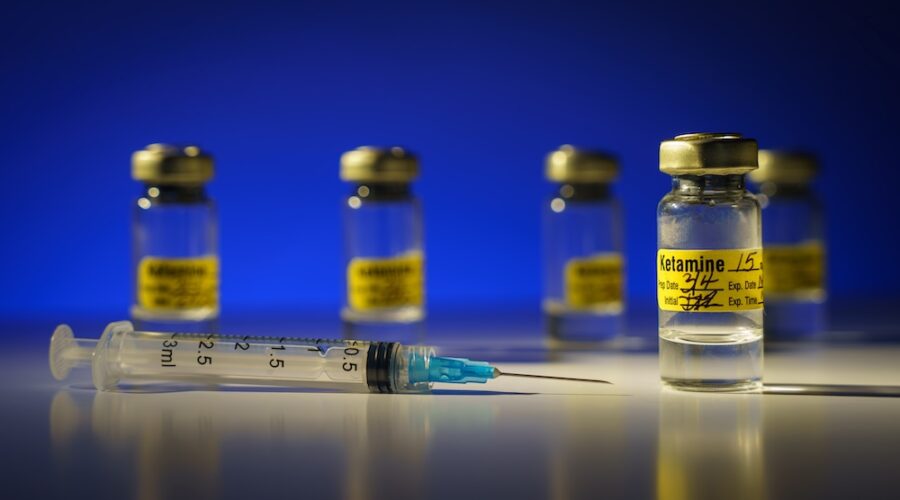
IV Ketamine Could Get Its First FDA Psychiatric Indication. Here Is What Would Actually Change
Last reviewed and updated: August 13, 2026.
Headlines about the FDA and ketamine will multiply this year. Most operators will read them wrong. Some describe a generic manufacturing application. One concerns NRX-100, a specific IV ketamine product pursuing a psychiatric indication. That program could change how clinics approach coverage, marketing and protocols. Knowing which is which is worth a few minutes.
| Key Takeaway | Detail |
|---|---|
| Today’s label | No IV racemic ketamine product is FDA approved for depression |
| The generic application | NRx’s preservative-free ketamine ANDA is not approved. An approval would add a generic anesthetic, not a depression indication |
| The psychiatric program | NRx Pharmaceuticals is pursuing an NDA for NRX-100, a specific IV ketamine product |
| What approval could change | It could create a clearer coverage pathway, firmer marketing ground and an FDA-reviewed regulatory benchmark |
| What it would not change | Other FDA-approved ketamine products could still be prescribed off label when medically appropriate |
| The operational question | FDA could require a REMS or other safeguards, but that outcome is not certain |
Two Applications, Two Different Worlds
Ketamine hydrochloride injection has been approved since 1970. The reference product is Ketalar. Its FDA label covers anesthesia. It is approved as a sole anesthetic for certain procedures, for inducing anesthesia and for supplementing other anesthetic agents. Other manufacturers have chased ketamine approvals by different routes, including PharmaTher’s clearance after a third attempt.
An abbreviated new drug application is the generic pathway. A generic must be comparable to its reference product in dosage form, strength, route, quality, performance and intended use. An approved generic ketamine product would carry the relevant Ketalar anesthesia labeling. A preservative-free formulation does not create a psychiatric indication.
On August 7, 2026, NRx disclosed the result of FDA’s first-cycle review of its preservative-free ketamine ANDA. The company said FDA found no major deficiencies involving the drug components. FDA did identify a major deficiency involving the container-closure system. A reviewer raised concern that the twist-off tip of the luer-lock vial could deform during clinical use.
NRx said FDA requested signed manufacturing certifications and agreed to restart its review promptly after the information is submitted. That account comes from the company’s SEC filing, not an FDA approval notice. As of August 13, the generic product is not FDA approved.
This is the part being misread. A generic approval would add a supplier. It would not add a depression indication. Use of that generic product for depression would remain off label.
The Application That Would Change Things
A new drug application is different. It asks the agency to approve a product for a specific use, backed by data.
NRx Pharmaceuticals is pursuing a new drug application for NRX-100, its preservative-free IV ketamine product. The program carries Fast Track designation for suicidal ideation in depression, including bipolar depression. NRx has said it plans to seek a broader indication involving treatment-resistant depression in the context of suicidality.
After a February meeting, NRx reported that FDA agreed to review existing controlled trials together with real world evidence. The company also said FDA did not require additional bridging or nonclinical studies before filing. That does not guarantee the evidence package will support approval. FDA could still ask for more information or studies during review.
NRx had targeted a 2026 filing. As of August 13, public confirmation that FDA has accepted the psychiatric NDA for review has not appeared. Treat the timeline as unsettled rather than imminent.
What Approval Would Change
Three things could shift if FDA approves a psychiatric indication for a specific IV ketamine product.
Reimbursement gets a much clearer pathway. An approved psychiatric indication would strengthen the case for payer coverage and give insurers a labeled use to evaluate. It would not guarantee reimbursement. Coverage would still depend on the payer, medical-necessity criteria, coding, site of care, administration requirements, prior authorization and the product’s price. Some off-label uses can already be reimbursed in certain circumstances. CMS guidance, for example, allows some unlabeled uses when a Medicare contractor finds them medically accepted.
Marketing gets firmer ground, but not a free pass. An approved indication would give clinics an FDA-reviewed label they could accurately reference for that specific product and use. FDA’s prescription drug promotional authority primarily covers communications made by or for manufacturers, packers and distributors. Clinic advertising also faces FTC substantiation rules and state medical and professional advertising laws. Health claims still must be truthful, supported and not misleading.
A regulatory benchmark gets written. Approved labeling would establish FDA-reviewed dosing, monitoring, contraindications, warnings and safety requirements for that product. Those instructions could matter in malpractice disputes, licensing investigations, payer policies, clinic protocols and informed consent. They would not automatically define the legal standard of care for every ketamine clinic.
What Approval Would Not Change
Off-label prescribing remains lawful. Approval of NRX-100 for a psychiatric use would not, by itself, make physicians’ off-label use of other FDA-approved ketamine products illegal.
The market could split into two tracks. One could be an FDA-approved psychiatric product with formal labeling, payer rules and potentially higher costs. The other could be generic ketamine used off label when clinicians judge it medically appropriate. Pricing, availability and payer behavior cannot be predicted from an approval alone.
The Part Nobody Is Discussing
Approval would not be operationally simple. Spravato offers one precedent. Its FDA-approved labeling requires a REMS, certified healthcare settings and at least two hours of monitoring after each treatment.
FDA could require a REMS or other safeguards for an IV psychiatric product. It could also approve the product without a comparable REMS. The agency has not announced that decision. Product pricing and payer rules are also unknown.
Our comparison of IV ketamine and Spravato covers how clinics navigate that tension now. So does our guide to what Spravato coverage actually pays. Posted infusion prices cluster near $400 in our directory wide pricing analysis. A branded alternative would have to justify a wide gap.
Your Records May Be Part of the Evidence
One detail deserves operator attention. NRx says the proposed real world evidence comes from an electronic records platform used across ketamine practices and includes records from more than 65,000 patients. That figure and the proposed use of the data come from NRx’s disclosure, not an FDA assessment of the evidence.
If an indication is granted partly on that basis, ordinary clinic documentation will have helped approve the treatment those clinics deliver. That is the clearest argument yet for keeping structured outcome data. We covered the habit in our acquisition readiness checklist.
Operator Resource
What to Do Before Any of This Lands
Read the applications correctly. When a headline says FDA cleared a hurdle for ketamine, check which pathway and product it concerns. A generic approval changes supply. A psychiatric indication could change the reimbursement and regulatory landscape. Do not confuse the two.
Keep documenting outcomes. The audience may be a regulator, a payer or a buyer. The data is the asset either way.
Do not change your marketing based on a pending application. Spravato is FDA approved for treatment-resistant depression and for depressive symptoms in adults with major depressive disorder and acute suicidal ideation or behavior. No IV racemic ketamine product is currently FDA approved for depression.
Plan for more than one possible outcome. An approved psychiatric product could sit beside generic ketamine used off label. Restrictions, pricing, coverage and clinic adoption would depend on FDA’s final decision and payer policies.