What to Expect at Your First Ketamine Infusion: A Patient’s Complete Guide
Walking into a ketamine clinic for the first time feels unfamiliar. You filled out forms, read testimonials, and maybe watched a few videos. But nothing fully prepares you for the experience itself. This guide covers every stage of your first ketamine infusion from the initial phone screening to the days that follow so you walk in informed, calm, and ready.
| Key Takeaway | What It Means |
|---|---|
| Infusions last 40 to 60 minutes | Plan for a 2 to 3 hour total clinic visit including prep and recovery |
| You need a driver | Clinics will not start treatment unless someone can drive you home |
| Dissociation is expected | Floating sensations, visual shifts, and altered time perception are normal |
| Results build over sessions | Most patients notice improvement after 1 to 3 infusions |
| A standard course is 6 infusions | Sessions are spaced over 2 to 3 weeks for optimal response |
| Insurance rarely covers IV ketamine | Expect to pay $400 to $800 per infusion out of pocket |
Before Your Appointment: Screening and Preparation
Every reputable ketamine clinic starts with a medical screening. A provider reviews your mental health history, current medications, and treatment goals. This screening happens by phone, video call, or in person. The clinic needs to confirm that ketamine therapy is appropriate for your specific situation.
Certain conditions disqualify patients from IV ketamine. Uncontrolled hypertension, active psychosis, and untreated hyperthyroidism are common exclusions. Your provider will also review your medication list. Some drugs interact with ketamine, and your clinic will give clear instructions about what to pause or adjust.
On infusion day, follow your clinic’s fasting instructions. Most clinics ask you to stop eating solid food 6 hours before treatment. Clear liquids are usually fine up to 2 hours before. An empty stomach reduces nausea, one of the most common side effects during infusion.
What to Wear and What to Bring
Dress in comfortable, loose fitting clothing. You will recline in a chair or on a bed for over an hour. Avoid tight waistbands, restrictive sleeves, or anything that feels constricting. Wear a short sleeved shirt so the nurse can access your arm for the IV line.
Bring a sleep mask or eye cover. Many clinics provide one, but your own feels more familiar. Headphones with a calming playlist also help. Some clinics offer curated music; others encourage you to bring your own. Skip anything with lyrics or intense emotional associations. Ambient, instrumental, or nature sounds work best.
Leave valuables at home. You will not need your laptop, and your phone should stay on silent. Arrange your ride home before you arrive. Clinics will confirm that a friend, family member, or rideshare is ready to pick you up. They will not administer treatment without a safe ride plan. Use the HealingMaps ketamine clinic directory to find providers near you who offer consultations.
Arriving at the Clinic
Ketamine clinics look nothing like hospital psychiatric wards. Most operate in calm, private office settings with dim lighting and comfortable furniture. You will check in at a front desk, complete any remaining paperwork, and settle into a treatment room.
Staff will take your vital signs — blood pressure, heart rate, and oxygen saturation. These baseline readings let the medical team monitor you throughout the infusion. If your blood pressure runs high that day, the provider will decide whether to proceed or reschedule.
Expect a quiet, unhurried atmosphere. Clinics schedule infusions with buffer time between patients. You will not feel rushed or processed through an assembly line.
The Pre Infusion Consultation
Before your first infusion, a clinician sits with you to set expectations. This conversation covers the dose, the duration, and the range of experiences patients report. Ask every question on your mind during this time. No concern is too small.
The provider will explain the dosing approach. First infusions typically start at a lower dose, around 0.5 mg per kilogram of body weight. This conservative approach lets the team observe how your body responds before adjusting in future sessions. The clinician will also discuss anti nausea medication, which many clinics administer preemptively through the IV.
Getting Set Up for the Infusion
A nurse or medical assistant will place a small IV catheter in your hand or forearm. This takes about a minute. The IV connects to a pump that delivers ketamine at a precise, controlled rate over the session.
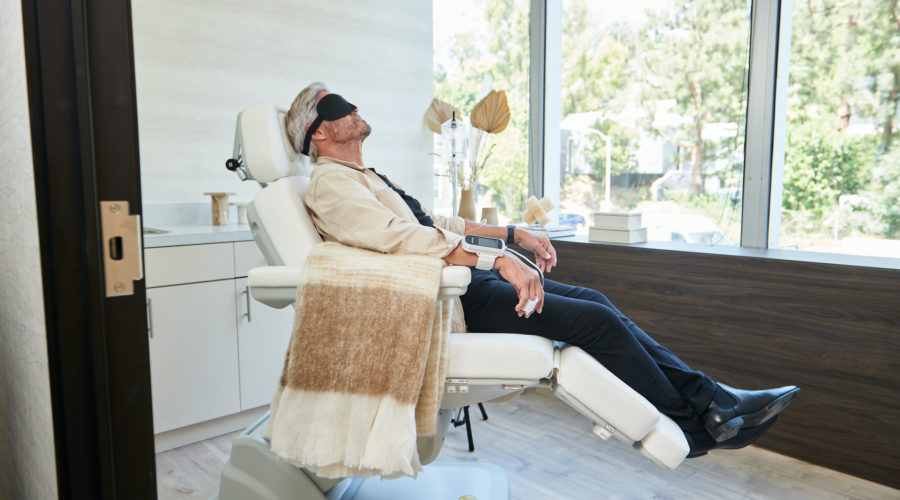
You will settle into a reclining chair or bed. The room is usually dimly lit. Staff will clip a pulse oximeter to your finger and place a blood pressure cuff on your arm. These monitors stay on throughout the infusion and alert the team to any changes.
Put on your eye mask and headphones now. Creating a cocoon of sensory calm helps you lean into the experience instead of fighting it. The nurse will let you know when the drip begins.
What Happens During the Infusion
The ketamine drip runs for 40 to 60 minutes. Effects begin within 5 to 10 minutes of starting the IV. You remain conscious the entire time, but your perception shifts significantly.
The dissociative state is the therapeutic mechanism at work. Ketamine temporarily disrupts default neural pathways, creating space for new connections to form. Your brain enters a state of heightened neuroplasticity. This is the window where rigid thought patterns loosen their grip. Research published in the journal Molecular Psychiatry details how ketamine promotes rapid synaptogenesis in the prefrontal cortex.
A medical professional stays nearby throughout the session. They monitor your vitals on screen and check in periodically. If you feel uncomfortable at any point, the team can slow or pause the drip immediately. You are never left alone during an active infusion.
Common Sensations During Treatment
Every patient’s experience is unique. But certain sensations appear consistently across first time reports.
Floating or weightlessness. Many patients describe feeling detached from their physical body. The chair or bed seems to dissolve. This sensation is harmless and typically feels pleasant once you stop resisting it.
Visual shifts. With eyes closed, patients often see colors, geometric patterns, or dreamlike imagery. These visuals range from subtle to vivid. They are not hallucinations in the psychiatric sense — you remain aware that the experience is induced.
Altered time perception. A 45 minute infusion can feel like 15 minutes or two hours. Time becomes elastic. This distortion is one of the most universally reported effects.
Emotional release. Some patients experience waves of emotion — tears, laughter, or deep calm. Suppressed feelings sometimes surface during the dissociative window. Clinicians consider this a productive part of the therapeutic process.
Nausea. Mild nausea affects some patients, especially during the first session. Pre treatment anti nausea medication reduces this significantly. Tell your nurse if the feeling intensifies so they can adjust accordingly.
Your Ketamine Infusion Day: A Visual Timeline
Understanding the full arc of your clinic visit removes uncertainty. The timeline below maps each phase from arrival through departure so you know exactly how your day unfolds.
[INFOGRAPHIC]What Happens Right After the Infusion
When the drip stops, effects begin fading within 15 to 20 minutes. The transition back to baseline happens gradually. You will not snap out of the experience all at once.
Staff will keep you in the recovery area for 30 to 45 minutes. They continue monitoring your vitals as the ketamine clears your system. You will feel groggy, spacey, and possibly unsteady on your feet. This is completely expected.
Some clinics offer light snacks and water during recovery. Your appetite returns quickly. Eating something small helps stabilize your blood sugar and accelerates the grounding process.
The nurse will assess your steadiness before releasing you. Once cleared, your designated driver takes you home. You cannot drive, operate machinery, or make important decisions for the rest of the day.
The Drive Home and the Rest of Your Day
Keep your evening simple. Go home, rest, and hydrate. Many patients feel a pleasant calm or mild fatigue for several hours after treatment. Others feel emotionally tender or reflective.
Avoid alcohol for at least 24 hours. Skip strenuous exercise and heavy meals the evening of your infusion. Screen time can feel overstimulating — consider reading, journaling, or listening to gentle music instead.
Some patients report improved mood the same evening. Others notice nothing dramatic until after subsequent sessions. Both responses are normal and do not predict your overall outcome.
The Days Following Your First Infusion
The 24 to 72 hours after a ketamine infusion represent a critical integration window. Your brain is actively forming new neural connections during this period. What you do with this time matters.
Journaling helps capture insights that surfaced during the session. Write freely without editing or judging the content. Many patients find that emotional patterns or personal realizations become clearer when written down.
If you work with a therapist, schedule a session within a few days of your infusion. Therapy during the integration window is especially productive. The increased neuroplasticity makes you more receptive to new perspectives and behavioral changes.
Maintain regular sleep, eat balanced meals, and move your body gently. Walking, stretching, or yoga supports the integration process. Avoid major life decisions or emotionally charged conversations if possible.
When to Expect Results
Ketamine works faster than traditional antidepressants. But “fast” does not always mean “first session.” Most patients experience noticeable improvement after 1 to 3 infusions. Some feel significant relief within hours of their first treatment. Others need the full initial series before the benefits emerge.
Depression symptoms typically respond first. Patients describe the heaviness lifting, motivation returning, and emotional numbness receding. Anxiety and PTSD symptoms often follow a similar trajectory, though the timeline varies by individual.
Track your symptoms between sessions. Many clinics provide standardized questionnaires like the PHQ 9 for depression. Consistent tracking gives your provider objective data to guide dose adjustments and treatment planning.
The Full Treatment Course: What Six Sessions Look Like
The standard initial protocol involves 6 infusions over 2 to 3 weeks. Clinics typically schedule sessions every 2 to 3 days. This concentrated approach builds on the neuroplastic changes from each previous session.
Your provider adjusts the dose based on your response. If the first session felt too mild, subsequent doses increase slightly. If dissociation felt overwhelming, the team dials back. This titration process is normal and expected.
After the initial 6 sessions, most clinics transition patients to maintenance infusions. Maintenance schedules vary widely — some patients return monthly, others every few months. Your provider builds a personalized plan based on symptom duration, severity, and treatment response.
Cost and Insurance Considerations
IV ketamine infusions cost between $400 and $800 per session at most clinics. The full initial series of 6 infusions runs $2,400 to $4,800 out of pocket. Some clinics offer package pricing that reduces the per session cost.
Traditional insurance plans rarely cover IV ketamine for mental health. The treatment remains off label for depression, anxiety, and PTSD. However, some clinics help patients submit superbills to insurance for partial reimbursement. Ask your clinic about their billing process during the initial screening call.
Spravato (esketamine nasal spray) is the one FDA approved ketamine formulation for treatment resistant depression. Insurance covers Spravato more frequently than IV infusions. Your provider can discuss whether Spravato or IV ketamine fits your situation better.
Many clinics offer financing through third party medical lending companies. Payment plans spread the cost over several months. Ask about financing options before your first session so the financial logistics do not add stress to an already vulnerable time.
Questions to Ask Your Provider Before Starting
Bring this list to your screening call or first appointment. The answers will help you evaluate the clinic’s quality and determine whether their approach aligns with your needs.
- What is the medical background of the provider administering the infusion?
- How do you determine the starting dose, and how do you adjust across sessions?
- What anti nausea protocols do you use?
- Is a medical professional present in the room throughout the entire infusion?
- What monitoring equipment do you use during treatment?
- Do you offer integration support, therapy referrals, or post session guidance?
- What is your protocol if a patient has a difficult experience during infusion?
- How do you handle emergencies or adverse reactions?
- What does your maintenance schedule look like after the initial 6 sessions?
- Do you accept insurance, offer superbills, or provide financing options?
Your first ketamine infusion marks the beginning of a process, not a single event. The treatment works best when you prepare thoughtfully, surrender to the experience during the session, and invest in integration afterward. The unfamiliar becomes routine by session two or three. And for many patients dealing with treatment resistant depression, anxiety, or PTSD, that process changes everything.
Frequently Asked Questions
What should I expect at my first ketamine infusion?
Expect a pre treatment medical screening, IV placement, and a 40 to 60 minute infusion in a quiet private room. Most patients experience mild dissociation, visual effects, and a floating sensation during the session. Staff monitor your vitals throughout. You will need a ride home because driving is not safe for several hours after treatment.
What should I wear to a ketamine infusion?
Wear loose comfortable clothing that allows easy IV placement in your arm. Bring a blanket, eye mask, and headphones if you want music. Some clinics provide all of these. Avoid heavy perfumes or colognes as sensory sensitivity is common during the infusion.
Can I eat before a ketamine infusion?
Most clinics recommend a light meal 2 to 4 hours before the appointment. Avoid heavy or greasy foods that could cause nausea during the infusion. Do not eat within 1 hour of the session. Stay well hydrated on the day of treatment.
How long until I feel normal after a ketamine infusion?
Acute dissociation fades within 30 to 60 minutes of the infusion ending. Most patients feel clear headed enough to walk 1 to 2 hours later. You should not drive for at least 12 hours. Full alertness typically returns the next morning.
Find a REMS-certified Spravato clinic near you in our verified provider directory.