The Fadiman Microdosing Protocol: Schedule, Dose, and Evidence (2026)
Last reviewed and updated: May 12, 2026.
The short answer: The Fadiman Protocol — designed by psychologist Dr. James Fadiman in 2011 — is the most-cited microdosing schedule in published self-report research. The structure: dose Day 1, rest Days 2–3, dose Day 4, repeat for 4–8 weeks, then a 2-week break. Typical psilocybin microdose: 0.1–0.3 g dried P. cubensis. The protocol’s distinguishing feature is the deliberate 2-day rest window between doses to prevent tolerance build-up. Federal Schedule I outside Oregon’s and Colorado’s regulated state programs.
Key Takeaways
| The schedule | 1 day on / 2 days off. Dose Day 1, rest Days 2–3, dose Day 4. Repeat for 4–8 weeks, then break for 2 weeks. |
| Why the 2 rest days | Psilocybin tolerance builds within 24 hours. The 2-day rest window allows full tolerance reset before the next dose. |
| Typical dose (psilocybin) | 0.1–0.3 g dried P. cubensis. Sub-perceptual range — goal is no acute psychedelic effect. |
| Cycle length | 4–8 weeks of dosing, then a 2-week break before starting another cycle. Total commitment: 6–10 weeks per cycle. |
| Designed by | Dr. James Fadiman, psychologist and microdosing researcher. Outlined in The Psychedelic Explorer’s Guide (2011). |
| Evidence base | Most-studied microdosing protocol — used in the bulk of survey-based research. Self-reported benefits well documented; placebo-controlled trials (Szigeti et al. 2021) suggest expectancy effects account for some of the reported benefit. |
| U.S. legal status (2026) | Federal Schedule I. Personal-use cultivation decriminalized in Colorado (Prop 122). All other states: illegal outside Oregon’s licensed service-center program. |
Fadiman vs Other Microdosing Protocols
The Fadiman Protocol is one of three most-cited microdosing schedules. The comparison below shows how it differs from the Stamets Stack and the unstructured “random” approach.
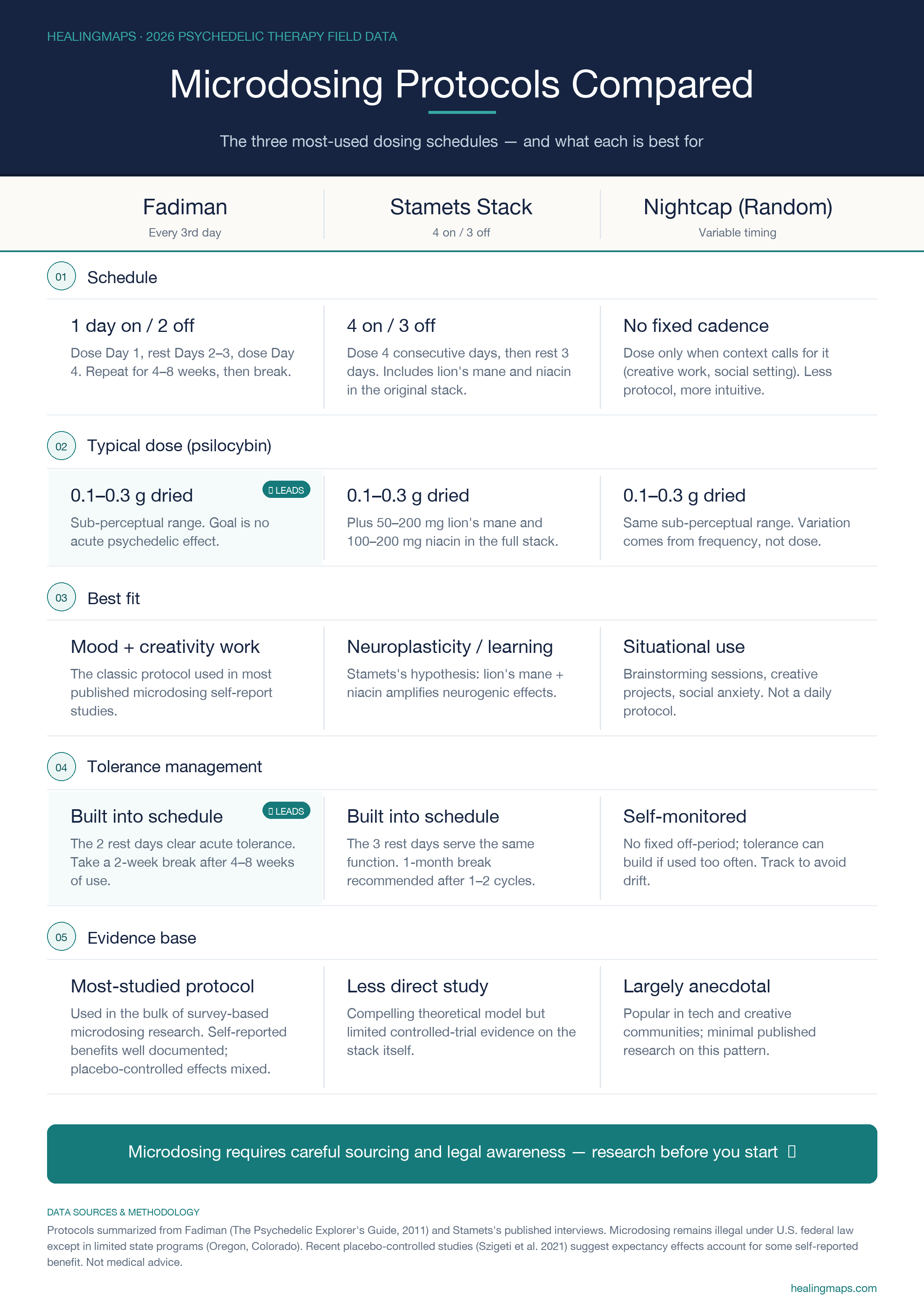
For the full guide to choosing among microdosing protocols, see HealingMaps’ How to Start Microdosing.
The Fadiman protocol is one of the most popular methods for microdosing. Developed by Dr. James Fadiman, this method stands out for its simplicity and effectiveness, especially for newcomers.
In short, the Fadiman protocol operates on a cycle that balances dosing days with rest periods, ensuring that our bodies don’t build a tolerance and our brains continue to produce natural neurotransmitters. This balance is key to maintaining the protocol’s efficacy over time.
The Fadiman Protocol
When exploring the realm of microdosing, The Fadiman Protocol stands out for its blend of simplicity and structured approach. At the heart of its methodology is the subperceptual dosing regimen which entails taking small, often imperceptible amounts of psychedelics. These dosages fall just below the threshold of conscious perception, averting any hallucinatory experience.
Adhering to the protocol means you microdose on the first day, followed by a two-day reprieve to process and integrate the experience. This three-day cycle is integral to maintaining the balance between the substance’s influence and our natural brain chemistry. The two-day gap isn’t an arbitrary choice; many individuals report a residual uplift in mood and cognition, commonly referred to as an afterglow, which lingers after the initial dosing day.
RELATED: Why Are So Many Moms Microdosing?
Here’s How the Fadiman Protocol Works
| Day | Action |
|---|---|
| Day 1 | Microdose |
| Day 2 | Rest |
| Day 3 | Rest |
| Day 4 | Repeat Cycle |
At the core of this systemized routine is the objective to gain the benefits associated with psychedelics — heightened creativity, increased sense of well-being — without hampering daily functioning. This goal is made feasible through the subperceptual nature of the dose which does not impede cognitive abilities or control.
We also need to underscore the importance of implementing an off-cycle after continued use. Typically a period of 2 to 4 weeks of abstaining is recommended to sustain the protocol’s efficacy and prevent tolerance build-up. This strategically placed rest period spurs the brain’s capacity to replenish neurotransmitters naturally, contributing to the sustained impact of microdosing.
Incorporating an off-cycle reinforces the regime’s effectiveness and echoes the prudence with which microdosing protocols are designed. It’s a nod towards the enduring influence these practices can have on our psychological well-being, extending beyond the immediate aftermath of dosing days. We can perceive this as a testament to the Fadiman protocol’s potential as a transformative tool for mental health.
EXCITING NEWS: Two states have legalized psilocybin therapy for the first time ever. Click here to get on the waiting list for Oregon psilocybin therapy. And click here to get on the waiting list for Colorado psilocybin therapy.
Here’s How the Stamets’ Protocol Works
| Day | Action |
| Day 1 | Microdose (Psilocybin, Lion’s Mane, Niacin) |
| Day 2 | Microdose (Psilocybin, Lion’s Mane, Niacin) |
| Day 3 | Microdose (Psilocybin, Lion’s Mane, Niacin) |
| Day 4 | Microdose (Psilocybin, Lion’s Mane, Niacin) |
| Day 5 | Rest (No Dosing) |
| Day 6 | Rest (No Dosing) |
| Day 7 | Rest (No Dosing) |
New: Interested in Being Part of a Psychedelics-Focused Clinical Trial? Sign Up Here
The Fadiman Protocol vs the Stamets Protocol
When exploring the realm of microdosing, we often encounter two prominent protocols: the Fadiman Protocol and the Paul Stamets Protocol. Both have their unique approaches and benefits, catering to different needs and preferences.
The Fadiman Protocol is known for its structured three-day cycle: one day of microdosing followed by two days off. It’s become a well-regarded method for those looking to enhance their overall quality of life without overstimulating their brain chemistry. Let’s break down what we’ve observed in those who follow the protocol:
- Increased creativity
- Improved focus and concentration
- Reduced anxiety and depression
- Enhanced emotional regulation
- Improved social functioning
Microdosing may benefit us by stimulating new neural connections and enhancing brain communication.
The Stamets Protocol, a different approach, attracts those seeking cognitive improvement. A renowned mycologist created it. It combines psilocybin mushrooms with Lion’s Mane mushrooms and Niacin. This mixture is thought to enhance and prolong psilocybin’s effects, improving stress management and cognition.
When comparing protocols, we must consider the risks and side effects of psychedelic microdoses. Following guidelines and consulting professionals before starting microdosing is essential.
The Fadiman and Stamets protocols offer unique routes to improved well-being. Fadiman focuses on balanced regimens, while Stamets leverages substance synergy. Our choice between them depends on personal goals and expert advice.
RELATED: Is Microdosing BS?
Which One is Right For You?
We’ve explored the nuances of the Fadiman Protocol, underscoring its structured approach to microdosing. It’s clear that personal goals and professional advice are key in choosing between this and the Stamets Protocol. Remember, safety and informed decision-making should always be at the forefront of any microdosing regimen. Whether you’re seeking cognitive enhancements or emotional well-being, understanding these protocols is the first step towards a responsible and potentially beneficial practice.
More on Psilocybin Mushrooms from HealingMaps
- What Are Psilocybin Mushrooms? — canonical cluster guide
- Shrooms Dosage Guide
- How Long Do Magic Mushrooms Last?
- 10 Most Potent Magic Mushroom Species
- How to Grow Magic Mushrooms
- Ways to Eat Magic Mushrooms
- Psilocybin Retreats Near Me
- Lemon Tek
- Do Shrooms Show Up on a Drug Test?
- Do Shrooms Go Bad? Shelf Life Guide