
Your Brain on Mushrooms: A Breakdown of The “Stamets Stack”
Last reviewed and updated: July 5, 2026
Key Takeaways
| Three-component stack | The Stamets Stack combines sub-perceptual doses of psilocybin, lion’s mane mushroom (for NGF production), and niacin (to flush compounds to peripheral nervous system). |
| Lion’s mane evidence | A 2024 RCT (Bat et al.) found lion’s mane improved working memory and attention in healthy adults — one of the first placebo-controlled studies to show cognitive benefits. |
| No stack RCT yet | While individual components show benefits, no randomized controlled trial has tested the full Stamets Stack as a protocol. The combined synergy is theoretical, not yet clinically confirmed. |
| Microdosing schedule | The typical protocol is 1 day on / 2-3 days off to prevent tolerance — full-dose psilocybin tolerance develops rapidly with daily use. |
| Legal status | Psilocybin microdosing remains illegal under federal law and in most states — legally accessible only through Oregon and Colorado’s licensed programs. |
If one microdose is good — and people swear that it is — what about a microdose with extra oomph?
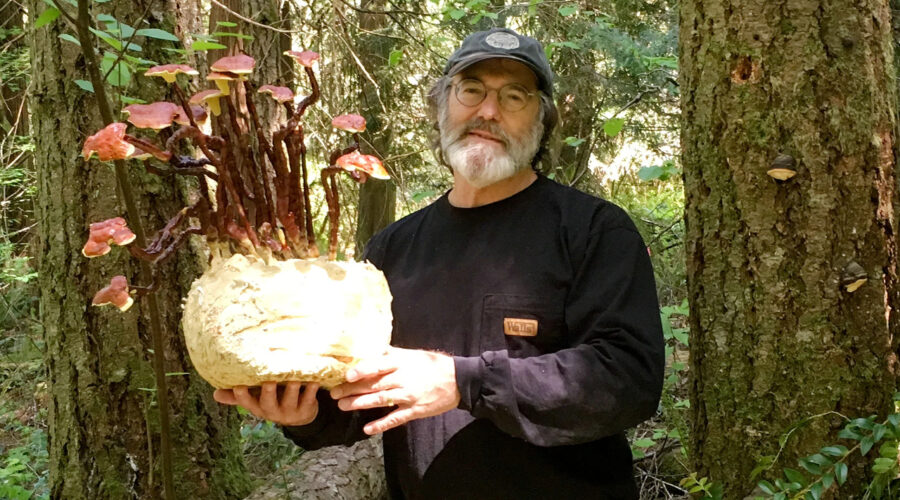
Famed mycologist Paul Stamets has developed his own nootropic stack (a combination of cognitive enhancers) that contains psilocybin mushrooms, lion’s mane mushroom, and niacin.
This is known as the Stamets Stack. And he claims this stack could initiate “the next quantum leap in human consciousness”.
RELATED: How To Microdose Shrooms Effectively
Is There Evidence the Stamets Stack Works?
Stamets refers to research showing that low doses of psilocybin can cause neurogenesis (the generation of new neurons) in mice.
Other studies have found that psilocybin can prompt an immediate and long-lasting increase in connections between neurons in mice. Keep in mind these results do not necessarily mean that microdoses of psilocybin in humans also result in neurogenesis. We need studies to confirm this before declaring it a benefit of microdosing mushrooms.
Stamets includes lion’s mane in his stack, as this type of mushroom may also cause neurogenesis. Animal studies show lion’s mane can reduce symptoms of memory loss and prevent neuronal damage caused by amyloid-beta plaques in mice. This may help protect people against Alzheimer’s disease.
RELATED:These are the most popular magic mushroom strains for 2024
The Stamets Stack Dosage Breakdown
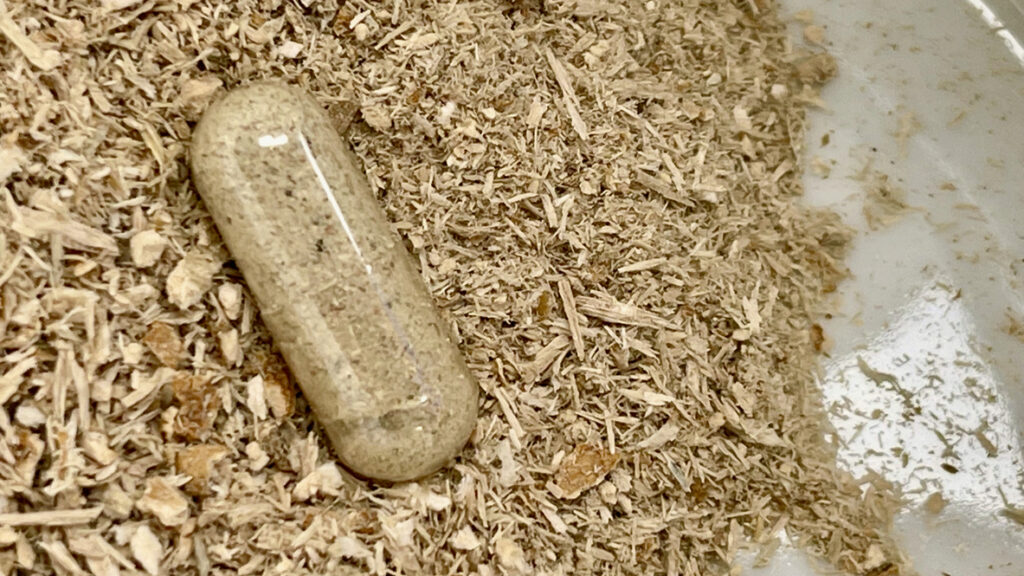
Add the following ingredients together and put them into empty gel-caps:
- 100mg psilocybin mushroom powder
- 50mg of lion’s mane
- 100mg of niacin.
This mix will give you pills equal to 1/10th of a typical dose of mushrooms. That’s a microdose.
Try one pill on a day you don’t have to do anything like work, care for others, or drive. See how you feel. If you liked that dose, stick with it.
Rest for two or three days.
Did you feel any different on the microdose? If not, consider adding another half of a pill. So, two or three days later, take one full pill and eat it. Then pour half of another pill into your mouth or a glass of water.
Pay attention to what happens. Did you like that dose? If so, then stick with it, taking one and a half pills.
If you still didn’t feel any different, add another half of a pill the next day — so, two full pills.
Make sure you leave two or three days between doses. This gives you perspective on how the microdose in affecting you. Once you found your sweet spot, start on a one day on, two-to-three days off schedule for a month.
Stop after a month and take a break to see if you’ve changed at all.
RELATED: The Fadiman Microdosing Protocol vs the Stamets Stack
Here’s What People Like About the Stamets Stack:
- Promotes cognitive function: Many users report increased focus, creativity, problem-solving abilities, and improved memory.
- Boosts mood: The stack is often credited with alleviating symptoms of depression, anxiety, and even PTSD.
- Enhances well-being: Users report increased energy, vitality, and overall sense of well-being.
- Natural and non-toxic: The stack is comprised of natural substances, making it a more appealing option for those wary of synthetic medications.
- Controlled dosage: The microdosing approach allows for a precise and controlled experience, minimizing the risk of adverse effects.
- Scientific basis: Paul Stamets, the creator of the stack, has a reputation as a leading authority on mushrooms and their medicinal properties. His research and published works provide a sense of legitimacy to the protocol.
- Flexibility: The stack can be adjusted to individual needs and preferences, with different dosages and supplemental components to explore.
Here’s What People Don’t Like About the Stamets Stack:
- Limited scientific research: While anecdotal evidence abounds, there is a lack of large-scale clinical studies to definitively prove the effectiveness and safety of the stack.
- Potential for side effects: Although generally well-tolerated, some users report side effects like nausea, anxiety, and headache.
- Legality: Psilocybin, the key component of the stack, is still illegal in most jurisdictions, making it difficult to obtain and potentially raising legal concerns.
- Psychological factors: The subjective nature of the experience can be influenced by pre-existing conditions, expectations, and mindset.
- Accessibility: Access to the components of the stack, particularly psilocybin, can be limited or expensive.
- Individual variability: Individual responses to the stack can vary greatly, with some experiencing significant benefits and others noticing little to no effect.
Overall
The Stamets Stack is a popularized microdosing protocol with potential benefits for cognitive function, mood, and overall well-being. However, it’s important to consider the limited scientific research, potential side effects, legal restrictions, and individual variability before engaging in microdosing.
It’s crucial to consult with a healthcare professional before starting the Stamets Stack, especially if you have any pre-existing medical conditions or are taking other medications.
Leave a comment below if you need any help, and others will respond with help.
What Stamets’ Research Unveils
Stamets writes:
“The reduction of beta-amyloid plaques in the brains of mushroom-fed mice vs. the mice not fed any mushrooms was remarkable. The formation of amyloid plaques is what many researchers believe is a primary morphological biomarker associated with Alzheimer’s. Plaques linked to beta-amyloid peptide inflame brain tissue, interfere with healthy neuron transmission, and are indicated in nerve degeneration.”
By combining psilocybin mushrooms with lion’s mane, Stamets believes you can enhance neurogenesis. Niacin, meanwhile, is in the stack for purposes of deliverability. Stamets states that the niacin will help to distribute psilocybin and the beneficial compounds in lion’s mane (hericenones and erinacines) throughout the brain, therefore enhancing neurogenesis.
His aim has been to create an entourage effect or a synergy between these different molecules, which is believed to occur with cannabis, too, whereby THC in combination with other compounds in the plant work together to create a more beneficial effect than THC or CBD alone.
Many people swear by the effectiveness of the Stamets Stack. However, there are no studies on it, so we don’t know what its true effect is, nor if it works in the way that Stamets claims.
2026 Update
The Stamets Stack — psilocybin microdose + lion’s mane + niacin — has gone from fringe biohacking protocol to the subject of serious research interest. A 2024 randomized controlled trial (Bat et al.) provided the strongest evidence yet for one component: lion’s mane mushroom improved working memory and sustained attention in healthy adults in a placebo-controlled study. This is significant because it moves lion’s mane from traditional medicine into the evidence-based tier. The proposed mechanism for the full stack is that psilocybin promotes neuroplasticity, lion’s mane provides NGF (nerve growth factor) and BDNF support, and niacin’s vasodilatory flush drives both compounds into the peripheral nervous system.
The full stack has not been tested in a formal RCT — the synergy is logical but theoretical. Stamets himself is involved in research at Johns Hopkins that includes elements of this protocol, and the research community is taking the hypothesis seriously. Colorado’s licensing framework, which launched healing centers in 2024, technically allows structured microdose protocols under facilitator supervision — a legal pathway for stack experimentation that didn’t exist a few years ago. Community data from thousands of self-experimenters (particularly through Fadiman’s microdose research and James Fadiman’s ongoing research) provides a substantial observational evidence base even without a completed RCT.
Frequently Asked Questions
- What is the Stamets Stack?
- The Stamets Stack is a microdosing protocol developed by mycologist Paul Stamets combining: (1) a sub-perceptual dose of psilocybin mushrooms (0.1-0.3g dried, taken on a 1-on/2-3-off schedule), (2) lion’s mane mushroom supplement (500-2000mg), and (3) niacin (vitamin B3, typically 100-200mg). The combination is theorized to synergistically promote neuroplasticity and nervous system health.
- Is there evidence that the Stamets Stack works?
- Evidence exists for components, not the full stack. A 2024 RCT (Bat et al.) showed lion’s mane improved working memory and attention. Psilocybin microdosing has strong observational data and some controlled studies showing mood, focus, and creativity benefits. Niacin’s role in driving compounds peripherally is pharmacologically plausible but not specifically tested. No RCT has tested the full three-component protocol together.
- Is microdosing psilocybin for the Stamets Stack legal?
- Psilocybin microdosing is illegal under U.S. federal law and in most states. Legal exceptions: Oregon and Colorado’s licensed programs technically permit structured microdose protocols under facilitator supervision. Personal decriminalization (not legalization) exists in several cities. For most U.S. residents, microdosing psilocybin remains a legal risk.
- What is the correct dosing for the Stamets Stack?
- Paul Stamets’ described protocol: psilocybin (0.1-0.2g dried mushrooms for a sub-perceptual dose), lion’s mane (500-2000mg extract), niacin (100-200mg). The schedule is typically 1 day on followed by 2-3 days off to prevent tolerance. Individual sensitivity varies significantly — many people start at the lower end of the psilocybin range and adjust based on how sub-perceptual the effects feel. This is not medical advice.
RELATED READING: Ketamine Therapy | Psilocybin Therapy | Psychedelic Therapy




John M. Coon
November 3, 2023 at 5:51 pmI love Paul and have been following his work for about 50 years now he is a genius that will save the planet and mankind in general
Patrick Pultz
December 8, 2023 at 9:47 pmIn regards to the Stamets stack is the dose of 50 mg lions mane dried or fresh?
Brenda
January 7, 2025 at 2:52 pmello,
I was wondering if there is an alternative for lions mane, I take blood thinners. I am looking for an alternative that has the same effect on the brain as lions mane, is green tea or cocoa a good option instead of lions mane? Or do you have better suggestions?