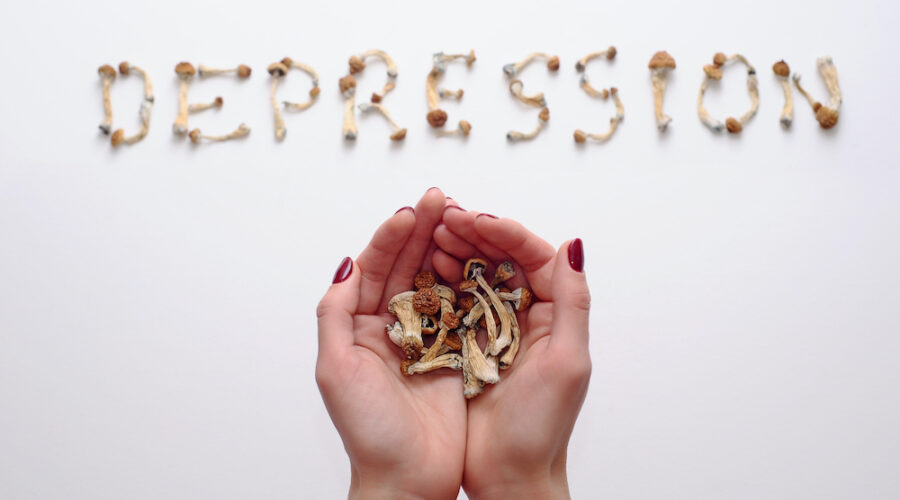
Groundbreaking Study Shows Psilocybin Can Treat Depression
Last reviewed and updated: August 14, 2026.
Key Takeaways
| The early promise | Early studies from Johns Hopkins, Imperial College, and Compass Pathways showed psilocybin could rapidly reduce depression, launching the modern research wave. |
| Now near approval | Compass Pathways’ COMP360 hit its primary endpoint in two Phase 3 trials for treatment-resistant depression, with high statistical significance. |
| FDA fast track | In April 2026 the FDA granted COMP360 a rolling NDA review and a priority voucher that can compress review to one to two months. |
| Possible first approval | Compass targets a Q4 2026 filing, with a potential FDA decision by late 2026 or early 2027, which could make it the first FDA-approved classic psychedelic. |
| Still illegal for now | Psilocybin remains federally illegal today. Approval would create a regulated medical pathway, not general legalization. |
Psilocybin is the psychedelic compound found in over 200 species of mushrooms, commonly referred to as ‘magic mushrooms’. And it has recently been spotlighted for its potential in treating depression, a condition affecting approximately 300 million people worldwide. A groundbreaking study published in the British Medical Journal highlights psilocybin’s significant effects on depression. Particularly noting its efficacy in older adults and those with a history of psychedelic use.
RELATED: Find Psilocybin Retreats in Oregon and Across the Globe
Unveiling Psilocybin’s Potential
Psilocybin is currently a Phase III candidate for the treatment of treatment-resistant depressive disorder (P-TRD) in the United States. And this is setting the stage for a potential revolution in psychiatric care. This classification marks it as the only psychedelic in advanced clinical trials for this purpose. It also distinguishes it from other substances under investigation.
The study’s findings are compelling, revealing that psilocybin binds to serotonin receptors in the brain, triggering a ‘reset’ of brain activity. This effect not only alters mood and perception but also shows promise in restructuring brain connectivity. This leads to both rapid and sustained alleviation of depressive symptoms, even after the drug’s effects have subsided.
New: Interested in Being Part of a Psychedelics-Focused Clinical Trial? Sign Up Here
Clinical Insights and Results
Researchers delved into previous randomized controlled trials involving 436 participants, comparing psilocybin’s impact on depression against various controls, including placebos and microdoses of other psychedelics. The analysis yielded a Hedge’s g score of 1.64 for psilocybin, indicating a substantial improvement in depression scores compared to other treatments.
Notably, the greatest improvements were observed in patients with secondary depression, older individuals, and those who self-reported their symptoms. This suggests that psilocybin could offer a valuable treatment alternative for these specific groups.
Exciting news: Two states have legalized psilocybin therapy for the first time ever. Click here to get on the waiting list for Oregon psilocybin therapy. And click here to get on the waiting list for Colorado psilocybin therapy.
Challenges and Considerations
Despite these promising results, the study authors urge a cautious approach. The significant variation between trials and the lack of diversity among study participants (90% were white) suggests that more comprehensive research is necessary to fully understand psilocybin’s therapeutic potential and ensure its efficacy across diverse populations.
Moreover, transitioning from controlled clinical trials to widespread clinical use presents practical challenges. In trials, psilocybin administration is carefully managed in a controlled environment, often accompanied by music and psychotherapeutic support, a setting that might be difficult to replicate broadly in the healthcare system.
Regulatory and Market Outlook
The path to psilocybin’s inclusion in mainstream mental health treatment is fraught with hurdles. Which include regulatory approvals, cost considerations, and the establishment of appropriate legal and clinical frameworks. However, its designation as a ‘Breakthrough Therapy’ by the FDA in 2018 for treatment-resistant depression underscores the growing acknowledgment of its potential benefits.
Financial analysts are optimistic about the economic prospects of psilocybin. They are forecasting a compound annual growth rate (CAGR) of 265.1% from 2026 to 2029, with projected global sales reaching $765 million by the end of the decade. The United States is expected to dominate this emerging market, accounting for approximately 65% of total sales.
The Future of Depression Treatment
The conversation around psychedelic-assisted therapy continues to evolve. The scientific community and the public alike are cautiously optimistic about the potential of psilocybin to transform the treatment landscape for depression. With ongoing research and a balanced, science-driven approach to its development and use, psilocybin could very well lead to more effective, faster-acting therapeutic options for those who have found little relief in conventional treatments.
In conclusion, while psilocybin offers a beacon of hope for many suffering from depression, it is imperative that its journey towards clinical application be guided by rigorous research, stringent safety protocols, and a deep understanding of its psychopharmacological mechanisms. The promise of psilocybin lies not just in its ability to treat depression. But in its potential to reshape our understanding of mental health treatment.
From Groundbreaking Study to Near-Approval in 2026
The early psilocybin depression studies from Johns Hopkins, Imperial College, and Compass Pathways helped launch the modern research wave. Since then, the field has matured toward FDA approval. What began as a single striking study has become a treatment on the verge of approval. The change over just a few years has been remarkable.
Compass Pathways’ COMP360 is a synthetic psilocybin for treatment-resistant depression. It hit its primary endpoint in two consecutive Phase 3 trials, COMP005 in June 2025 and COMP006 in February 2026. Both trials showed high statistical significance, rapid onset, and durability lasting months. This makes COMP360 the first classic psychedelic with highly significant Phase 3 results in treatment-resistant depression. You can review Compass Pathways’ second Phase 3 results directly.
In April 2026, the FDA granted COMP360 a rolling NDA review and a Commissioner’s National Priority Voucher. That voucher can compress the standard review to one or two months. Compass targets a Q4 2026 filing, with a potential FDA decision by late 2026 or early 2027. If approved, COMP360 would be the first FDA-approved classic psychedelic. One caveat still matters. Psilocybin remains federally illegal today, so approval would create a regulated medical pathway rather than general legalization.
Frequently Asked Questions
- Does psilocybin really treat depression?
- A growing body of research says yes, especially for treatment-resistant depression. Early studies from Johns Hopkins, Imperial College, and Compass Pathways showed rapid, meaningful reductions in depression. Compass Pathways’ COMP360 then hit its primary endpoint in two Phase 3 trials with high statistical significance, rapid onset, and durability lasting months.
- Is psilocybin FDA-approved for depression?
- Not yet, but it is close. In April 2026 the FDA granted Compass Pathways’ COMP360 a rolling NDA review and a priority voucher that can compress review to one to two months. Compass targets a Q4 2026 filing, with a possible FDA decision by late 2026 or early 2027. If approved, it would be the first FDA-approved classic psychedelic.
- How is psilocybin depression treatment different from antidepressants?
- Psilocybin appears to work rapidly, often within a session or two, and its benefits can last months, unlike daily antidepressants that take weeks and are taken continuously. It is given in a small number of supervised sessions paired with psychological support, rather than as a daily pill. It is intended for treatment-resistant cases.
- Will I be able to get psilocybin for depression legally?
- Not yet through the medical system, since psilocybin remains federally illegal. If the FDA approves COMP360, access would come through a regulated medical pathway, likely with strict delivery requirements and trained providers, rather than general legalization. Oregon and Colorado also offer state-licensed psilocybin programs that do not require a diagnosis.