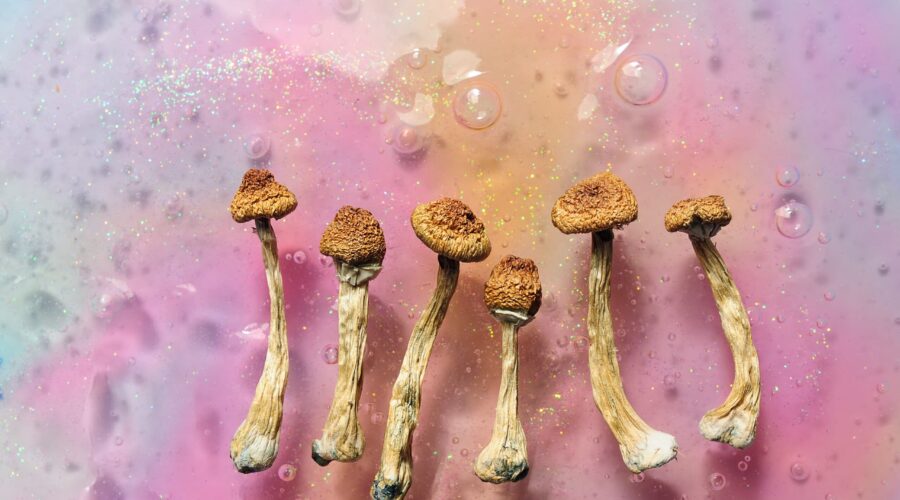
Magic Mushrooms Move Mainstream as Science and Policy Lag Behind
Psilocybin is moving into the mainstream faster than science and policy can keep up. Will this interest in magic mushrooms move the regulatory and legislative needles? Time will tell.
Looking for treatment? Find Spravato clinics (which is covered by insurance) and ketamine clinics closest to you as well as other psychedelic therapies in your area.
| Key takeaway | What it means |
|---|---|
| Public use is rising | More adults are trying psilocybin, including older users. |
| Research lags behind demand | Clinical studies still rely on limited forms of psilocybin. |
| The market is uneven | Products vary widely in strength and quality. |
| Risks are real | Higher doses can raise the chance of difficult experiences. |
| Regulation remains fragmented | Rules differ by city, state, and setting. |
New: Interested in Being Part of a Psychedelics-Focused Clinical Trial? Sign Up Here
A Fast Moving Shift
Interest in magic mushrooms is no longer fringe. It is part of a wider wellness conversation that now includes mental health, trauma recovery, and spiritual healing. That shift has drawn patients, clinicians, and curious consumers into the same crowded space.
The problem is pace. Public demand is accelerating while research tools remain slow and narrow. Have we learned enough to guide this growth safely? Not yet.
What Research Misses
Scientists still face a basic limitation. Federal rules often require them to study synthetic psilocybin rather than the full mushroom. That matters because real world products can contain other compounds that may affect the experience.
HealingMaps readers know set, setting, and preparation shape outcomes. Product quality does too. Yet most consumers still lack clear information about potency, dosage, or purity.
Regulation And Reality
Local policy has moved faster than federal policy. Some cities and states have decriminalized or created supervised access programs. But that patchwork leaves most consumers in a gray zone.
That means people can find products easily, yet still have little guidance on what they are taking. In a market like this, the biggest risk is often not intent. It is uncertainty.
Safety Still Counts
Psilocybin has promise, but it is not risk free. Users can experience nausea, dizziness, headaches, or changes in blood pressure. More serious concerns can appear with high doses or poor screening.
For anyone exploring psychedelic care, the lesson is simple. Context matters. Preparation matters. And safer access requires more than enthusiasm.
The Road Ahead
The article points toward a clear next step. Researchers need better real world data, and regulators need standards that reflect current use. Without both, the market will keep growing faster than the guardrails around it.
That is the central tension for healing spaces today. Interest is expanding. The evidence base is still catching up.