Scientists Warn Against the Rising Popularity of Amanita Mushrooms — Should They?
Last reviewed and updated: June 25, 2026.
Key Takeaways
| Legal status | Federally legal in U.S. (muscimol/ibotenic acid not scheduled); exception: Louisiana. Unregulated market with no quality standards |
| Key compounds | Ibotenic acid (raw mushroom, neurotoxic at high doses) + muscimol (GABA-A agonist, more tolerable); commercial products don’t standardize the ratio |
| vs psilocybin | Completely different pharmacology — GABA mechanism (not serotonin); sedation/delirium, not visual psychedelic experience; psilocybin has better-characterized safety profile |
| Main risks | Ibotenic acid neurotoxicity at high doses; misidentification with death cap (fatal); GABA potentiation with alcohol/benzos; steep unpredictable dose-response |
| Drug interactions | Dangerous with alcohol, benzodiazepines, sleep aids; avoid with MAOIs; less serotonin-concern than psilocybin but no adequate drug interaction data |
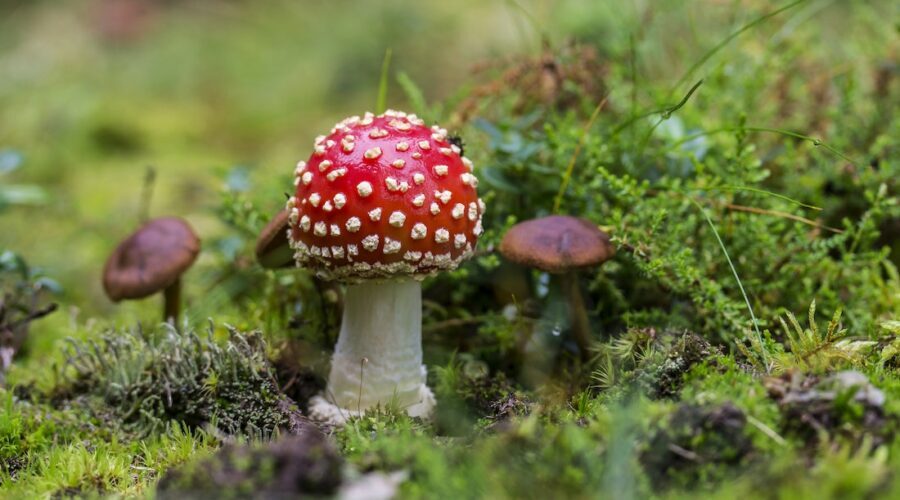
Lately, more people are getting interested in Amanita muscaria, also known as the fly agaric mushroom. This mushroom is easy to spot with its red cap and white spots. It’s been famous in stories and legends for a long time. But now, its popularity is growing because people are curious about natural psychedelics. This has made scientists and health experts worried about the dangers of amanita muscaria mushrooms. But should they be?
New: Interested in Being Part of a Psychedelics-Focused Clinical Trial? Sign Up Here
The Allure of Amanita Muscaria
Historical Significance
Amanita muscaria has been around for a long time. People in ancient times used it in their rituals. It shows up in old art and stories. Some tribes in Siberia used it to enter different states of mind. Its bright red color and white spots make it look magical, which is why it appears in many myths and fairy tales.
Psychotropic Effects
The effects of Amanita muscaria can be different for everyone. Some people might feel happy and see strange things. But these effects can be unpredictable. You might also feel sick, throw up, or get confused.
Comparing Amanita Muscaria to Psilocybin Mushrooms
Differences in Chemical Compounds
Amanita muscaria and psilocybin mushrooms both make you hallucinate, but they have different chemicals. Psilocybin mushrooms have psilocybin and psilocin, which are less toxic. Amanita muscaria has muscimol and ibotenic acid, which are more dangerous.
Variations in Effects
The effects of these mushrooms are also different. Psilocybin mushrooms often make people feel more thoughtful and spiritual. Amanita muscaria can make you feel more erratic and unpredictable. This makes Amanita muscaria riskier to use.
Interested in MDMA Treatment? The FDA is close to approving MDMA Therapy. Get on the waiting list now!
The Rise in Popularity
Market Trends
More people are buying Amanita muscaria these days. This is because people are interested in natural psychedelics and the mushroom’s cool look and history. But this trend has also led to misleading ads that don’t talk about the dangers.
Influence of Social Media
Social media has played a big role in making Amanita muscaria popular. Influencers and content creators share their experiences with the mushroom, often making it look fun without talking about the risks. This makes more young people interested in trying it.
RELATED: FDA Warns Against Amanita Muscaria Mushroom Edibles
Potential Dangers of Amanita Muscaria
Toxicity Levels
Amanita muscaria is very toxic. The chemicals in it can cause serious poisoning. You might have seizures, get delirious, or even fall into a coma. In the worst cases, it can be deadly.
Health Risks
The health risks of Amanita muscaria are serious. Besides its toxic effects, it can cause stomach problems, heart issues, and mess with your brain. These risks are worse because there’s not much reliable information, and many ads are misleading.
Misleading Marketing Practices
False Health Claims
One big problem is that some products make false health claims. They say the mushroom has health benefits like psilocybin mushrooms, but there’s no proof. This can make people think the mushroom is safe and good for them, which is not true. Always make sure you purchase amanita muscaria products from trusted brands and vendors.
Expert Opinions and Recommendations
Insights from Mycologists
Mushroom experts, called mycologists, have important insights into the risks and benefits of Amanita muscaria. Their knowledge can help shape public health policies and education efforts. By listening to these experts, we can better understand the mushroom and how to stay safe.
Public Health Perspectives
Public health officials also play a key role in addressing the issues with Amanita muscaria. Their views can help create policies and rules that protect people and promote safe use. By working with mycologists and other experts, they can develop strategies to handle the rising popularity of Amanita muscaria.
Amanita Muscaria in 2025: A Booming Unregulated Market and the Risks Scientists Are Most Concerned About
Between the time this article was first published and 2025, Amanita muscaria products have exploded in the American consumer market. What was once a fringe curiosity is now widely available as gummies, chocolate bars, tinctures, capsules, and tea blends — sold in gas stations, supplement stores, and online. This growth has occurred in a regulatory vacuum. Unlike psilocybin (federally Schedule I) or cannabis (state-regulated), the primary psychoactive compounds in Amanita muscaria — muscimol and ibotenic acid — are not controlled under the federal Controlled Substances Act. This legal loophole has allowed a largely unregulated market to emerge with minimal quality control, inconsistent dosing, and no standardized safety labeling.
What is actually in Amanita muscaria products — and why it matters. Amanita muscaria’s effects come primarily from two compounds: ibotenic acid (present in the raw mushroom) and muscimol (the more psychoactive compound, produced when ibotenic acid is decarboxylated through drying or heat). Crucially, ibotenic acid is neurotoxic at higher doses — it is a potent excitatory amino acid that can cause seizures, neurotoxicity, and organ damage in severe cases. Muscimol, by contrast, is a GABA-A receptor agonist (similar in mechanism to benzodiazepines, not to psilocybin) and is considered to have a safer profile at typical recreational doses. The problem with many commercial products is that they do not standardize the ibotenic acid-to-muscimol ratio, meaning consumers do not know whether they are getting predominantly the more dangerous neurotoxin or the more tolerable psychoactive compound.
How Amanita differs from psilocybin mushrooms. This is perhaps the most important distinction for anyone considering either substance. Psilocybin (in “magic mushrooms”) works primarily at 5-HT2A serotonin receptors — the same mechanism as LSD — producing visual alterations, introspective states, and the “classic” psychedelic experience. Amanita muscaria works through completely different neurochemistry: muscimol activates GABA-A receptors (inhibitory rather than excitatory), producing sedation, delirium, dream-like dissociation, and altered time perception. The experiences are qualitatively different, the dose-response curves are different, and the safety profiles are different. Comparing the two because they are both mushrooms is like comparing alcohol (GABA) to LSD (serotonin) — related category, completely different pharmacology.
What scientists are actually warning about — and what they’re not. Scientists’ concerns about Amanita are not that muscimol is inherently dangerous at recreational doses — at low to moderate doses, muscimol has a long history of use in indigenous contexts without mass fatality events. The concerns are: (1) the unregulated commercial market’s inability to guarantee ibotenic acid-to-muscimol ratios; (2) the risk of misidentification of Amanita muscaria with lethal Amanita species (particularly Amanita phalloides, the “death cap,” which contains amatoxins that cause fatal liver failure — the same mushroom appearance, deadly consequences); (3) the dose-response curve being steep and unpredictable, especially for commercial products; and (4) contraindications with medications affecting GABA systems (benzos, alcohol, sleep aids).
Frequently Asked Questions
Is Amanita muscaria legal in the United States?
Yes — at the federal level, Amanita muscaria (fly agaric mushroom) and its psychoactive compounds muscimol and ibotenic acid are not scheduled under the Controlled Substances Act. This makes Amanita muscaria mushrooms and derived products technically legal to sell, possess, and consume in most of the U.S. at the federal level. Louisiana is the notable exception — it has specifically prohibited Amanita muscaria and muscimol under state law. This federal legal gap is why commercial Amanita products proliferated rapidly after 2020. It does not mean they are unambiguously safe or unregulated — the FDA can take action against products that make unauthorized health claims or that contain dangerous substances.
What are the risks of Amanita muscaria compared to psilocybin mushrooms?
They carry different risk profiles. Psilocybin mushrooms (federally Schedule I, illegal but well-studied) have an excellent acute safety record — they do not cause fatal overdose, have no known lethal dose for a healthy adult, and carry primarily psychological rather than physiological risks. Amanita muscaria’s risks are different: (1) ibotenic acid is neurotoxic at high doses; (2) commercial products don’t standardize the ibotenic/muscimol ratio; (3) misidentification risk is real (Amanita phalloides/death cap can be lethal in small amounts); (4) GABA-A mechanism means dangerous interactions with alcohol, benzodiazepines, and other CNS depressants; (5) steep, unpredictable dose-response curve especially with dried products. Paradoxically, psilocybin mushrooms — which are illegal — have a better-characterized acute safety profile than Amanita products, which are legal but unregulated.
What does Amanita muscaria feel like?
Amanita muscaria (muscimol) produces an experience quite different from psilocybin or LSD. Common effects: sedation, drowsiness, dream-like or delirious states, altered time perception, distorted vision (objects appearing to change size — “macropsia/micropsia”), mild euphoria, and sometimes dissociation. The experience has been compared to lucid dreaming or a hypnagogic state. Unlike classical psychedelics, Amanita generally does not produce geometric visuals, entity encounters, or profound insight experiences in most users. Higher doses can produce delirium, confusion, vomiting, and in extreme cases, loss of consciousness. The effects can last 4–8 hours. The experience is highly variable depending on whether the product contains primarily ibotenic acid or muscimol — different compounds produce meaningfully different experiences.
Can Amanita muscaria be taken with other medications?
Several drug interactions are concerning and warrant caution or avoidance: (1) Alcohol and CNS depressants — muscimol potentiates GABA-A activity; combining with alcohol, benzodiazepines, or sleep aids can produce dangerous over-sedation; (2) Anticholinergics — some Amanita species contain trace anticholinergic compounds that can cause dry mouth, urinary retention, confusion; (3) MAO inhibitors — as with most psychoactive substances, combining with MAOIs is not well-studied and potentially dangerous. Muscimol’s mechanism is different from classical psychedelics (it’s not serotonergic), so SSRI interactions are less of a concern than with psilocybin — but the absence of interaction data is itself a caution. Anyone on medications affecting the central nervous system should consult a physician before using any Amanita product.