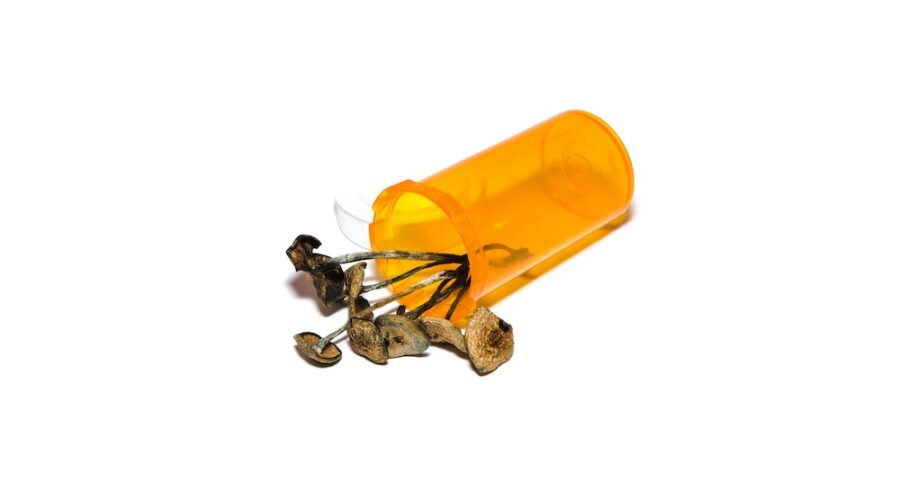
The Countdown to Approval: The Psychedelic Clinical Trials That Could Reshape Mental Healthcare
Last reviewed and updated: June 25, 2026.
Key Takeaways
| Compass COMP360 | Both Phase 3 trials positive; rolling NDA submission + CNPV voucher (1–2mo review); full NDA targeted Q4 2026; approval outlook 2027 |
| Definium DT120 (LSD) | MDD Phase 3 (Emerge) positive June 2026 — 8.1-pt MADRS; GAD Phase 3 (Voyage/Panorama) readout Q3 2026; formerly MindMed MM120 |
| Usona psilocybin | Phase 3 fully enrolled (~Nov 2025); CNPV issued Apr 2026; topline results pending; broad MDD indication; outlook 2027–2028 |
| Helus HLP003 | Phase 3 APPROACH topline Q4 2026; formerly Cybin CYB003; BTD; 79% remission in Phase 2 |
| 5-MeO-DMT | AtaiBeckley BPL-003 Phase 3 initiating (BTD Oct 2025); GH Research GH001 US hold lifted Jan 2026; Phase 3 late 2026 |
| MDMA (Lykos) | FDA rejected 2024; additional trial requested; multi-year path forward |
Compass Pathways achieved its primary endpoint in its first Phase 3 trial (COMP005) for COMP360 (psilocybin) in treatment-resistant depression (TRD) on June 23, 2025, marking a historic moment in psychedelic medicine. The trial showed a statistically significant reduction in depression symptoms, and the company is now accelerating its commercialization readiness plans by 9-12 months. This puts the company on track for a potential New Drug Application (NDA) submission in late 2026 or early 2027, with a potential approval decision shortly thereafter.
New: Interested in Being Part of a Psychedelics-Focused Clinical Trial? Sign Up Here
But Compass is just one player in an expanding field. Multiple late-stage psychedelic trials are currently underway, representing an inflection point for treatments that could transform mental healthcare for millions of Americans.
| Company | Drug Candidate | Target Condition | Current Phase | Projected Approval |
|---|---|---|---|---|
| Compass Pathways | COMP360 (Psilocybin) | Treatment Resistant Depression | Phase 3 | Late 2026 – 2027 |
| Cybin | CYB003 (Deuterated Psilocybin) | Major Depressive Disorder | Phase 3 | 2027 – 2028 |
| Definium Therapeutics (DFTX) | MM120 (LSD) | Generalized Anxiety Disorder | Phase 3 | Late 2026 – 2027 |
| Beckley Psytech/Atai | BPL-003 (5-MeO-DMT) | Treatment Resistant Depression | Phase 3 (Initiating 2026) | 2028 – 2029 |
| GH Research | GH001 (5-MeO-DMT) | Treatment Resistant Depression | Phase 2b (Pivotal Program Planned 2026) | 2029+ |
| Usona Institute | Psilocybin | Major Depressive Disorder | Phase 3 | 2027 – 2028 |
| MAPS Public Benefit Corp | MDMA | Post-Traumatic Stress Disorder | Phase 3 (Additional Trial Requested) | TBD |
Looking for treatment? Find ketamine clinics closest to you as well as other psychedelic therapies in your area.
Compass Pathways Leads the Pack
The first Phase 3 trial (COMP005) showed a single dose of psilocybin led to a statistically significant 3.6 point reduction on depression scales compared to placebo at six weeks. The trial showed no clinically meaningful imbalance in suicidal ideation between treatment and placebo groups, addressing a key safety concern.
Results from the first Phase 3 trial came in the second quarter of 2025. The 26-week data from a second ongoing pivotal trial (COMP006) is expected in the first quarter of 2026. The company is exploring accelerated filing pathways, but the most likely timeline for an NDA submission remains late 2026 to early 2027.
The treatment requires careful consideration. Data shows efficacy from a single 25mg dose lasting approximately 12 weeks on average, with substantially longer duration in some patients. This represents a paradigm shift from daily antidepressants to periodic interventions.
Do you work in the ketamine industry? We launched the Healing Health Alliance, which is the first national provider network and GPO (Group Purchasing Organization) exclusively for ketamine practitioners and clinic owners. We will bring you significant cost savings and revenue generating opportunities. There’s no cost or obligation and you can join now!
Cybin’s Deuterated Approach Gains Momentum
Cybin is pursuing an innovative molecular approach with CYB003, a deuterated form of psilocybin. The Phase 3 PARADIGM program is currently dosing patients across US and European sites, with topline results expected in 2026.
Phase 2 trial data showed a 71 percent remission rate in major depressive disorder (MDD) patients. The company holds over 90 granted patents and 230 pending applications, with protection extending to 2041.
Cybin has enrolled 550 patients in depression trials and is also developing CYB004, a deuterated DMT molecule for generalized anxiety disorder. A second pivotal study called EMBRACE is planned to initiate around the fourth quarter of 2025.
Manufacturing and commercialization partnerships position the company for scale. Cybin partnered with Thermo Fisher Scientific to provide US-based manufacturing for its CYB003 program.
Definium Therapeutics (DFTX) Brings LSD into the Clinic
Definium Therapeutics (formerly MindMed) received FDA Breakthrough Therapy Designation in March 2024 for MM120, a pharmaceutically optimized form of LSD. Phase 2b results showed a 7.6 point reduction in anxiety compared to placebo at four weeks, with a 65 percent clinical response rate and 48 percent remission rate sustained over 12 weeks.
Phase 3 trials began by year-end 2024, with two pivotal trials in generalized anxiety disorder (GAD) totaling approximately 690 patients (Voyage and Panorama). The first patient in the second pivotal trial, Panorama, was dosed on January 30, 2025. Initial results from the 12-week double-blind period of both GAD trials are expected by the end of 2026.
The company also dosed its first patient in the Phase 3 Emerge study evaluating MM120 for MDD in April 2025. The study will enroll approximately 140 participants in the US, with topline data from the 12-week double-blind period anticipated in the second half of 2026.
The compound represents potential innovation in treatment duration. While MDMA and psilocybin experiences can last up to six hours requiring medical monitoring, LSD experiences last eight to twelve hours but may offer unique therapeutic benefits.
Beckley Psytech and Atai Merge Strengths
Beckley Psytech and Atai Life Sciences jointly announced positive topline results from Phase 2b trials of BPL-003, an intranasal 5-MeO-DMT formulation, in July 2025. A single 8mg dose achieved a 12.1 point reduction on depression scales at day 29, and the study achieved its primary endpoint and all key secondary endpoints.
The companies plan to engage with the FDA and other agencies regarding Phase 3 trial design in the coming months. BPL-003 received FDA Breakthrough Therapy designation in October 2025. Phase 3 trials are expected to initiate in the second quarter of 2026, subject to alignment with the FDA.
The drug requires a short time in clinic, with patients ready for discharge within two hours of dosing. This could fit within existing treatment paradigms established by Johnson & Johnson’s Spravato, potentially easing adoption.
GH Research Shows Promising Early Data
GH Research’s inhaled version of 5-MeO-DMT (GH001) achieved a 15.5 point greater reduction in depression scores compared to placebo in Phase 2b trials. The trial involved 81 patients with TRD and demonstrated an ultra-rapid treatment effect.
The full analysis of the open-label extension confirms a 73% remission rate at 6 months with infrequent treatment visits and no mandated psychotherapeutic intervention. The company is currently engaging with the FDA to address a clinical hold on its Investigational New Drug (IND) application, with the goal of initiating its global pivotal program in 2026.
GH Research is working on multiple delivery methods. The company is developing both inhaled and injectable formulations, expanding treatment options for different clinical settings and patient needs.
Usona Institute Takes Nonprofit Approach
Usona Institute launched its Phase 3 uAspire trial, a randomized, double-blind, multicenter study evaluating psilocybin in adults with MDD. The trial is enrolling approximately 240 people across the country.
Phase 2 PSIL201 results, published in JAMA, represented the largest randomized, double-blind, placebo-controlled study of single-dose psilocybin to treat MDD. The data showed a single treatment produced a rapid, large, and sustained antidepressant effect.
Usona received FDA Breakthrough Therapy designation in 2019 for psilocybin as a potential treatment for MDD. As a nonprofit research organization, Usona aims to make treatments accessible beyond typical profit-driven models.
The Regulatory Landscape Shifts
The FDA published its first draft guidance on psychedelic clinical trials in 2023, providing clarity on study design, data collection, and safety requirements. The document addresses unique challenges like functional unblinding, where participants can often tell whether they received a psychedelic or placebo.
The FDA Commissioner has stated that psychedelic drug review is a top priority and promised an expeditious and rapid review of clinical data. Companies are adapting their approaches in response. Cybin, for example, adjusted plans for Phase 3 trials to address concerns raised during the MDMA review, including giving patients the psilocin treatment along with regular antidepressants rather than requiring medication discontinuation.
Understanding the Science Behind the Treatments
These compounds work through similar but distinct mechanisms. Psilocybin and LSD act as partial agonists at serotonin 2A receptors, triggering neuroplastic changes that may underlie their therapeutic effects. The deuterated versions developed by Cybin are designed to have more predictable pharmacokinetics and potentially improved safety profiles.
5-MeO-DMT represents a different approach within the same receptor family. Its ultra-rapid onset and shorter duration could make treatments more practical for clinical settings, reducing monitoring time and facility costs.
The treatments typically require psychological support before, during, and after dosing. This integration work helps patients process their experiences and translate insights into lasting behavioral changes.
Challenges on the Path to Market
The psychedelics sector received a setback when the FDA rejected Lykos Therapeutics’ MDMA application for PTSD on August 9, 2024. The decision, which followed a negative advisory committee vote, highlighted scrutiny around trial design, particularly functional unblinding issues.
The rejection sent ripples through the industry, but companies view it as clarifying regulatory expectations rather than closing doors. Compass Pathways laid off 30 percent of its workforce in November 2024 as part of reorganization following delays in Phase 3 readouts, demonstrating the financial pressures companies face.
Reimbursement remains a critical question. These treatments involve multiple hours of clinical time, raising costs significantly. However, if single or infrequent doses can replace years of daily medication and therapy, the value proposition may prove compelling to insurers.
What Timeline Can Patients Expect
Compass Pathways is on track to present its NDA to the FDA sometime between late 2026 and 2027. This would make it potentially the first psilocybin-based therapy to reach the market.
Definium Therapeutics’ LSD program follows closely behind, with Phase 3 data expected in late 2026. If successful, this would mark the first FDA approval of LSD for any indication.
The second wave of Phase 3 trials from Cybin, Beckley Psytech, and Usona Institute likely won’t reach approval decisions until 2027 or 2028. Companies moving from Phase 2 to Phase 3 face longer timelines extending into 2028 or 2029.
The Bigger Picture for Mental Health
The psychedelic medicine market is projected to reach $8.5 billion by 2032. This growth reflects not just investor enthusiasm but genuine medical need. Current treatments for depression, anxiety, and PTSD leave many patients without adequate relief.
These trials are testing whether psychedelic medicines can offer something fundamentally different: rapid-acting, durable responses that don’t require daily dosing. Early data suggests this potential may be real.
The next two years will be decisive. Multiple Phase 3 readouts will either validate the promise of psychedelic medicine or reveal unexpected challenges. Either way, the field has moved far beyond early-stage exploration into rigorous late-phase development.
For the millions of people whose conditions resist current treatments, these trials represent hope that better options may soon be available. The companies racing toward approval are competing not just with each other but with the clock, knowing that delayed treatments mean continued suffering for patients in need.
Company Updates and Trial Status Corrections: Mid-2026
Two companies mentioned in this article have rebranded and several trials have advanced significantly since publication. This section corrects those records and adds developments through June 2026.
Compass Pathways: Both Phase 3 Trials Now Positive — Rolling NDA Underway
Compass Pathways is the furthest along of any company to a potential FDA approval for a psilocybin-based therapy. The original article covered the positive COMP005 Phase 3 result (June 2025, −3.6-point MADRS improvement vs. placebo). Since then: the second Phase 3 trial, COMP006, also met its primary endpoint — announced February 17, 2026, with a −3.8-point placebo-adjusted MADRS reduction at six weeks. Both pivotal trials are now positive. On April 24, 2026, the FDA granted Compass a rolling NDA submission and a Commissioner’s National Priority Voucher (CNPV), which compresses FDA review from the standard 10–12 months to approximately 1–2 months after the full application is submitted. Compass is targeting full NDA completion in Q4 2026. The 26-week durability data from COMP006 is expected in early Q3 2026. COMP360 retains Breakthrough Therapy Designation for TRD. A realistic approval timeline is 2027.
Definium Therapeutics (formerly MindMed): LSD Phase 3 Positive for Depression, GAD Readout Imminent
Important name correction: MindMed rebranded to Definium Therapeutics (Nasdaq: DFTX) on January 9, 2026. The article’s reference to “MindMed MM120” is now “Definium Therapeutics DT120” — these are the same molecule (lysergide D-tartrate, an oral LSD formulation), with DT120 being the renamed orally disintegrating tablet (ODT) formulation used after the rebrand. There is no separate compound; it is one drug in an updated delivery format.
Definium has two active Phase 3 programs: (1) MDD (Major Depressive Disorder) — Phase 3 positive. The Emerge trial (149 adults, single 100mcg DT120 ODT dose vs. placebo) announced positive topline results on June 22, 2026 — the primary endpoint: 8.1-point placebo-adjusted MADRS improvement at Week 6, with a 35% response rate vs. 7% placebo and 24% remission vs. 3% placebo. Analysts at Jefferies called the data “profound.” FDA submission is the next step. A second MDD Phase 3 (Ascend) began enrollment in May 2026. (2) GAD (Generalized Anxiety Disorder) — Phase 3 ongoing. Two registrational trials, Voyage and Panorama, are actively running with topline readouts expected in Q3 2026. DT120 holds Breakthrough Therapy Designation for GAD. The original article’s projected approval window of “late 2026–2027” for the GAD program now has a realistic competitor in the MDD program, which may move faster given its positive data.
Helus Pharma (formerly Cybin): Phase 3 Dosing Underway, Topline Q4 2026
Important name correction: Cybin rebranded to Helus Pharma (Nasdaq: HLUS) in January 2026, and CYB003 was renamed HLP003. The PARADIGM Phase 3 program is actively dosing patients. The first pivotal study, APPROACH (220 patients, 45 U.S. and European sites), has topline data guided for Q4 2026. A second pivotal study, EMBRACE, launched mid-2025. HLP003 holds Breakthrough Therapy Designation. Phase 2 results showed 79% remission and 100% response rate at two doses at 12 months. Topline results from APPROACH in Q4 2026 would position Helus for an NDA submission in 2027.
Usona Institute: Phase 3 Fully Enrolled, CNPV Voucher in Hand
Usona’s uAspire Phase 3 trial (NCT06308653, ~240 adults with MDD) completed enrollment approximately November 2025. No topline results have been announced as of mid-2026. On April 24, 2026 — the same day as Compass — the FDA issued Usona a Commissioner’s National Priority Voucher, compressing review to approximately 1–2 months post-NDA submission. Usona’s indication is broad MDD (not treatment-resistant only), covering a larger potential patient population than Compass. Analyst consensus places an approval decision in 2027–2028, depending on when topline data is available and the NDA is submitted. Usona holds Breakthrough Therapy Designation since 2019.
5-MeO-DMT Programs: AtaiBeckley BPL-003 and GH Research GH001
AtaiBeckley (merged from Atai Life Sciences + Beckley Psytech). BPL-003 received Breakthrough Therapy Designation in October 2025. A successful End-of-Phase 2 meeting with the FDA was announced March 10, 2026, confirming the Phase 3 program design. The two registrational studies — ReConnection-1 and ReConnection-2 — were targeted to initiate in Q2 2026. Phase 2b showed an 11.1-point MADRS reduction vs. 5.8 for control at Day 29. GH Research GH001. The FDA lifted its U.S. clinical hold on GH001 on January 5, 2026, clearing the path for U.S. subject enrollment. Phase 2b data published in JAMA Psychiatry showed a −15.5-point placebo-adjusted MADRS reduction; 57.5% remission vs. 0% placebo at Day 8, with 73% remission at 6 months. GH Research completed preparatory healthy-volunteer studies in Q1 2026 and is targeting Phase 3 initiation in late 2026, pending FDA design alignment meetings.
MDMA: FDA Rejection and the Path Forward
The FDA rejected Lykos Therapeutics’ application for MDMA-assisted therapy for PTSD in 2024. The Complete Response Letter cited functional unblinding (participants and therapists can generally tell who received MDMA vs. placebo), questions about the generalizability of the trial population, and MDMA’s abuse potential. The clinical effect sizes across trials were large and consistent — the issue is methodological, not about whether MDMA produces real therapeutic effects. Lykos is working on a path forward, likely involving additional trials designed to address the blinding critique. This is a multi-year process. An additional trial has been requested by the FDA, but no confirmed timeline for resubmission exists.
Frequently Asked Questions
What psychedelic drugs are closest to FDA approval?
As of mid-2026, the leading candidates: (1) Psilocybin — Compass Pathways COMP360: both Phase 3 trials positive; FDA rolling NDA submission underway with a Commissioner’s National Priority Voucher (1–2 month review post-filing); full NDA targeted Q4 2026; realistic approval 2027. (2) Psilocybin — Usona Institute: Phase 3 enrollment complete; CNPV issued; broad MDD indication; no topline results yet; approval outlook 2027–2028. (3) DT120 — Definium Therapeutics (DFTX): oral LSD (formerly MM120/MindMed); MDD Phase 3 positive June 2026 (8.1-pt MADRS); FDA submission pending; GAD Phase 3 readout Q3 2026. (4) MDMA — Lykos Therapeutics: FDA rejected 2024; additional trial requested; multi-year path forward. Spravato (esketamine) and IV ketamine are already legally available.
Why did the FDA reject MDMA therapy?
The FDA’s 2024 Complete Response Letter for MDMA-assisted therapy for PTSD cited: (1) Functional unblinding — participants and therapists can generally tell whether MDMA or placebo was administered, which makes it difficult to separate drug effect from expectancy; (2) Population generalizability — the trial population may not fully represent the broader PTSD patient population; (3) Abuse potential — concerns about scheduling implications. The clinical effect sizes across MAPS trials were large and consistent. The FDA’s concern is methodological: there is no established way to conduct a fully blinded psychedelic trial, and this problem affects the entire field — not just MDMA. Lykos is working to address these concerns, most likely through additional trials with modified designs.
What does FDA approval of a psychedelic actually mean legally?
FDA approval does not broadly legalize a drug — the DEA controls scheduling independently. When the FDA approves a currently Schedule I substance, the DEA is required to initiate rescheduling. The likely outcome is Schedule II (high abuse potential, accepted medical use) or Schedule III, making the drug legally prescribable by licensed physicians. It would not be available over-the-counter or at service centers without a prescription. For context: ketamine is Schedule III (licensed anesthetic, used off-label psychiatrically); Spravato is Schedule III with REMS requirements. Oregon and Colorado’s state-level legal frameworks exist separately from federal scheduling and would not be affected by federal approval.
How do I find a psychedelic clinical trial to participate in?
The primary registry is clinicaltrials.gov — search by condition (e.g., “psilocybin depression,” “MDMA PTSD”) and filter by recruiting status and location. The Psychedelic Alpha database tracks psychedelic trials in more detail. Compass Pathways, Usona Institute, and Definium Therapeutics maintain their own trial registries. Key eligibility considerations: most Phase 3 trials exclude patients on SSRIs, those with certain psychiatric histories, or those with active substance use disorders. Participation is typically free; you receive the investigational treatment at no cost in a supervised setting and may receive compensation for time. If you are not near an active trial site, Oregon licensed psilocybin service centers provide legal supervised access now, and Colorado Prop 122 permits personal possession for adults 21+.