
We Asked ChatGPT to Predict the Ketamine Clinic of the Future. Here’s What It Came Up With
Last reviewed and updated: September 1, 2026.
It seems like almost everyone can agree: Artificial intelligence and GPTs are going to change almost all aspects of our lives very soon. It’s going to take jobs, create jobs, but mostly it’s going to (hopefully) save us all a lot of time. (What does more time matter if no one has a job? That’s a discussion for another time.) But how will it change our experiences in clinics and other healthcare facilities? We asked it what the ketamine clinic of the future will look like.
| 2023 prediction | Where it landed by 2026 |
|---|---|
| Digital check-in and calming reception design | Widely adopted. Digital intake is now standard, driven by staffing costs rather than ambience |
| Sensory-controlled private therapy rooms | Partly real. Room design is a live competitive question as session lengths shorten |
| Outdoor therapy gardens | Rare. Real estate economics did not cooperate |
| VR therapy zones | Still fringe in ketamine clinics, with more traction in research settings |
| What it missed | Insurance, staffing ratios and regulation, which shaped clinics far more than decor |
Reception and Therapy Rooms of Future Ketamine Clinics
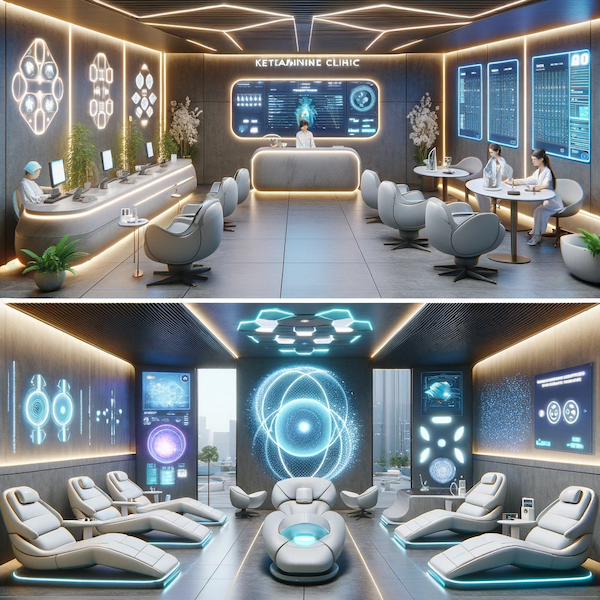
According to ChatGPT:
Reception Area: The entrance could feature a sleek, modern design with interactive digital interfaces for check-in, calming ambient lighting, and a soothing, minimalistic decor.
According to HealingMaps: Hell yes. Also a big fan of the Blade Runner style version of “Ketamine”

According to ChatGPT:
Therapy Rooms: Envision private, soundproof therapy rooms equipped with sensory-controlled environments. They could offer adjustable lighting, temperature, and sound settings to create a personalized therapeutic atmosphere.
HealingMaps Says: If there’s one thing our therapy rooms need more of, it’s holograms of light that take you into another dimension both figuratively and literally.
RELATED: Solving the Insurance Puzzle: How to Get Your Ketamine Therapy Covered
Ketamine Clinics of the Future Will Have These Indoor/Outdoor Therapy Gardens
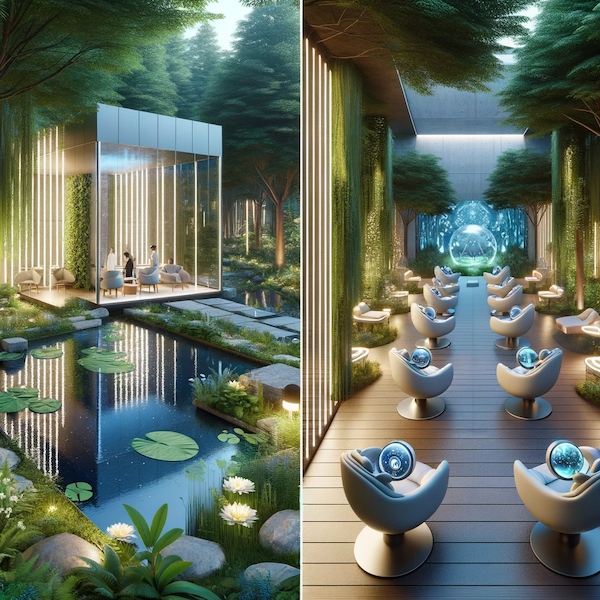
According to ChatGPT:
Outdoor Therapy Garden: A serene garden space blending natural elements with technology. It could feature interactive light and sound installations, peaceful water features, and various zones for different therapeutic activities, all surrounded by lush, calming greenery.
According to HealingMaps: Is this also going to be in a strip mall next to a nail salon?
Get Ready for Virtual Reality Therapy Zones
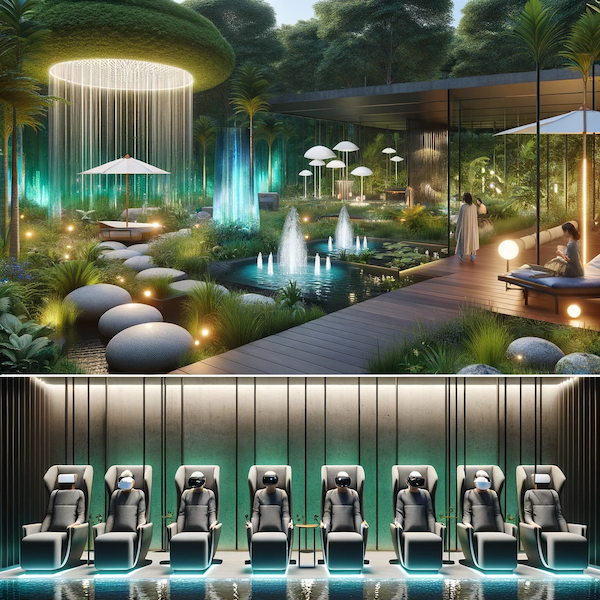
According to ChatGPT:
Virtual Reality Therapy Zone: A high-tech area where patients wear VR headsets. The space is designed to be minimalist yet futuristic, with individual therapy pods or chairs. The environment is equipped with advanced VR technology for immersive, therapeutic experiences.
According to HealingMaps: OK, this is a bit too Matrix-y. Let’s not be so on the nose when it comes to us living in an AI-generated simulation. But we do like the vibe.
Slightly-Better-Than-We-Have-Currently Monitoring Stations


According to ChatGPT:
Monitoring Stations: This area is equipped with state-of-the-art technology for real-time patient monitoring during therapies. It features advanced biometric sensors, multiple digital screens displaying vital statistics and therapy progress, and ergonomic workstations for healthcare professionals.
According to HealingMaps: This does seem a bit more advanced than someone peeking under your eye mask to make sure you’re not having a full blown anxiety attack. But these machines also look a tad pricey. Is Aetna going to cover this?
And then we asked ChatGPT to sum up its predictions.
“In conclusion, the ketamine clinic of the future represent a harmonious blend of advanced technology and patient-centered design. From the serene Outdoor Therapy Garden to the state-of-the-art Monitoring Stations, each element of the clinic is thoughtfully crafted to enhance the therapeutic experience. The innovative use of virtual reality in treatment, alongside the calming, technology-integrated environments like the Consultation Room and Therapy Rooms, underscores a commitment to pioneering mental health care. This futuristic clinic not only embodies the cutting edge of medical technology but also reflects a deep understanding of the holistic needs of patients, promising a new era in mental health treatment that is as compassionate as it is innovative.”
You know what? We’re in.
Scoring the Predictions in 2026
Three years on, it is worth checking the homework. The model was reasonable about interiors and almost entirely silent about economics, which is where clinics actually changed.
Digital check-in did arrive, though not for the reason predicted. Clinics adopted it because front-desk staffing is expensive, not because patients wanted a sleek interface. Sensory-controlled rooms are a genuine live debate, but the pressure came from session economics as the industry races to shorten chair time, not from a design trend.
The gardens and VR pods largely did not happen. What the model missed entirely is the set of forces that did reshape the field: whether insurance pays, what staffing ratios a protocol demands, and how state regulators decide to treat the sector.
That is the useful lesson from the exercise. Asked to imagine the future, the model produced a mood board. The things that decided which clinics survived were mundane and financial.