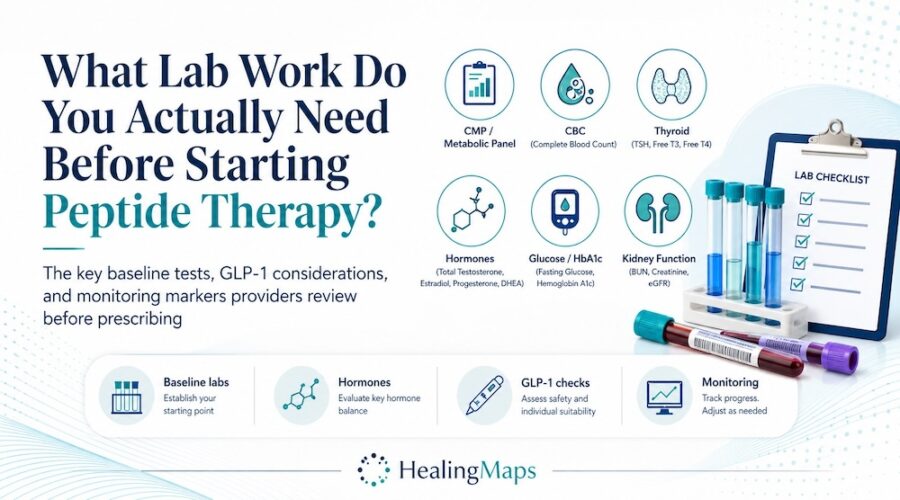
What Lab Work Do You Actually Need Before Starting Peptide Therapy?
Last reviewed and updated: May 5, 2026 — medically reviewed by Dr. Jonathann Kuo, MD.
Most people considering peptide therapy arrive with one pressing concern: will this work for me? Lab work rarely makes the top of that list. It should. The tests a provider orders before writing your prescription are not administrative formalities. They are the clinical foundation that separates safe, effective treatment from a prescription that may miss the mark entirely or create risks you never anticipated.
Interested in peptide therapy? Find vetted peptide therapy clinics near you.
| Key Takeaway | Detail |
|---|---|
| Is lab work required? | Not universally required by law, but medically essential for responsible prescribing |
| What labs are typically ordered | Metabolic panel, thyroid function, hormone levels, CBC, lipids, fasting glucose, HbA1c |
| Who orders the labs | Your prescribing physician or the peptide clinic conducting your intake |
| How recent must labs be | Most clinics require results within 90 days |
| GLP-1 specific considerations | Thyroid history, pancreatitis markers, and kidney function are especially relevant |
| Ongoing monitoring | Labs should be repeated every 3 to 6 months while on therapy |
| Red flags | Clinics that prescribe without any labs or intake assessment |
| Where to find vetted providers | HealingMaps peptide clinic directory |
Peptide therapy — delivered to your own home
Get BPC-157, TB-500, CJC-1295 & more — prescribed 100% online.
Live Vital matches you with licensed providers for physician-supervised protocols across every major goal — recovery & healing (BPC-157, TB-500, KPV), skin & anti-aging (GHK-Cu), growth hormone (CJC-1295, Ipamorelin, Tesamorelin), and energy & longevity (NAD+, MOTS-C, Glutathione). Quick online intake, provider review, and your protocol arrives at your home — only if it’s clinically right for you. No gray-market vendors, ever.
See My Peptide Options →Provider consultation required; dispensed by licensed pharmacies. HealingMaps may earn a commission through this link — it doesn’t change your price. Compounded peptides are not FDA-approved finished products; eligibility is determined by Live Vital’s licensed providers.
How much bloodwork a program wants before it will prescribe varies from one to the next. Our peptide telehealth comparison covers how each program runs its intake.
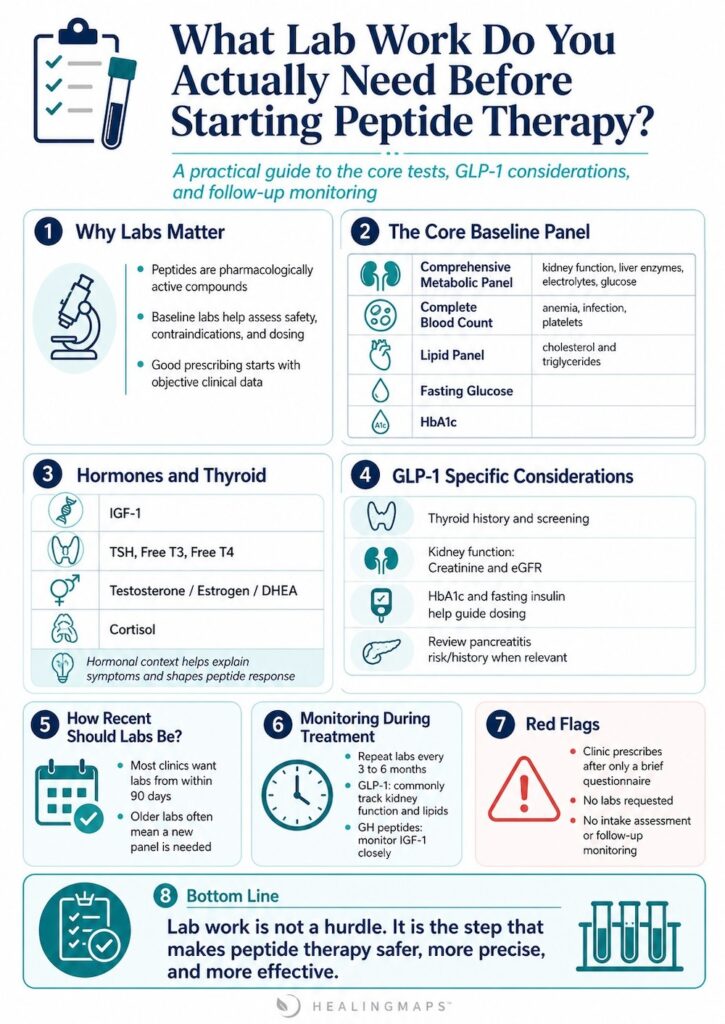
Why Labs Matter More Than Most Patients Expect
Peptides are not supplements. They are pharmacologically active compounds that interact directly with your body’s hormonal and metabolic systems. A provider who prescribes without understanding your baseline physiology is operating without the most basic clinical information.
Lab results tell a physician whether your kidneys and liver can handle a new compound. They reveal hormonal imbalances that might be driving the symptoms you want to treat. They flag contraindications before you ever inject anything. Without that picture, even a well-researched peptide can produce unpredictable results.
The Core Lab Panel Most Providers Order
The specific panel varies by provider, but most responsible peptide clinics order a consistent core set of tests.
A comprehensive metabolic panel covers kidney function, liver enzymes, electrolytes, and blood glucose. This gives the provider a broad view of your organ function and metabolic health before treatment begins.
A complete blood count evaluates red blood cells, white blood cells, and platelets. It screens for anemia, infection, and other conditions that could complicate treatment.
A lipid panel measures total cholesterol, LDL, HDL, and triglycerides. Several peptides, including GLP-1 receptor agonists, influence lipid metabolism. Knowing your starting point allows for meaningful tracking.
HealingMaps may earn a commission when readers sign up through Eden. This does not affect our editorial coverage or your price. Sermorelin is a prescription medication; eligibility is determined by a licensed clinician. Pricing is from Eden’s published rates and may change.
Hormone Levels: What Gets Tested and Why
Hormonal context shapes how peptides perform in your body. Growth hormone peptides like sermorelin or ipamorelin work by stimulating your pituitary gland. Before prescribing those, a provider needs to understand your current hormonal environment.
IGF-1 is one of the most important markers here. It reflects how much growth hormone your body is actually producing and responding to. Providers use it to calibrate dosing and to monitor your response over time.
Thyroid function is equally relevant. TSH, free T3, and free T4 tell a complete thyroid story. Some peptides affect thyroid metabolism indirectly. More immediately, an undiagnosed thyroid condition can mimic or worsen the symptoms you are seeking treatment for.
Sex hormones including testosterone, estrogen, and DHEA round out the hormonal picture.
These markers matter for energy, body composition, mood, and recovery. When a patient is pursuing peptide therapy for fat loss or muscle retention, hormonal deficiencies in this category can blunt results significantly. Addressing them in parallel often produces better outcomes.
Cortisol levels are increasingly part of intake panels at comprehensive clinics. Chronic stress and cortisol dysregulation directly impact how the body responds to peptides designed to improve metabolism and recovery.
GLP-1 Specific Labs: What Changes for Weight Loss Peptides
GLP-1 receptor agonists have a distinct risk and benefit profile. The lab work for semaglutide, tirzepatide, or compounded equivalents reflects that.
Thyroid screening carries particular importance here. GLP-1 drugs carry a boxed warning related to thyroid C-cell tumors observed in animal studies. Providers should review your personal and family history of thyroid cancer alongside your TSH results before prescribing.
Kidney function gets extra attention with GLP-1s. These drugs alter fluid balance and can accelerate changes in patients with compromised renal function. Creatinine and eGFR are the primary markers used to assess this risk.
HbA1c and Fasting Insulin: The Metabolic Markers That Guide Dosing
HbA1c measures average blood sugar over the past two to three months. It is the gold standard for assessing glucose management and diagnosing prediabetes or type 2 diabetes.
Fasting insulin is a companion marker that many conventional practices skip but most peptide-forward clinics include. Together, HbA1c and fasting insulin reveal the degree of insulin resistance in a way that fasting glucose alone cannot capture.
These two markers directly influence how a provider structures your GLP-1 dose escalation protocol. A patient with a high HbA1c and significant insulin resistance may need a slower ramp or additional metabolic support alongside their peptide protocol.
Inflammatory Markers: CRP and Beyond
Chronic inflammation affects treatment outcomes across nearly every area of medicine. C-reactive protein, specifically the high-sensitivity version, measures systemic inflammation levels in the body.
Elevated CRP can indicate cardiovascular risk, autoimmune activity, or metabolic dysfunction. It also provides context for why a patient may be struggling with weight, energy, or recovery despite otherwise normal-looking numbers.
Some clinics include homocysteine and fibrinogen as part of an extended cardiovascular risk assessment. This level of detail is more common at integrative or functional medicine practices that specialize in peptide therapy.
How Recent Do Your Labs Need to Be?
Most reputable peptide clinics require lab results from within the past 90 days. Some extend that to six months for healthy patients with stable histories.
If you arrive with older labs, expect your provider to order a new panel before proceeding. This is not bureaucratic caution. Your metabolic and hormonal status can shift meaningfully within months, particularly if you have recently changed your diet, started a new medication, or experienced significant stress or illness.
Bringing recent labs to your first consultation also shortens the time between intake and your first prescription. It signals that you are an engaged patient and makes the entire process more efficient.
Ongoing Lab Monitoring During Treatment
The labs required to start therapy are not the only labs you will need. Monitoring during treatment is a standard component of responsible peptide prescribing.
Most providers schedule follow-up labs at the three-month and six-month marks after starting therapy. These panels reassess the same markers from your baseline and look for changes that require protocol adjustments.
For GLP-1 patients, kidney function and lipid response are the most commonly tracked ongoing markers. For growth hormone peptide patients, IGF-1 is monitored closely to ensure levels stay within a safe and therapeutic range.
What It Means When a Clinic Skips Labs Entirely
Not all peptide providers apply the same standard of care. Some online platforms issue prescriptions after a brief questionnaire with no lab requirement.
That approach is a clinical red flag. Prescribing a pharmacologically active compound without any objective data about the patient’s baseline health is not a streamlined service. It is an incomplete medical process.
The absence of a lab requirement does not make a prescription illegal. It does make it less safe. A provider who does not know your thyroid status, kidney function, or metabolic markers is making decisions without the information that responsible clinical judgment requires.
How to Prepare for Your First Peptide Consultation
There are several concrete steps that will make your first consultation more productive.
Request your most recent bloodwork from your primary care provider before your peptide appointment. If those results are more than 90 days old, ask whether the peptide clinic wants to run a fresh panel.
Fast for at least eight hours before any labs involving glucose, insulin, or lipids. Water is acceptable. Coffee and food are not.
Bring a complete list of your current medications and supplements to your consultation. Several compounds interact with peptide pathways in ways that require dosing adjustments.
Frequently Asked Questions
How much do peptide labs typically cost?
A standard pre-treatment panel runs $150–$400 cash pay if your insurance won’t cover it. The cost depends on which markers your clinic orders and whether they bundle labs into the consultation fee. Some peptide telehealth providers include baseline labs in the program price; others charge separately or refer you to a lab service like Quest or LabCorp where you pay out of pocket. If your insurance covers preventive metabolic and hormone panels, the cost can drop to $0–$50 in copays. Comprehensive panels with specialty markers (IGF-1, advanced lipid panels, full hormone workups) tend to land at the higher end.
Can I order peptide-related labs online without seeing a doctor?
Yes, with caveats. Direct-to-consumer lab services (Quest’s QuestDirect, Labcorp OnDemand, Marek Health, Function Health, and similar) let you order most baseline panels without a clinician visit. You pay cash, get drawn at a partner lab, and receive results directly. The trade-off: no clinician interpreting your results in the context of your goals or medical history. For straightforward baseline screening before peptide therapy, self-ordered labs work fine. For interpretation and dosing decisions, you still want a peptide-trained clinician reviewing the results with you.
Do I need to repeat all my labs every month?
No. Most peptide protocols re-test at the 3-month and 6-month marks, then annually if you’re stable. Monthly labs would be unusual unless your clinician is troubleshooting a specific issue (uncontrolled glucose on a GLP-1, for example, or unexpected IGF-1 trends on a growth hormone peptide). Avoid clinics that push monthly comprehensive panels as a standard protocol — that’s typically more about clinic revenue than clinical necessity.
What if a peptide clinic doesn’t require any labs at all?
Walk away. A clinic that skips baseline labs entirely is either prioritizing speed-of-prescription over patient safety, or dispensing peptides outside the boundaries of legitimate clinical practice. Even telehealth services that operate at scale should require at least a basic intake (current medications, contraindications, recent labs from your primary care provider). If a clinic’s entire intake is a 30-second checkbox form and they’ll ship peptides the next day, that’s a regulatory and safety red flag. Find a different provider.
Are at-home finger-prick test kits accurate enough for peptide therapy?
For some markers, yes. For most clinical decisions, no. Finger-prick kits work reasonably well for HbA1c, total cholesterol, and a handful of hormone markers, but accuracy varies by manufacturer and the small sample volumes can produce more variance than venous blood draws. For pre-treatment baselines and dosing decisions, your clinician will want venous draws from an accredited lab. At-home kits are useful for at-a-glance trend monitoring between formal lab visits, not as substitutes for them.
How long do baseline labs stay valid before I need new ones?
Most reputable peptide clinics will accept labs drawn within the past 90 days. Some accept up to 6 months for stable patients with no acute medical changes. Beyond 6 months, expect to redo at least the core panel. If you’ve had any major health events (new medication, hospitalization, significant weight change, new diagnosis) since your last labs, redo them regardless of how recent they are.
Finding a Provider Who Takes Labs Seriously
The quality of your lab protocol reflects the quality of your overall care. A clinic that invests in a thorough intake panel is demonstrating that it treats peptide prescribing as a medical process and not a transaction.
HealingMaps maintains a directory of vetted peptide clinics across the country. These are providers who approach therapy with the clinical rigor that patients deserve. Whether you are exploring GLP-1s for weight loss, growth hormone peptides for recovery, or other compounds for metabolic support, the right provider starts with the right data.
Lab work is not the obstacle between you and a peptide prescription. It is the step that makes your prescription worth taking.