Ketamine Raised Morning Cortisol in a New Trial. Here Is What That Might Mean
Cortisol has a reputation as the stress hormone, so a headline about ketamine raising it sounds alarming. The finding is more interesting than that. In a randomized trial published in the Journal of Affective Disorders, patients who received ketamine woke up the next morning with higher cortisol than patients who did not. Those with the biggest rises also reported the biggest drops in suicidal thinking.
Do you work in the ketamine industry? Save thousands on overhead and other fees by joining the first GPO for ketamine clinics and practitioners. There’s no cost to join and zero obligations. Sign up here!
| Key Takeaway | Detail |
|---|---|
| The trial | 80 hospitalized adults with major depression and severe suicidal thinking, randomly assigned |
| The comparison | A single 40 minute infusion of ketamine at 0.5 mg/kg or midazolam, an active control |
| The finding | Morning cortisol was higher 24 hours after ketamine than after midazolam |
| The correlation | Bigger cortisol rises tracked with bigger drops in suicidal thinking, but not strongly enough to prove a link |
| The odd part | Cortisol changes showed no relationship to overall depression severity |
Looking for treatment? Find Spravato clinics (which is covered by insurance) and ketamine clinics closest to you as well as other psychedelic therapies in your area.
What the Researchers Did
Teams at Columbia University and the New York State Psychiatric Institute enrolled 80 voluntarily hospitalized adults between 18 and 65. All had major depression and active, severe suicidal thoughts.
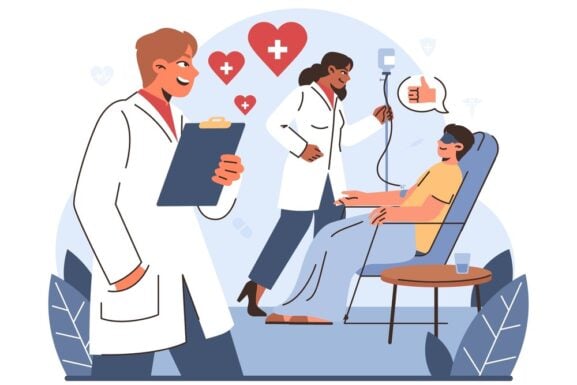
Each received a single 40 minute intravenous infusion. Half got ketamine at 0.5 mg/kg. Half got midazolam, a sedative chosen because it produces a similar drowsy feeling without ketamine’s antidepressant mechanism. That comparison is what makes the design useful.
Why Morning Cortisol
Cortisol follows a daily rhythm. It rises sharply in the first half hour after waking, which is why researchers sampled saliva at waking and 30 minutes later. Other biological markers are getting the same scrutiny, including immune signals that track with depression relief. Ketamine has since been tested in a population clinics usually screen out, in a midazolam-controlled trial in bipolar depression.
They took those samples before treatment and again 24 hours afterward. The ketamine group showed a larger morning rise at the 24 hour mark.
The Part Worth Reading Carefully
The correlation with reduced suicidal thinking was real but modest. The researchers were explicit that it was not strong enough to establish that cortisol changes drive ketamine’s effect.
Something may be going on beneath both, and this study cannot say what. The team framed the question as open rather than answered.
An Unexpected Split
One result stands out. The cortisol increase tracked with changes in suicidal thinking but showed no relationship to overall depression severity.
That distinction matters. It supports a growing view that ketamine’s effect on suicidal thoughts may run partly separate from its effect on mood. Other recent work suggests ketamine acts on more than one brain system at once.
What This Does Not Mean
A moderate morning cortisol rise is not the same as being stressed. The researchers propose the opposite reading, that a temporary bump may help reset the stress response system and give patients more capacity to handle distress.
That remains a hypothesis. Nothing here changes how ketamine is dosed or scheduled, and patients should not expect to feel a cortisol effect. If you are preparing for treatment, our patient guide to a first infusion covers what actually happens in the room.
Do you work in the ketamine industry? Save thousands on supplies, insurance and compliance costs by joining the first GPO built for ketamine clinics. There is no cost to join and zero obligation. Sign up here.