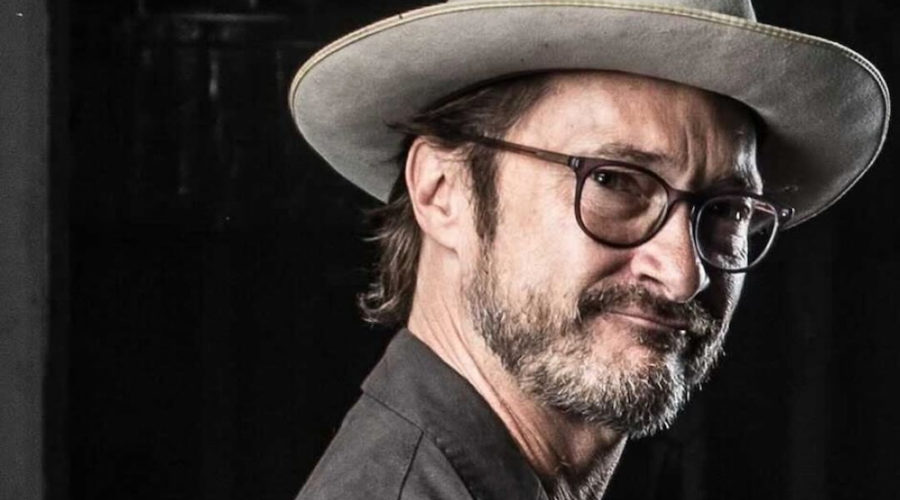
Mike Wilson: Gaming’s Medicinal Madman
Mike Wilson is on the road today. He’s barreling along the I-5, towards Los Angeles. He’s got two dogs in the car, a tank full of gas, and mad ideas.
Mike isn’t 50. (He will be, soon.) But Mike is retired. Rather, he was retired until recently. He has lived a thousand lifetimes in the video game business, making games that you, likely, have devoted hundreds of hours towards. As a young Texan in the mid 90’s, Mike worked at iD software during the halcyon doom days.
But his greatest success came decades later at Devolver Digital. His company made a killing by publishing indie giants like Hotline Miami, Downwell, and Genital Jousting, to name just a few. (Google it, if you like.)
Mike cashed out of Devolver a couple years back and planned to prop his feet up at the beach. Then, out of the blue, Mike and another restless, retired colleague founded Deepwell DTx — a company that wants the world to understand the therapeutic benefits of playing video games. Imagine that: Instead of 100 mgs of Prozac, your doctor says, “Play 10 games of Pac-Man and call me in the morning.”
RELATED: Veterans Affairs to Fund $1.5M Study on MDMA Therapy for PTSD and Alcohol Use
He has also been, well, transparent about his intake of copious amounts of psychedelics over the years, including LSD, psilocybin, and ayahuasca. He believes in these medicines. And he’s tickled that the rest of the world is coming around, finally, to see what he has always seen.
RELATED: A Guide To Vancouver’s Magic Mushroom Dispensaries
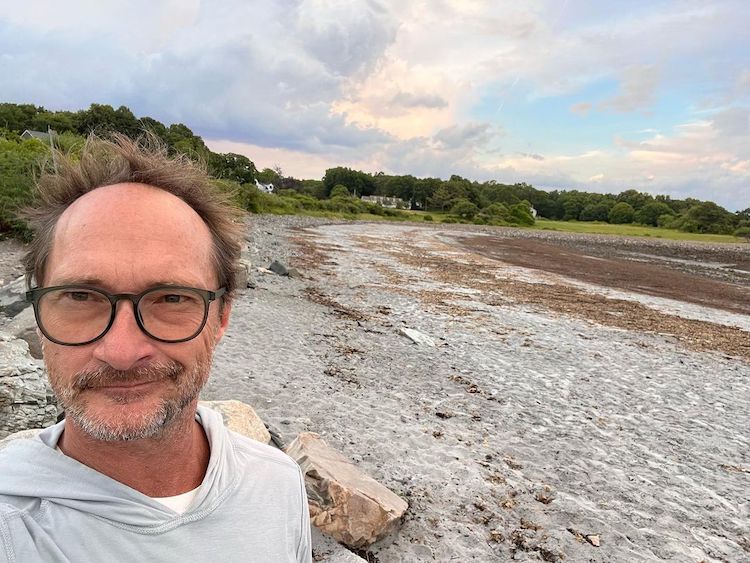
Mike Wilson (MW): Well. Here we are, Scotty. One on one, driving down the I-5…
Scott Jones (SJ; on the phone]: Are you OK talking openly about this stuff? On the record?
MW: Jesus, yes. I’m very publicly an advocate for psychedelic assisted therapies. And I have been for a long time. People like you always want to talk to me about them. Why? Because I’m the ONLY asshole that they’ve seen publicly talking about them. [LAUGHS]
SJ: Can you tell me when you used them for the first time? And at what point did you realize that there’s therapeutic value in these practices?
MW: Well. I wouldn’t have used the words ‘therapeutic value’ back in my 20s. [LAUGHS] When I discovered LSD I certainly realized that it had changed my perception quite a bit. It had opened some channels that I did not know were there. And so I used LSD in that way. You know. And for, well, enjoying nature more, let’s say. And I’ve been connecting with my friends that did that, much more, ever since. In my early 20s, let’s just say that I did it A LOT. And then, as time went on, less and less of my cohort were up for taking 10 to 12 hour hallucinogenic trips. [LAUGHS] I get to my 30s, and I’m taking mushrooms in a park — just for fun. I certainly wasn’t like, Oh this is gonna help me work through my shit or anything like that.
I really didn’t know that I had so much shit to work through — not until I had my first bout with clinical, crippling depression. When I was 31 or 32.
I didn’t know you had depression…
MW: I didn’t either. Until I did. It runs in my family. Then, five years ago, my sister checked herself out. [She committed suicide.] Because of depression. And she was super high functioning. She had a PhD in psychology. She was a professor, a traveling lecturer — all that. But she did all that despite the fact that she had all sorts of mental health issues. Her whole life. I didn’t really know that, either. Because my family didn’t talk about it. She’d been dealing with this stuff her whole life.
Ever since then, I’ve been super interested in the subject matter. Then I started becoming aware of psychedelics’ potential to be a breakthrough therapy about 10 years ago, I guess. I had my first experience with ayahuasca in 2012. And that’s the [drug] that left no room for doubt, as far as these [drugs] being here for a reason.
I went to my first retreat in my early 30’s. [And] honestly? I was just looking to get super high. My buddy, who I had done a lot of acid with, said, “This is way stronger, and I don’t know how to describe to you just how different it is.”
So I was like, LET’S GO. And I just went there, kind of in my ego, thinking, Aw, I can handle this. Let’s get high!
And I got humbled, man! [LAUGHS] By the power of that medicine! And for the first time, I got a peek into what else is here with us — all the time — that we don’t see.
Then I did [ayahuasca] again six months after that. And that one was the one that kind of rewired me. Made me understand that our culture, at the core, is based almost entirely on fear-based religions. Which was my idea of spirituality before [ayahuasca].
How often do you do it now?
MW: I do [ayahuasca] twice a year now. Two weekends a year. As a sort of tune up. A spiritual, emotional tune-up! To make sure that I’m remembering all the things that I’ve learned from it. And since then, I’ve been able to, you know, help a lot of friends have similar breakthroughs. And that’s super satisfying to me.
How do you decide, of these drugs, what to do? Does [your spirit pharmacist] help you figure that out?
MW: [LAUGHS] Uh, no. I’m pretty experienced with all three medicines at this point.
I’ve actually never done a guided session like you did. With the mushrooms. I’ve done one that was sort of self-guided, in my backyard, when I was feeling a bit lost. It was really beneficial for me. Once you learn to work with any of those medicines in an intentional way, I think you can kind of do it yourself. It’s really just humbling yourself and being open to what comes.
Humbling…?
MW: It’s pretty fucking humbling when you realize the incredible duality of our insignificance and yet our infinite natures. To accept both those things at the same time? Man, that’s humbling.
I took five buddies with me to that first ayahuasca trip. None of us knew what the hell we were talking about… Looking back, it would have been a hilarious buddy road trip movie. All of us were completely ignorant! But one buddy, he had it all worked out, scientifically speaking.
“Oh, this is what’s gonna happen to our brains, dut dut dut dut.”
He’s a pretty smart guy. He usually talks a lot. But after the medicine, he didn’t speak for almost two weeks AT ALL. Because he had been so humbled! He became aware of his own ignorance. ALL of our ignorance, you know. Until you know something, you don’t.
That sounds pretty profound.
MW: I mean, so much of the human experience right now is wrapped up in neuroses and anxiety and, well, being small. For me, for the experience I had, ‘humbling’ is the right word for it, man. There is such grandeur in our own minds, in our own beings, that we’ve completely lost touch with.
A friend of mine was sharing that becoming aware of our insignificance — our tininess, in the scope of the universe — actually made life easier for him. I was like, ‘Sure, yeah you’re insignificant, but also just the DNA in your one little body could reach across the solar system and back… If it’s uncoiled and stretched out!‘
So how insignificant are you, really? How tiny are you? And how limitless is the universe inside your stupid little meat package, really? A lot of the lessons [on medicines] are that. It’s like, yes, we are nothing. But we are also everything, too. There are a series of contradictions that feel inherent in these practices, for sure.
Tell me more about your experience. If you can…
It was four days. Thursday to Sunday. Guided plant medicine journey with this couple on Vancouver Island. They were super booked up for the longest goddamned time. I had to be patient. But I was really anxious, too. And I was ready and just… so desperate to have this experience. And the couple said, ‘we’re sorry, you just have to wait your turn.‘
That was frustrating. But, looking back now, it was almost like a weird test on their part. I needed to learn how to be patient. I needed to wait for MY TIME.
MW: That’s right. Even though I’ve been working with these medicines for a long time, when I go to my retreats, I still have my Ego Stories in my head. About being annoyed with this aspect or that, about this person, or these things. And there is always a laugh at myself right in the middle of the experience.
“Just keep going, buddy,” I say to myself. “You are SO CLOSE to not being an asshole…” [LAUGHS]. “Just don’t be an asshole!”
I’ve been getting sick all my life. Stroke. Allergies. Lost one of my testicles. I suffered a detached retina during COVID. Out of the blue, I lost vision in my right eye. I had an operation in Toronto to reattach the retina. An operation called a vitrectomy. That was the moment for me. I knew that I needed to do something to address a kind of corruption or chaos inside myself. That something is so wrong with me. My heart has been sick! I’m losing my vision! I needed to do something. I needed to change myself, on a core level.
So, I got connected with this couple on the Island…And that experience really took my head off. I will never forget that. That I was able to see my whole life from a different point of view. You know what I mean?
MW: It’s exactly that. It is a different point of view; a different perspective. From the other side, it’s like, ‘Oh there it is, I SEE NOW.‘ Literally, the medicine lets you look behind the curtain.
I have come to believe that the healing we do now is in this infinite mess of DNA in the human body. You are doing it for you, but I believe that you are also doing it for your entire ancestry. And your family. Anything that’s unresolved like [what you went through], or any traumas, I believe that everybody shares that DNA, collectively. So… Thank you for your work, sir. [LAUGHS]
It did feel like there was a profound discovery. And it didn’t feel like it was just for me… It did feel like I was doing it for all of humanity.
MW: That’s part of the reason that when I go now, I don’t need quite the ass-kicking that I got 10 years ago. I’m still fine tuning. But I’m also just continuing to do that work for my family, for my friends that are present in those circles…
The reason so many of my friends are interested [in psychedelics] is NOT because I go around evangelizing; it’s because most of my friends noticed a change in me when I first started working with the medicine. And in my family, too. So they inevitably start asking me questions…
— Mike Wilson
I want other people to have that opportunity. Maybe it can benefit them in the same way. So it’s hundreds of people I’ve helped. I do consider it part of my life’s work, spreading the news…
And, honestly, that’s where I was headed with all this VR stuff and digital therapeutics. I did it to help [the plant medicine] movement. Then I realized that staying away from pharmaceuticals [Note: people need to abstain from antidepressants prior to the intake of any plant medicines] and the need for, you know, two therapists to be present for a six to eight hour guided journey? Those are bottlenecks. In 10 years the digital stuff is going to be pretty close to being just as powerful. And we can reach people all over the world. Using something [i.e., games] that’s not illegal. And that’s not risky. So that’s kind of how I ended up here, with Deepwell. It’s an extension of wanting to help people find ways to turn off the noise and give them that new perspective.
That’s really beautiful.
MW: That’s really all it is… We’re looking at the same thing, man. Just in a different way.
This feels like a moment, Mike. Right now. Things are happening. Even starting Deepwell. People are consciously moving in a new direction. That we haven’t moved in before, certainly not recently. Maybe we moved in this direction 50 years ago. Do you think it’s part of the time we’re living in, that life is more difficult now? What’s changed?
MW: I fantasize all the time about if Nixon and the government hadn’t shut this research down 50 years ago, how many people could have benefited by now.
But it’s also a reminder that the government could make it really hard for people to keep doing this work at ANY POINT. Like I can’t believe that psychedelics haven’t been politicized again. Because it sure is a scary thing for people to realize that they have power, too.
Thank goodness that [the meds] are doing such wonderful work with veterans. I think that’s the only thing that saved it, politically speaking. They need people to be HAPPY ENOUGH. They need people to be OK. In order for the Machine that they’ve built to continue to operate…
Life seems really fucking hard right now.
MW: On paper, it’s not. On paper, it’s easy. Easier than it has been for previous generations. But there’s something wrong. We are working jobs that barely make any sense! Or, really, mean anything at all. It’s pretty hard right now to have a sense of purpose. And that’s what people really want.
You can’t just say you wanna be happy because being happy all the time is impossible, literally lose the benefit when you are, if you were never sad…
It’s subjective too…
MW: Yeah. Having a tangible purpose. Having a reason for being. That’s something that we all crave. And that purpose could be as simple as being of service in your community, or your family, or your friends, or in your job, or whatever it is. In our society, we don’t put very much importance on that. Instead, it’s just make as much money as you can, then spend as much money as you can. [LAUGHS]
A lot of people are hopelessly disconnected. The other day, and I feel lousy for bringing this up, I was thinking about the mass shootings. It’s men. Usually white men. The fuck is our problem? You know? What is it about ourselves that we’re so unhappy with? I keep trying to fit the square peg of therapeutics into the round hole… There’s a gap that we’re not looking at clearly. Instead, we’re jumping from mass shooting to mass shooting.
I was bullied a lot. And I remember what that feels like. That’s when you are in the thick of it, and you are being fucked with every day in a place where you have no choice but to go to [i.e. school] every day, being made to feel like a piece of shit, by your peers. That’s about as powerful as any human experience I’ve had. And so when you know it’s possible to exact some fucking revenge? For a day? These guys don’t care if they live or die anyway. So many people don’t have a reason to want to stay alive…
I think that’s the real challenge. What keeps you strong enough to keep coming back? What the fuck am I even doing here? Why should I get out of bed…You know?”
Let’s get off this topic. Talk about something more positive. For somebody who is starting a new company — Deepwell DTx — give me your most optimistic view of the future.
Mike Wilson: A shit-ton of people are having these kinds of conversations that you and I are having — right now. That’s a brand new thing for humanity. A lot of people are learning that there are different medicines for them, different paths to walk. And I feel like a lot of people have had an awakening. That’s why nobody wants to work shitty jobs for shitty money anymore. That’s why we can’t hire teachers, can’t hire health care workers, and nobody wants to work. I mean, for the record, NO ONE EVER wanted to work. [LAUGHS] But now, it seems so silly, to spend your life like that.
I think about the yin and yang a lot. And what I think is this: whenever there is this much darkness in the world, there is this much LIGHT — by rule. And I feel like there are a lot of awakenings happening, man. At some point, hopefully we reach a tipping point and people learn to treat one another better. Through these conversations and being more curious when their neighbor is hurting. Instead of feeling fearful of their neighbor, because they’ve been programmed to [be afraid]. This whole you-have-to-lose-for-me-to-win mentality is toxic.
There’s more hope in my heart after the medicine experience that I had earlier this year. I see the world differently now. I don’t know if that’s related to the medicine or I’m changing as a human. But I’m moving more towards being the kind of human being I should have been all along…
MW: Aging is a beautiful process in which you become the person you were meant to be all along. That’s a David Bowie quote.
You’ve been out in the open about medicines for a long time. If Mike’s ever going to have a moment when Mike Wilson is needed in the world, it’s now.
MW: And I would challenge you to do the same! You being new to it is perhaps more compelling than hearing me say, ‘Oh, I’ve done psychedelics hundreds of times.’ Because people just go, ‘Well, Mike’s crazy.’
As somebody that’s new to it, I would challenge you to be just as open and have as many conversations with people who you love as you can. How To Change Your Mind [Michael Pollan’s book; now a Netflix show] is massive for this movement. But in our culture, a book can only be so massive… I’m glad that it’s a TV series now. More people are getting curious, and having talks. Access is getting easier. I saw in Vancouver there’s storefronts offering mushrooms.
It’s not legal here in Canada. So I’m not sure what goes on in there…
MW: It’s the same thing they were doing with cannabis, before it was legal. There were already dispensaries, right?
There were.
MW: They’re just trying to invite the conversation, I think. Maybe they’re having conversations with the government. And they have no reason to be afraid. Because if the government was really worried about mushrooms they would be shut down pretty fast.
I don’t think they are worried.
MW: No, I don’t think they are, either. Legally, you can, in fact, use [mushrooms] for palliative care, in Canada. For removing the fear of dying, for somebody who is terminal. That’s one of the most powerful things the medicine can do. And one of the biggest lessons that I got from it. I have no fear, at all, of dying. Sure, there’s still sadness around how sad people will be. But I know now that this is not the end of the road. And I just want to be as good as I can be, while I’m here. For the benefit of those around me.
Wow. There is a fearlessness that you get from the medicine…
MW: You realize that you are infinite. And that what you see, on this ball of dirt we are on, is just… just another arrangement of molecules and energy. None of it’s real. When you know that everything’s gonna be OK? Even if you die? [LAUGHS] You loosen up a little bit, let me tell you.
Scott C. Jones is a writer and TV host based in Vancouver, BC. He’s the host of Heavily Pixelated, which you can find on iTunes.