Compounded Semaglutide vs. Wegovy and Ozempic: 2026 Comparison
Compounded semaglutide and brand-name Wegovy or Ozempic deliver the same active ingredient. The differences come down to regulation, cost, and how you access them. Here is the honest 2026 comparison — what each one is, what each one costs, and which one fits which kind of patient.
Doctor-prescribed GLP-1s — delivered to your home
Get doctor-prescribed GLP-1s shipped straight to your door — no insurance needed, from $199/mo.
SkinnyRx pairs prescription GLP-1 medication with clinician-guided care: compounded semaglutide from $199/mo, or tirzepatide from $299/mo as a once-weekly injection or once-daily tablet. Online assessment, licensed provider review, free shipping, cancel anytime — FSA/HSA eligible.
Check If I Qualify →Provider consultation required. HealingMaps may earn a commission through this link — it doesn’t change your price. Compounded medications are not FDA-approved finished products; eligibility is determined by SkinnyRx’s licensed providers. 90-day money-back guarantee per SkinnyRx terms.
The Short Answer
Wegovy and Ozempic are FDA-approved versions of semaglutide manufactured by Novo Nordisk. Compounded semaglutide is the same molecule prepared by 503A compounding pharmacies under prescription. The active ingredient is the same. The price gap is roughly 5-to-1 in favor of compounded. The trade-off is regulatory pathway and standardization.
| Wegovy / Ozempic | Compounded Semaglutide | |
|---|---|---|
| Active ingredient | Semaglutide | Semaglutide |
| Manufacturer | Novo Nordisk (FDA-registered) | 503A compounding pharmacy (state board regulated) |
| FDA approval | Yes — specific indications | No FDA approval; legal under 503A compounding rules |
| Typical cost (cash) | $199–$499 / month via NovoCare self-pay; $968–$1,349 at pharmacy retail | $199–$400 / month |
| Insurance covered | Sometimes (varies by plan, requires prior auth) | Not insurance-eligible (cash pay only) |
| Access path | Doctor → pharmacy → insurance/cash | Telehealth or local clinic → compounding pharmacy → cash |
| Dose flexibility | Fixed pen doses | Customizable; provider-prescribed |
What Is Semaglutide?
Semaglutide is a GLP-1 receptor agonist. It mimics the natural hormone glucagon-like peptide-1, which the body releases after eating. The drug slows gastric emptying, increases feelings of fullness, and improves the body’s insulin response. Patients on semaglutide consistently eat less and lose weight without willpower-level effort.
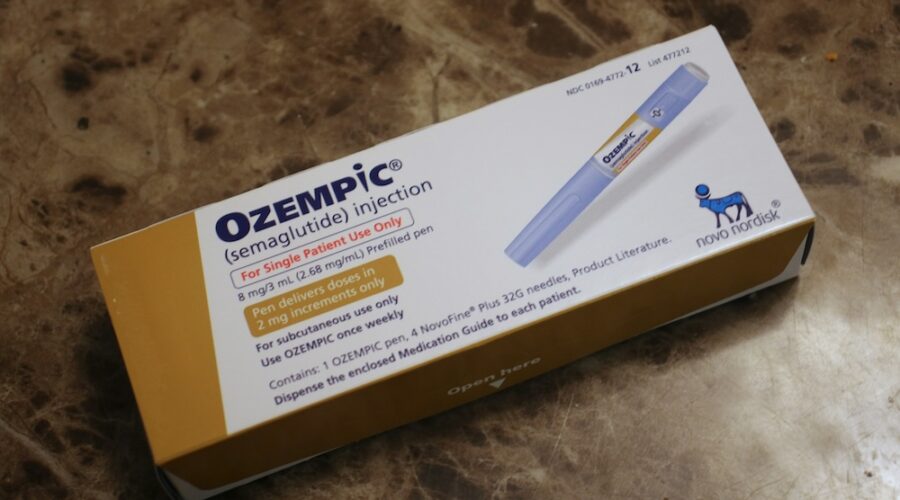
Novo Nordisk first developed semaglutide for type 2 diabetes (Ozempic, FDA-approved 2017) and later for chronic weight management (Wegovy, 2021). The molecule is identical across both products — the differences are dosing schedule and approved indication, not chemistry.
Wegovy and Ozempic: The Brand-Name Path
Both are FDA-approved injectable forms of semaglutide manufactured at Novo Nordisk facilities under FDA oversight.
- Ozempic is approved for type 2 diabetes. Doses range from 0.25 mg to 2 mg per week.
- Wegovy is approved for chronic weight management in adults with BMI ≥ 27 (with comorbidities) or BMI ≥ 30. Doses go up to 2.4 mg per week.
Cash retail prices in 2026 sit around $968/month for Ozempic and $1,349/month for Wegovy. Novo Nordisk now sells both direct to cash-pay patients through NovoCare Pharmacy for far less. Standard doses run $349/month ($499 for 2 mg Ozempic, $399 for 7.2 mg Wegovy), and new patients pay $199/month for their first two fills through December 2026. Insurance coverage is plan-dependent. Type 2 diabetes coverage under Ozempic is reasonably common; weight loss coverage under Wegovy is far less consistent. Many commercial plans require prior authorization, BMI documentation, and proof of comorbidities. Medicare Part D coverage varies by plan and state. Medicaid coverage is also state-dependent.
Both drugs spent 2022–2024 on the FDA drug shortage list. Novo Nordisk has scaled production, and the FDA officially removed semaglutide from the shortage list in February 2025. That removal had a major downstream effect on the compounded semaglutide market.
What Is Compounded Semaglutide?
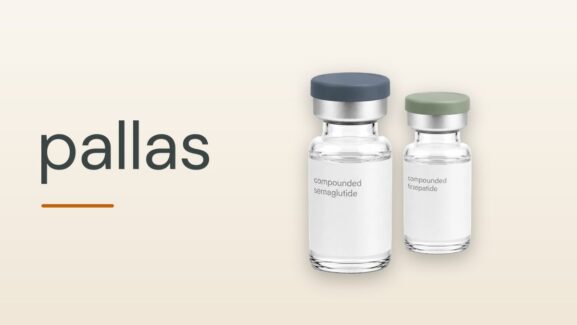
Compounded semaglutide is the same active ingredient prepared by 503A compounding pharmacies. Section 503A of the Federal Food, Drug, and Cosmetic Act allows licensed pharmacies to compound prescription medications when those medications are unavailable from the manufacturer (e.g., on FDA’s shortage list) or when a patient needs a customized formulation that the commercial product cannot provide (such as a different concentration, an additive like B12, or an allergen-free form).
From 2022 through early 2025, compounded semaglutide grew explosively because brand semaglutide was on the FDA shortage list. Telehealth platforms and local peptide clinics dispensed compounded semaglutide widely under the shortage exemption. With the shortage now resolved, the legal framework has narrowed: compounding continues under specific medical-need exemptions (custom doses, B12 combinations, allergy considerations), and compounding pharmacies must source the active ingredient from FDA-registered API suppliers.
The FDA Pharmacy Compounding Advisory Committee will review several peptides for permanent inclusion on the Section 503A Bulk Drug Substances List in July 2026. That review will not directly affect semaglutide’s status (it is already approved as a brand drug), but it signals the regulatory direction for the broader compounded-peptide market.
Cost Comparison: Real 2026 Numbers
The cost gap is the headline difference. A patient paying cash for Wegovy will pay roughly $16,000 per year. A patient on compounded semaglutide will pay $2,400–$4,800 per year. The cost gap shrinks if insurance covers Wegovy at, say, $25/month copay — in that scenario brand becomes cheaper than compounded. The math depends entirely on insurance coverage.
| Scenario | Wegovy/Ozempic | Compounded Semaglutide |
|---|---|---|
| Insurance with low copay | $25–$50/month | $199–$400/month (no coverage) |
| Insurance with high copay | $300–$500/month | $199–$400/month |
| No insurance / cash pay | $349–$499/month via NovoCare; $968–$1,349 retail | $199–$400/month |
| Online (telehealth) | Same as cash, plus consult fee | Often $179–$249/month with promo |
Efficacy: Are They Actually the Same?
The active molecule is the same, so the mechanism is the same. Where the comparison gets honest: brand-name semaglutide has been studied in large randomized controlled trials. Compounded semaglutide has not. Patients receiving compounded versions are extrapolating clinical evidence from STEP-1 (Wegovy’s pivotal trial), which showed average weight loss of 14.9% over 68 weeks at the 2.4 mg dose.
In real-world practice, reputable compounding pharmacies prepare semaglutide at the same concentrations and dose ramps as the brand. Patient outcomes — in the limited published case series and clinic-level data — are broadly similar to brand outcomes. The variance comes from individual pharmacy quality, dose customization, and provider expertise. A licensed clinician working with a USP 797–compliant 503A pharmacy can reasonably expect outcomes in the same ballpark as brand semaglutide.
Safety and Quality Considerations
Brand-name semaglutide is manufactured under FDA oversight at Novo Nordisk facilities. Every batch is tested, every dose standardized. That is the gold standard.
Compounded semaglutide quality varies by pharmacy. The legitimate path: 503A pharmacies operating under state board of pharmacy oversight, sourcing API from FDA-registered facilities, following USP 797 sterile compounding standards, and producing certificates of analysis on request. Patients should verify these credentials before starting. Online “research peptides” sold without prescription are a separate market entirely and carry real risk of contamination, dose variance, or counterfeit material.
Side effect profiles are similar between brand and compounded: gastrointestinal effects (nausea, constipation, diarrhea) are the most common, especially during dose escalation. Serious adverse events (pancreatitis, gallbladder issues, hypoglycemia in diabetic patients) are documented in trials and apply to both forms.
Who Should Choose Which?
Choose brand-name (Wegovy or Ozempic) if:
- Your insurance covers it with a manageable copay
- You qualify for the FDA-approved indication (BMI threshold, T2D diagnosis)
- You prefer the standardization of FDA-registered manufacturing
- You want supporting clinical evidence directly applicable to what you are taking
Consider compounded semaglutide if:
- You are paying cash or your insurance does not cover Wegovy
- You do not meet the FDA-approved BMI thresholds but want to start GLP-1 therapy under medical supervision
- You need a customized formulation (B12 combination, dose customization, allergen-free)
- Your physician has worked with reputable compounding pharmacies and can verify quality
How to Access Each
Brand: Doctor visit (primary care, endocrinologist, or weight-management specialist) → prescription → pharmacy fill → insurance prior authorization or cash pay. Expect 1–3 weeks for prior auth review.
Compounded via local peptide clinic: Find a licensed clinician in your area — our peptide therapy directory lists verified clinics. Initial consultation, labs, and prescription. Cash pay only.
Compounded via telehealth: Online platforms like ShedRx run a 5-minute health questionnaire, route to a licensed clinician, and ship from a partner 503A pharmacy. No appointment required. Typically the cheapest path.
Tablet, Sublingual, or Injection? Picking a Compounded GLP-1 Format
Most compounded GLP-1 is sold as a weekly injectable — that’s how the brand versions (Ozempic, Wegovy, Mounjaro, Zepbound) work, and it’s how most compounding pharmacies dispense it. But for the substantial number of patients who would never start a GLP-1 because of needle aversion, there are now legitimate non-injection options.
The needle-free formats currently available through 503A compounding telehealth:
- Compounded semaglutide tablets — daily oral dose. Typical pricing: /month (vs – for the injectable version).
- Sublingual semaglutide drops — placed under the tongue daily. Typical pricing: /month.
- Compounded tirzepatide tablets — the rarest format. Currently available through SkinnyRx at $299/month. No other major telehealth platform offers oral tirzepatide as of 2026.
There are real trade-offs. Bioavailability differs across formats. Subcutaneous injection delivers the highest dose of active medication into the bloodstream. Tablets and sublingual formats lose some active ingredient to first-pass metabolism or buccal absorption variability. Compounding pharmacies adjust dosing to compensate, but the clinical literature on oral compounded GLP-1 efficacy is thinner than for the injectable forms.
For most patients, the question isn’t “which format is most pharmacologically efficient.” It’s “which format will I actually take, every week, for months?” A patient who refuses to inject themselves and skips the injection altogether gets zero benefit from semaglutide’s higher bioavailability. A patient who takes a daily tablet consistently for six months gets meaningful weight loss even at slightly lower absorption.
HealingMaps may earn a commission when readers sign up through SkinnyRx. Compounded GLP-1 medications are not FDA-approved finished products; eligibility is determined by a licensed clinician.
Frequently Asked Questions
Is compounded semaglutide as effective as Wegovy?
The active molecule is identical, so the mechanism is the same. Reputable 503A pharmacies prepare it at the same concentrations as the brand. Real-world outcomes from licensed clinics are broadly similar. The caveat: large randomized controlled trial data exists for brand semaglutide, not for compounded versions specifically.
Is compounded semaglutide legal in 2026?
Yes, when prescribed by a licensed clinician for a legitimate medical reason and prepared by a 503A compounding pharmacy. The FDA shortage exemption that broadly covered compounding from 2022–2024 has narrowed since semaglutide was removed from the shortage list. Compounding continues under specific medical-need exemptions.
Can I switch from Wegovy to compounded semaglutide?
Yes, with your prescriber’s guidance. Many patients switch when insurance coverage lapses or when they want to lower out-of-pocket cost. Maintain the same dose level and continue routine monitoring.
How do I know I am getting real semaglutide and not a counterfeit?
Use a licensed prescriber and a state-licensed 503A pharmacy. Ask for a certificate of analysis, verify the pharmacy’s state license, confirm USP 797 compliance, and confirm that the API was sourced from an FDA-registered facility. Avoid “research chemicals” sold without prescription.
Doctor-prescribed GLP-1s — delivered to your home
Get doctor-prescribed GLP-1s shipped straight to your door — no insurance needed, from $199/mo.
SkinnyRx pairs prescription GLP-1 medication with clinician-guided care: compounded semaglutide from $199/mo, or tirzepatide from $299/mo as a once-weekly injection or once-daily tablet. Online assessment, licensed provider review, free shipping, cancel anytime — FSA/HSA eligible.
Check If I Qualify →Provider consultation required. HealingMaps may earn a commission through this link — it doesn’t change your price. Compounded medications are not FDA-approved finished products; eligibility is determined by SkinnyRx’s licensed providers. 90-day money-back guarantee per SkinnyRx terms.
The Bottom Line
Brand-name and compounded semaglutide deliver the same active ingredient through different regulatory pathways. The choice depends on your insurance situation, your tolerance for the brand vs. compounded distinction, and the credibility of the prescriber and pharmacy involved. Both can produce real weight loss when used correctly under medical supervision. Neither is a shortcut around the underlying lifestyle work that makes GLP-1 therapy sustainable.
For broader context on peptide therapy, see our complete guide to peptide treatments. To compare semaglutide against tirzepatide (the next-generation dual-action peptide), see our Semaglutide vs. Tirzepatide comparison. To compare actual telehealth providers offering compounded semaglutide, see our 2026 GLP-1 telehealth programs comparison.