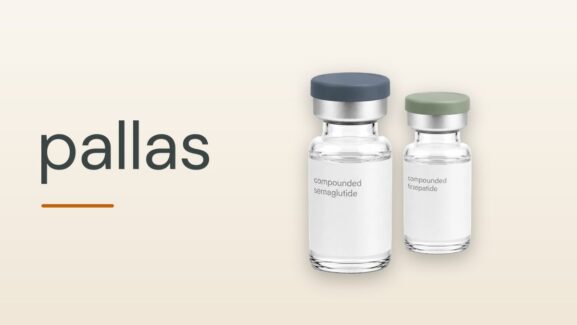
Are Compounded GLP-1s Legit? The 2026 Buyer’s Guide
The compounded GLP-1 market grew from a niche workaround during the 2022–2024 brand drug shortages into a multi-billion dollar telehealth segment. Patients reasonably ask: is this legit, or is it a workaround that could disappear? The honest answer is both. Compounded GLP-1 is legitimately legal under specific medical and regulatory rules, but the framework is narrower in 2026 than it was during the shortage years, and the variation between providers is real. Here is how to tell what you are actually getting.
Doctor-prescribed GLP-1s — delivered to your home
Get doctor-prescribed GLP-1s shipped straight to your door — no insurance needed, from $199/mo.
SkinnyRx pairs prescription GLP-1 medication with clinician-guided care: compounded semaglutide from $199/mo, or tirzepatide from $299/mo as a once-weekly injection or once-daily tablet. Online assessment, licensed provider review, free shipping, cancel anytime — FSA/HSA eligible.
Check If I Qualify →Provider consultation required. HealingMaps may earn a commission through this link — it doesn’t change your price. Compounded medications are not FDA-approved finished products; eligibility is determined by SkinnyRx’s licensed providers. 90-day money-back guarantee per SkinnyRx terms.
The Short Answer
Compounded GLP-1 (semaglutide or tirzepatide) prepared by a licensed 503A compounding pharmacy on a valid prescription from a licensed clinician is legal in 2026. The active ingredient is the same as the brand-name version. The medication is real. The legal basis is Section 503A of the Federal Food, Drug, and Cosmetic Act, which allows pharmacies to compound prescription medications under specific medical-need exemptions.
For the price side of the equation, see the cheapest GLP-1 programs online in 2026.
What is not legitimate: “research chemical” semaglutide or tirzepatide sold online without a prescription, peptides marketed for “not for human consumption,” vials shipped from overseas without state pharmacy oversight, and unlicensed sellers operating outside the 503A framework. Those products may contain real semaglutide, fake semaglutide, contaminated material, or wrong-dose preparations — you have no way to know.
The Legal Framework: Section 503A
Section 503A of the Federal Food, Drug, and Cosmetic Act creates a regulated pathway for licensed pharmacies to compound prescription medications. Compounding pharmacies operating under 503A are regulated by state boards of pharmacy and must follow specific rules:
- Compound only on a valid prescription for an individual patient
- Source active pharmaceutical ingredients (API) from FDA-registered facilities
- Follow USP 797 sterile compounding standards
- Limit to medications listed on FDA’s Bulks List or covered under specific exemptions (drug shortage list, medical-need customization)
- Submit to state board oversight, including inspection and quality reporting
Compounding pharmacies that meet these requirements are legitimate prescription pharmacies. They are not bootleggers. They have state licenses, NABP accreditation in many cases, and quality systems. The catch: the rules narrowed in 2025.
The 2025 Shortage-List Changes
From 2022 through 2024, FDA listed semaglutide and tirzepatide as in shortage. That triggered a broad legal exemption: 503A pharmacies could compound those drugs even without individual medical-need exemptions, because the brand was unavailable. That window powered the rapid growth of telehealth GLP-1 platforms.
FDA removed tirzepatide from the shortage list in October 2024 and semaglutide in February 2025. The shortage-based exemption ended. Compounding continues under different exemptions:
- Customized formulations: Adding B12, adjusting dose strengths not commercially available, providing allergen-free preparations
- Medical-need exemptions: Patient-specific reasons the brand product cannot be used (allergy, intolerance, dosing requirements)
- Patient access exceptions: Insurance non-coverage combined with documented medical need can support compounding for cash-pay patients in some state interpretations
Reputable compounding pharmacies and the telehealth platforms that work with them have restructured their patient-intake processes to document medical-need rationale on every prescription. Less reputable operations may not have done this. The compliance gap is widening.
503A vs. 503B: Two Compounding Categories
The Drug Quality and Security Act of 2013 created two compounding categories:
- 503A pharmacies compound on a per-prescription basis for individual patients. Regulated by state boards of pharmacy. The bulk of compounded GLP-1 dispensing happens here.
- 503B outsourcing facilities can compound in larger batches without patient-specific prescriptions, registered directly with FDA, and follow stricter manufacturing standards. They typically supply hospitals and clinics, not direct-to-patient.
Most patient-facing telehealth GLP-1 services route through 503A pharmacies. A 503B-sourced product would be more tightly regulated but also typically more expensive, and 503Bs do not currently produce semaglutide or tirzepatide at scale for patient prescriptions.
What to Verify Before You Buy
If you are considering a compounded GLP-1 prescription, verify these specifics. A legitimate provider will share each one without hesitation.
- Prescriber: Licensed clinician (MD, DO, NP, PA) with active state license. Verify on the state medical board website.
- Pharmacy state license: Confirm the pharmacy is licensed in your state. Check the state board of pharmacy website.
- USP 797 compliance: The pharmacy should follow USP 797 sterile compounding standards. Most legitimate pharmacies advertise this.
- API source: Active ingredient must come from an FDA-registered facility. Reputable pharmacies will share the source on request.
- Certificate of Analysis (CoA): Per-batch testing documentation. Available on request from legitimate pharmacies.
- Telehealth intake: Real medical consultation (not a 30-second checkbox form), required labs or health history, dose justification documented in the medical record.
Red Flags
The legitimate compounded GLP-1 market sits next to a much larger gray-market peptide market. The two are easy to confuse if you do not know what to look for.
- “Research peptides” or “not for human consumption” labeling. Sold without prescription, no FDA oversight, no state license, no quality testing. Real semaglutide may be in the bottle, but you have no way to verify potency, sterility, or purity.
- No prescription required. Legitimate compounded GLP-1 is a prescription medication. Any seller that does not require a prescription is operating outside the 503A framework.
- Overseas shipping. Compounding pharmacies are state-licensed and ship within the United States. Vials shipped from China, India, or other overseas markets bypass U.S. pharmacy regulation entirely.
- Suspiciously cheap. A monthly prescription typically runs $179–$499. Anything under $100/month for compounded GLP-1 is implausible at legitimate-pharmacy quality levels.
- 30-second intake form with no medical questions. Real telehealth requires a real medical evaluation. A health questionnaire that asks for nothing but credit card information is a red flag.
- No clinician name on the prescription. Every legitimate prescription is written by a named, licensed clinician. If your platform will not name the prescriber, that is a problem.
- Cash-only or crypto payment. Legitimate pharmacies process credit cards through standard merchant processors. Crypto-only or wire-only payment is a money-laundering pattern.
The 2026 Outlook: PCAC and the 503A Bulks List
FDA’s Pharmacy Compounding Advisory Committee will meet July 23-24, 2026 to evaluate seven peptides for permanent inclusion on the Section 503A Bulk Drug Substances List. Semaglutide and tirzepatide are not on the review docket (both are already FDA-approved as brand drugs), but the meeting will set the regulatory direction for the broader compounded peptide market. Read our full coverage.
Practical implications for compounded GLP-1: state boards of pharmacy and the FDA are paying closer attention to the entire 503A space. Reputable pharmacies will continue to operate. Less compliant operations are likely to face enforcement actions over the next 12–24 months. Patients should expect their providers to ask more medical questions and document more carefully than they did during the shortage years.
How Telehealth Platforms Differ from Local Clinics
Telehealth platforms like ShedRx, Eden, Ro, and Hims operate at scale: 5-minute intake forms, asynchronous prescriber review, partner 503A pharmacies, mail-order delivery. Cost is typically lower than local because of volume. Quality varies by platform — the largest platforms have invested in compliance infrastructure; smaller ones often have not.
Local peptide clinics typically charge more but offer in-person consultations, comprehensive labs, and a longer-term clinical relationship. Cash-pay pricing runs $300–$500/month plus consultation fees. The trade-off is access and accountability vs. cost.
Both can be legitimate paths. The verification checklist above applies equally. Our peptide therapy directory lists verified clinics if you prefer in-person care.
Tablet, Sublingual, or Injection? Picking a Compounded GLP-1 Format
Most compounded GLP-1 is sold as a weekly injectable — that’s how the brand versions (Ozempic, Wegovy, Mounjaro, Zepbound) work, and it’s how most compounding pharmacies dispense it. But for the substantial number of patients who would never start a GLP-1 because of needle aversion, there are now legitimate non-injection options.
The needle-free formats currently available through 503A compounding telehealth:
- Compounded semaglutide tablets — daily oral dose. Typical pricing: /month (vs – for the injectable version).
- Sublingual semaglutide drops — placed under the tongue daily. Typical pricing: /month.
- Compounded tirzepatide tablets — the rarest format. Currently available through SkinnyRx at $299/month. No other major telehealth platform offers oral tirzepatide as of 2026.
There are real trade-offs. Bioavailability differs across formats. Subcutaneous injection delivers the highest dose of active medication into the bloodstream. Tablets and sublingual formats lose some active ingredient to first-pass metabolism or buccal absorption variability. Compounding pharmacies adjust dosing to compensate, but the clinical literature on oral compounded GLP-1 efficacy is thinner than for the injectable forms.
For most patients, the question isn’t “which format is most pharmacologically efficient.” It’s “which format will I actually take, every week, for months?” A patient who refuses to inject themselves and skips the injection altogether gets zero benefit from semaglutide’s higher bioavailability. A patient who takes a daily tablet consistently for six months gets meaningful weight loss even at slightly lower absorption.
HealingMaps may earn a commission when readers sign up through SkinnyRx. Compounded GLP-1 medications are not FDA-approved finished products; eligibility is determined by a licensed clinician.
Frequently Asked Questions
Is compounded semaglutide actually semaglutide?
From a legitimate 503A pharmacy sourcing API from an FDA-registered facility, yes. The active ingredient is the same molecule as Wegovy or Ozempic. From gray-market sources, you cannot verify what you are actually getting.
Is it legal in my state?
Compounded GLP-1 prescribing follows federal Section 503A rules and state pharmacy practice. All 50 states allow 503A compounding. Some states (notably West Virginia, Mississippi, and Louisiana) have additional restrictions on telehealth prescribing. Reputable platforms only operate in states where they can comply.
Will my insurance cover it?
Compounded medications are typically not insurance-eligible. HSA and FSA funds are sometimes eligible with a letter of medical necessity. Cash pay is the norm.
What happens if my pharmacy gets investigated by the FDA?
Patients on legitimate prescriptions through compliant pharmacies are not at legal risk. If the pharmacy faces enforcement action, supply may be temporarily disrupted. Reputable platforms have backup pharmacy relationships for exactly this reason.
What about side effects and safety?
The pharmacological side effects (GI upset during dose escalation, rare risks of pancreatitis, gallbladder issues) are the same as brand drugs because the active ingredient is the same. Quality-related risks (contamination, dose variance) only apply to non-compliant pharmacies, which is why the verification checklist matters.
Doctor-prescribed GLP-1s — delivered to your home
Get doctor-prescribed GLP-1s shipped straight to your door — no insurance needed, from $199/mo.
SkinnyRx pairs prescription GLP-1 medication with clinician-guided care: compounded semaglutide from $199/mo, or tirzepatide from $299/mo as a once-weekly injection or once-daily tablet. Online assessment, licensed provider review, free shipping, cancel anytime — FSA/HSA eligible.
Check If I Qualify →Provider consultation required. HealingMaps may earn a commission through this link — it doesn’t change your price. Compounded medications are not FDA-approved finished products; eligibility is determined by SkinnyRx’s licensed providers. 90-day money-back guarantee per SkinnyRx terms.
The Bottom Line
Compounded GLP-1 is legitimate medicine when prescribed by a licensed clinician and prepared by a compliant 503A pharmacy. It is the same active ingredient as Wegovy or Zepbound at a fraction of the cost. The legal framework is real, the pharmacies are real, and the medication is real.
The legal framework also has limits. The shortage-based exemptions that powered the 2022–2024 boom have narrowed. Reputable providers have adapted; less compliant ones may face enforcement over the next 12–24 months. Patients should verify the prescriber, the pharmacy, the API source, and the intake process before starting any compounded GLP-1 prescription.
For specific drug comparisons, see our guides on compounded semaglutide vs. Wegovy/Ozempic and compounded tirzepatide vs. Mounjaro/Zepbound. For the broader peptide therapy landscape, see our complete guide to peptide therapy. To compare telehealth providers offering compounded semaglutide and tirzepatide, see our 2026 GLP-1 telehealth programs comparison.