
Psychedelics Won’t “Fix” You. Here’s What They Will Do
Last reviewed and updated: July 29, 2026.
Key Takeaways
| Not a one-time cure | Lasting benefit comes from the experience plus integration and ongoing support, not the substance alone. |
| What they actually do | Psychedelics temporarily raise neuroplasticity, loosen rigid thought patterns, and open a window of psychological flexibility. |
| The work is yours | Psychedelics can catalyze change and surface material, but the person still has to do the integration work. |
| The integration window | The roughly 24 to 72 hours after a session is when the brain is most adaptable and follow-up support matters most. |
| Expectations matter | Realistic expectations improve outcomes. Overselling a one-session cure sets up disappointment and can cause harm. |
Everyone wants to be fixed.
At least, that is why people often seek out Dr. Cheryl Tien’s therapeutic services. Dr. Tien is a ketamine preparation/integration therapist in San Francisco. Working in the great tech center of the world, she often has clients who expect their mental health problems to be fixed as easily as they might debug their computer code. Every problem must have a solution. There must be a way to control the situation. Of course they turn to ketamine for the answer. Studies seem to show ketamine helps depression. They think that if they could just manage to eat healthier or make it to the gym more often, then everything else would just fall into place.
This is rigid thinking. Fortunately, psychedelics have been scientifically proven to reduce rigid thinking.
If you were to ask Dr. Tien to fix you, she would say, “I can’t. I’m here to help you along your journey.”
RELATED: Study: Psilocybin Therapy Helps Post-Pandemic Frontline Clinicians
You Can’t Fix What Isn’t Broken: Why Psychedelics Won’t Fix You
Perhaps you want to be cured, too. Maybe that’s why psychedelics have piqued your interest. There are now stacks of studies saying psychedelic-assisted therapy can treat PTSD and depression. MDMA-assisted therapy is likely to be approved by the FDA soon.
But many psychedelic therapists say, surprisingly, that you can’t fix something that isn’t broken in the first place. You aren’t broken. You‘re just human. And psychedelics won’t fix you if you’re simply a human being a human.
Psychedelics can help. They’re famous for helping people grow. Not to turn them into flawless machines, but to shift your perspective on how you view your problems. They can help you rediscover what is truly important to you, which Dr. Tien says is important in overcoming mental health issues. Her clients often want an easy solution that will fix them, but she is more interested in helping them explore their human experiences.
RELATED: Ketamine is FDA-Approved to Treat Depression. Find a Clinic Near You
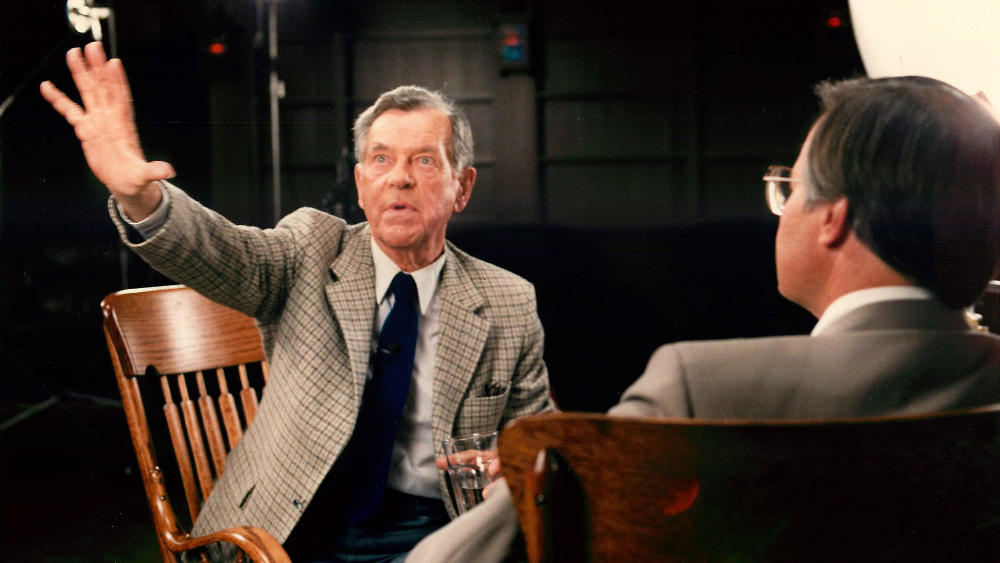
The Power of Myth
What exactly does it mean to be human? Let’s turn to an unexpected place to answer that question: myths.
Myths are the stories that form our beliefs as a society and as individuals. They offer us guidance through changes and troubles. In the book, The Power of Myth, late mythology expert Joseph Cambell speaks about how the lack of mythology in modern society leaves people without moral structure and guidance.
In an interview with Cambell, journalist Bill Moyers asked: “Perfection would be a bore, wouldn’t it?” Campbell said: “It would have to be. It would be inhuman. The umbilical point, the humanity, the thing that makes you human and not supernatural and immortal–that’s what’s lovable.”
If imperfections mean that you are broken, then every human on the face of this earth is broken. Instead, Campbell believed that imperfections are what make the human experience special.
Humans in myths always go through challenges. Most heroes reach a low point–a catabasis–a descent into the underworld of pain and death. Most of them rise out of the darkness. All our heroes grow and change.
This is precisely what Dr. Tien tries to help people understand.
READ: Mushroom-Testing Labs Find Huge Differences in Psilocybin and Other Compounds
‘Fix Me’ versus ‘Help Me Grow’: Knowing the Difference
Dr. Cheryl Tien helps people build awareness of the stories they tell themselves. Tien says it is important for people to build “distress tolerance.” During her 15 years in healthcare, she has noticed people with serious mental health issues often lack structured community and relationships. In other words, they lack the myths to help them navigate life. That’s why, psychedelics won’t fix you, at least on their own.
The myths of Western culture are in flux. Church services are under-attended; folks question the stories of their youths about deadly floods and lost paradises. Out with the bathwater went the baby; the myths that gave meaning to suffering. (“Your pain is a test from God.”) Without myths, it’s easy to feel adrift, un-anchored, alone.

Psychedelics Can Mark Transitions
For hundreds of years, people have been using psychedelics to facilitate growth through transitional periods. In West Africa, the Fang and Babongo people use Iboga to help people transition into new stages of life. In European-American cultures, people use psychedelics to help patients with terminal illnesses release their fear of transitioning from life to death. Into lives that feel meaningless, psychedelics offer us new myths.
READ: A Surprising Southern State Journeys from Opioids to Ibogaine
In many psychedelic circles, people meet a helper who can show them a new path: a teacher, trainer, integration coach, psychologist, psychiatrist, or shaman. Together, people often drop the old stories, and find new ones. The stories vary wildly, depending on the cultures. Here are a few stories: suffering is a matter of soul loss, or stuck energy, or an unneeded burden. Depending on the culture, health can be a question of listening to Nature, or connecting to the One, or retrieving your soul. In all these myths and stories, people regard the pain as just a waystation. Out of suffering, there’s a path, a way to put one foot in front of the other, which is typically healthier than sitting around doing nothing.
“The drugs are not the important bit,” said Dr. Ben Sessa, an expert in MDMA-assisted therapy. “In psychedelic-assisted therapy, we use the drugs to open the mind […] so patients can create their own bespoke, personalized care plans and show us what they need.”
RELATED: This is the World’s Most Powerful Mushroom
How Psychedelics and Mythology Can Help You Grow
Many of Dr. Cheryl Tien’s patients find that their “fix it” mindset disintegrates during their ketamine therapy sessions. Ketamine is strange. The drug “dissociates” you. It takes you away from your body, problems, pain, and myths for an hour or two.
The medicine certainly can’t fix all of life’s problems in a matter of a few hours. So, how does it work?
Ketamine and other psychedelics help reduce rigid thinking and offer new ways to look at life’s issues. They offer an open window of possibility. Imagine this visual offered by Tien.
Emotional struggles can be demonstrated as a large book on an empty bookshelf. Let’s take grief, for example. After losing someone or something special, That large book is the only thing that you see on the shelf. It is likely overwhelming. Over time, the bookshelf is filled with other books. The grief will always be there. However, as life goes on, your problems become less overwhelming.
This is an example of a shift in perception and awareness that psychedelics can help you accomplish. Anxiety and depression can be seen as fear of the unknown. Post-Partum depression: transitioning into motherhood. PTSD: transitioning out of a traumatic experience back into daily life.
To say that these issues need fixing would be to say that the natural events of life are problematic. Life is… Well, life!
You do not need to be fixed just from simply living life. However, growing and developing the myths that govern your life could help you better manage the struggles that you face.
READ: How Do You Treat PTSD with Ketamine? Clinicians Weigh In

Facing the Monsters: Why Psychedelics Won’t Fix You and Why It’s Okay
For over half a century in Western cultures, psychedelics have served as a tool to help people boost creativity, face challenges, and heal from trauma. They do this by forcing people to face their challenges instead of running from them. A great example of this can be found in How to Change Your Mind by Michael Pollan.
In preparation for his own psilocybin experience, Pollan’s guide warned him not to run away from any challenges that he faced during the trip. In other words, face the monsters in his head. Go into the underworld. Endure catabasis.
The How to Change Your Mind docuseries also highlights a Native American man who was able to overcome his alcohol addiction after a peyote ceremony in his community. He was struggling to be a good father and even take care of himself. The psychedelic medicine helped him find the strength and self-compassion to reclaim his life.
Psychedelics won’t fix you because you aren’t broken! Psychedelic medicines can help you learn to face your problems and either overcome them or accept them. With proper guidance and integration, they can help you manage fear and other emotions that may be causing you distress.
There is no guidebook for life, everyone is just doing their best. But, there is always room for improvement. Psychedelics can help you do just that!
Psychedelics can help you discover new ways to face challenges and identify areas of your life where you need to grow and improve. They can shift your focus so that you find more enjoyment and fulfillment in your life.
READ NEXT: Are Psychedelic Diagnoses Freeing Us? Or Caging Us?

99 Problems But a Fix Ain’t One
One more myth:
Once, a rich farmer came to Buddha seeking help. “Oh, Great Teacher!” he said. “My life is nothing but troubles. My wife lavishes attention on my daughter and not me. Change her heart so she loves me more.”
“I can’t fix that,” the Buddha said.
“My neighbor cut down a tree that gave me shade. Make him kinder.”
“Nothing I can do,” Buddha said.
“My employees won’t work past four. Find me better workers!”
“I can’t help you,” Buddha said. The man lost his patience. “How can you be the Enlightened One if you cannot help people resolve their problems?” he blurted.
The Buddha replied: “There will always be 83 problems troubling you. Occasionally, one problem will disappear, but it will be replaced by another one. I can’t change that.” Even more confused now, the man queried the Buddha: “So, is there any help you can give me?”
The Buddha answered: “I can help you be free of the 84th problem.”
“And what is that?” asked the man.
“The fact that you want to be rid of those 83 problems!” replied the Buddha.
What Psychedelics Really Do in 2026
Psychedelics are not a one-time fix. The strongest evidence shows lasting benefit comes from the experience combined with integration and often ongoing support. On their own, these substances do something narrower. They temporarily raise neuroplasticity, loosen rigid thought patterns through default mode network changes, and open a window of psychological flexibility. That window surfaces difficult material so you can process it.
The substance can catalyze change, but the person still does the work of integration. The roughly 24 to 72 hours after a session is a period of heightened neuroplasticity. During that window, reflection and follow-up support have the most impact. This helps explain why the same dose lifts one person and does little for another. Preparation and integration differ, so results differ too.
Overselling does real harm. A guaranteed one-session cure sets people up for disappointment, especially those already in crisis. Realistic expectations, careful screening, attention to set and setting, and integration turn a powerful experience into durable change. Clear expectation-setting is part of doing this safely, not a footnote to it.
Frequently Asked Questions
- Can a single psychedelic session cure depression?
- Not on its own. While some people feel dramatic relief quickly, the strongest evidence shows lasting benefit comes from the experience combined with integration and often ongoing support. Psychedelics can catalyze change, but a single session is rarely a permanent cure, and framing it that way sets up disappointment.
- What do psychedelics actually do to the brain?
- Psychedelics temporarily increase neuroplasticity and loosen rigid thought patterns, partly by changing activity in the default mode network. This opens a window of psychological flexibility that can surface difficult material and make new perspectives easier to adopt. The effect is a catalyst, not a fix by itself.
- Why does integration matter so much?
- Integration is how the insights from a psychedelic experience become lasting change. The roughly 24 to 72 hours after a session is a period of heightened brain plasticity, when reflection, therapy, and support have the most impact. Without integration, benefits often fade, which is why clinicians treat it as part of the treatment.
- Are psychedelics safe to use for personal growth?
- They can be, with the right preparation, but they are not casual wellness supplements. Contraindications apply, including a personal or family history of psychosis or bipolar disorder and certain medications. Realistic expectations, screening, set and setting, and integration are what make the experience safe and useful.