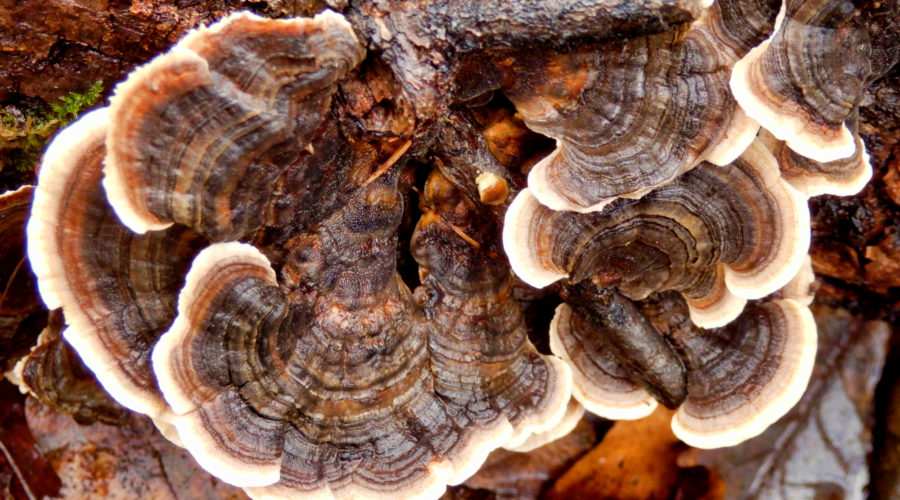
Turkey Tail Mushroom (Trametes Versicolor)
Last reviewed and updated: July 3, 2026.
Key Takeaways
| PSK/Krestin | Approved cancer adjunct in Japan since 1977; hundreds of clinical trials; mainstream Japanese oncology — not fringe; does not treat cancer, improves immune function during chemotherapy |
| Stamets/NIH trial | 2012: PSP improved NK cell and lymphocyte activity in breast cancer patients post-chemo; one of few mushroom compounds with NIH-funded human trial data |
| Gut microbiome | Increases Bifidobacterium/Lactobacillus; reduces Clostridiales; gut-immune axis provides second mechanistic route for immune support (2014 + 2021 studies) |
| Quality markers | Fruiting body extract required; verified beta-glucan content; avoid mycelium-on-grain products; third-party tested preferred |
| NOT psychedelic | No psilocybin; no psychoactive compounds; no altered states; pharmacologically nothing in common with psilocybin mushrooms |
The Turkey Tail mushroom (Trametes Versicolor) is a common polypore mushroom found all over the globe. A polypore is a type of fungus that produces large fruiting bodies with tubes or pores on the underside.
Versicolor means “of several colors” and reliably describes the variety of colors that Turkey Tail mushrooms display. The mushroom has earned the name “Turkey Tail” because its shape and multiple colors resemble those of a wild turkey. There is also a similar-looking mushroom, False Turkey Tail, which belongs to a different order. A further lookalike is the multicolor gill polypore.
The top surface of the Turkey Tail cap shows typical concentric zones of different colors, with the margin always being the lightest. Older specimens can have zones with green alga growing on them, thus making them appear green. The cap is flat, up to 8 x 5 x 0.15-1 cm in area. It is often triangular or round, with zones of fine hairs. The pore surface is whitish to light brown.
The Turkey Tail mushroom commonly grows in tiled layers or rows on logs and stumps of deciduous trees. The mushrooms are common in North America.
T. versicolor is a white-rot fungus that degrades lignin in wood. Lignin is a complex organic polymer found in the cell walls of plants, making them rigid and woody.
Turkey Tail mushrooms contain polysaccharides, which can offer a number of health benefits. Because of these benefits, T. versicolor is used in Traditional Chinese Medicine (TCM), as well as by people more broadly in the form of supplements.
In this comprehensive guide on T. versicolor, we’ll be covering:
- Turkey Tail mushroom benefits
- Side effects of Turkey Tail mushrooms
- How to grow Turkey Tail mushrooms
- Recipes
- Turkey Tail mushroom tea/coffee
- Turkey Tail mushroom powder
RELATED: What Is Kratom Tea Good For, And How Do You Make It?
Turkey Tail Mushroom Benefits
The most impressive benefit of the Turkey Tail mushroom is its ability to improve the health of your immune system, which it does in a variety of ways.
Antioxidants
Antioxidants are compounds that help to inhibit or reduce damage caused by oxidative stress. Oxidative stress occurs when there’s an imbalance between antioxidants and unstable molecules known as free radicals. This can result in cellular damage and chronic inflammation.
Moreover, this imbalance is linked to an increased risk of developing health conditions, such as certain cancers and heart disease.
However, you can minimize these risks by eating foods rich in antioxidants or supplementing with these compounds, helping to reduce oxidative stress and inflammation.
Turkey Tail mushrooms contain an array of antioxidants, including phenols and flavonoids. In fact, researchers in one study detected over 35 different phenolic compounds in a sample of Turkey Tail mushroom extract, along with the flavonoid antioxidants quercetin and baicalein.
Phenol and flavonoid antioxidants boost the immune system by reducing inflammation and stimulating the release of protective compounds.
For instance, research has shown that quercetin promotes the release of immunoprotective proteins like interferon-gamma while inhibiting the release of the pro-inflammatory enzymes cyclooxygenase (COX) and lipoxygenase (LOX).
Immune-Boosting Polysaccharopeptides
Polysaccharopeptides are protein-bound polysaccharides (carbohydrates). They are found in Turkey Tail mushrooms.
Krestin (PSK) and Polysaccharide Peptide (PSP) are two types of polysaccharopeptides found in Turkey Tail mushrooms. Both of these compounds possess powerful immune-boosting properties. They promote the immune response by activating and inhibiting specific types of immune cells and by suppressing inflammation.
For example, test-tube studies have revealed that PSP increases monocytes, which are types of white blood cells that fight infection and improve immunity.
Meanwhile, PSK stimulates dendritic cells that promote immunity to toxins and regulate the immune response. Furthermore, PSK activates specialized white blood cells called macrophages, which protect your body against harmful substances like certain bacteria.
In countries like Japan and China, many people use PSP and PSK as anticancer agents, alongside surgery, chemotherapy, and/or radiation, owing to their ability to naturally strengthen the immune system.
The Potential To Improve Immune Function In People With Certain Cancers
Studies have demonstrated that Turkey Tail mushrooms may have antitumor properties, which are believed to be related to their immune-strengthening effects.
One test-tube study found that PSK inhibited the growth and spread of human colon cancer cells.
Also, a certain type of polysaccharide found in Turkey Tail mushrooms — called Coriolus versicolor glucan (CVG) — may suppress certain tumors. One study in tumor-bearing mice showed that daily treatment with 45.5 and 90.9 mg of extracted CVG per pound (100 and 200 mg per kg) of body weight significantly reduced tumor size. Researchers attributed this effect to improved immune response.
Another study demonstrated that daily treatment with 45.5 mg of Turkey Tail extract per pound (100 mg per kg) of body weight significantly slowed the spread of cancer cells and improved survival times in dogs with a highly aggressive cancer called hemangiosarcoma.
However, anticancer effects are strongest when Turkey Tail mushrooms are used in combination with more traditional treatments, such as chemotherapy and radiotherapy.
Enhancing The Efficacy Of Certain Cancer Treatments
Due to the presence of many beneficial compounds, Turkey Tail mushroom extracts are commonly used alongside traditional cancer treatments like chemotherapy as a natural way to fight certain cancers.
For example, a review of 13 studies found that patients given 1-3.6 g of Turkey Tail mushroom extract per day, along with conventional treatment, had a significant survival advantage.
This study demonstrated that people with breast cancer, gastric cancer, or colorectal cancer treated with Turkey Tail and chemotherapy experienced a 9 percent reduction in five-year mortality compared to chemotherapy alone.
The five-year mortality rate is a type of survival rate for estimating the prognosis of a particular disease. It is the percentage of people in a study or treatment group who are alive five years after they were diagnosed with — or started treatment for — a disease, such as cancer.
Another review of eight studies in over 8,000 people with stomach cancers showed that those who received chemotherapy along with PSK lived longer after surgery than those who underwent chemotherapy without PSK.
In addition, a study in 11 women with breast cancer found that patients who were given 6-9 g of Turkey Tail powder per day following radiotherapy experienced an increase in cancer-fighting cells in the immune system, such as natural killer cells and lymphocytes.
Improvements To Gut Health
It’s important to ensure you have a healthy balance of beneficial bacteria in your gut. This will help you maintain a robust immune system. Your gut bacteria interact with immune cells and directly impact your immune response. Turkey Tail mushrooms contain prebiotics, which help nourish beneficial bacteria.
One eight-week study in 24 healthy people found that daily consumption of 3,600 mg of PSP extracted from Turkey Tail mushrooms led to beneficial changes in gut bacteria. It also suppressed the growth of the potentially problematic E. coli and Shigella bacteria.
A test-tube study revealed that Turkey Tail mushroom extract modified gut bacteria composition by increasing populations of beneficial bacteria like Bifidobacterium and Lactobacillus while reducing potentially harmful bacteria, such as Clostridium and Staphylococcus.
People who have healthy levels of Lactobacillus and Bifidobacterium have improved intestinal health (and less likelihood of having diarrhea), enhanced immune system, reduced cholesterol levels, a lower chance of certain cancers developing, and improved digestion.
The Potential To Combat HPV
A study of 61 people with human papillomavirus (HPV) found that 88 percent of participants who took Turkey Tail experienced positive results, such as clearance of HPV, compared to just 5 percent of the control group.
Possible Improvements To Athletic Performance
A mouse study found that Turkey Tail extract improved exercise performance and reduced fatigue. Moreover, the mice treated with the extract experienced lower blood sugar levels at rest and post-exercise.
Turkey Tail Extract May Improve Insulin Resistance
A study in rats with type 2 diabetes demonstrated that Turkey Tail extract significantly reduced blood sugar levels and improved insulin resistance.
Studies on the Turkey Tail mushroom are ongoing and future research may reveal more benefits of this mushroom. However, since many of the studies so far have been conducted on rodents, it’s not clear if people consuming the mushroom (or its extracts) will experience the same benefits. This is why further research on humans is necessary.
FROM OUR PARTNER: Want to Take Advantage of the Benefits of Functional Mushrooms? Shop High Quality Mushroom Supplements Here, and Use Code ‘HEALINGMAPS’ For a Discount
Turkey Tail Mushroom Side Effects
Turkey Tail mushrooms are considered safe to consume. Researchers report few side effects in studies.
Nonetheless, some individuals may experience digestive symptoms like gas, bloating, and dark stools when consuming Turkey Tail mushrooms. Another potential side effect of consuming these mushrooms is a darkening of the fingernails.
Also, if using Turkey Tail as a cancer treatment alongside chemotherapy, side effects may include nausea, vomiting, and loss of appetite.
Even though Turkey Tail mushrooms have a good safety profile, you should still speak with your doctor before supplementing with them to treat a health condition.
How To Grow Turkey Tail Mushrooms
You can find Turkey Tail mushrooms in nature (and fortunately, they grow year-round). You can also buy them as a powder or in the form of supplements online.
Another option is to grow them yourself. This may turn out to be a more economical way of having a reliable supply of Turkey Tail mushrooms. After all, the mushrooms may not grow near where you live, and having a constant supply of Turkey Tail mushroom capsules can end up being quite expensive.
If you want to go down the route of Turkey Tail mushroom cultivation, then you’ll need:
- A stump or 3-8” log from a hardwood
- Turkey Tail mushroom spawn plugs
- A power drill with a 5/16” drill bit
- Rubbing alcohol for sterilizing the drill bit
- Cheese wax
Here are the steps you should follow for a successful grow:
- Stump or log cultivation is the easiest method. You’ll want to start your grow in the late winter or early spring. Start by looking in your yard for a tree stump from a hardwood tree like oak, maple, or pine. Choosing a stump for the growth will make the whole process a lot easier because the roots will provide water to the wood and reduce the need for watering. If you don’t have a stump in your yard, go out and get yourself a small 3-8” log of oak, maple, or pine. Growing mushrooms with logs will involve the same process as with stumps. When choosing a stump, make sure that it’s located in a somewhat shaded area, as this will help keep the mushrooms alive.
- Clean the area before beginning the grow, as this will reduce the possibility of other fungi inhabiting the stump later on.
- Once you have your stump (or log) in the ideal location, you’ll want to begin inoculating it with Turkey Tail mushroom spawn plugs (which you can purchase from a variety of reputable vendors). In order to do this, take a 5/16” drill bit, sterilize it with rubbing alcohol, and set it in the drill.
- Drill a hole about 2” from the edge of one side of the top of the stump while also making it about 1 ¼“ deep.
- Next, hammer the plug spawns into the holes.
- Continue to drill a line of holes into the stump at intervals of 4” apart while inserting and hammering in your plug spawns along the way.
- Now you’ll want to drill a new row of holes 3” from the last row while also inserting spawn plugs in the same manner as you did before.
- You are now going to take cheese wax and heat it to approximately 145 degrees Fahrenheit. Then, with a paintbrush, apply the wax as it melts to each hole. This will seal the spawn plug into the wood.
- Add 1-2” of water a week to ensure a healthy grow.
RELATED: Puffball Mushroom (Calvatia Gigante): Health Benefits, Recipes and More
Turkey Tail Mushroom Recipes
Turkey Tail mushrooms have a mildly earthy and bitter taste. So they’re definitely an acquired taste. You can use Turkey Tail mushroom powder to easily add this healthy fungus to everyday recipes, creating a variety of flavors in the process.
Turkey Tail Mushroom Soup Recipe
One popular recipe is to use Turkey Tail mushrooms to make a savory soup. Simply add Turkey Tail mushrooms or mushroom powder to water with vegetables, herbs, and spices to enhance their natural earthy flavor. Let’s look at a soup recipe using whole Turkey Tail mushrooms.
Ingredients
- 15 oz of Turkey Tail mushrooms, sliced
- 1 ½ tbsp of oil
- 5 garlic cloves, minced
- 1 large onion, chopped
- 3 celery stalks, chopped
- 3 carrots, chopped
- 1 ½ tsp of dried thyme
- 1 large potato, peeled and cut in half
- 8 cups of vegetable stock
- Sea salt and pepper, to taste
Directions
- In a large pot at a medium-high temperature, cook the mushrooms in oil, stirring occasionally until they are tender and beginning to brown. This should take about 10 minutes.
- Add the onion and simmer for 3-4 minutes, or until it softens.
- Add the garlic and cook for another minute.
- Add the celery, carrots, potato, thyme, and vegetable stock to the pot, and bring it to a boil.
- Reduce the temperature to medium, and cook this soup down for around 20 minutes or until the potatoes are soft.
- Remove the potato chunks from the soup and mix them in your blender. Blend until smooth.
- Add sea salt and black pepper to taste.
Mushroom Broth
You could also try a blended mushroom broth mix (containing multiple functional mushrooms). All you have to do is mix the dry packet into hot water to sip alone or combine it with other recipes.
Turkey Tail Mushroom Tea/Coffee
Another popular way to consume Turkey Tail mushrooms is in the form of tea or coffee. Making Turkey Tail mushroom tea and coffee is actually pretty simple.
How To Make Turkey Tail Mushroom Tea
Ingredients
- 7 cups of purified water
- 1 ½ cup of chopped Turkey Tail mushrooms
- ¾ tsp of maple syrup
- 3.5 tsp of ground turmeric
- 2 drops of lemon essential oil
Instructions
- Chop the Turkey Tail mushrooms into smaller pieces.
- Put the pieces of mushrooms in the large pot of water that is on the stove.
- Bring the water to a boil, then reduce it to a low simmer for one hour.
- Pour the mixture into a strainer.
- Add a quarter teaspoon of freshly ground turmeric, as well as maple syrup, and mix.
- Add the lemon essential oil and mix again.
- If you’d like to enhance the flavor, you can add almond milk, ginger, cinnamon, or stevia.
You can keep your Turkey Tail mushroom tea in the fridge and reheat it later or serve it chilled.
How To Make Turkey Tail Mushroom Coffee
If you’re more of a coffee drinker, then there are basically four ways to make Turkey Tail mushroom coffee at home:
- Buy a commercial Turkey Tail mushroom coffee product
- Get Turkey Tail mushroom extract powder and add it to your coffee
- Buy Turkey Tail mushroom tincture and add it to your coffee
- Forage for mushrooms and make your own powder to add to your coffee
1. Commercial Turkey Tail Mushroom Coffee
This is the easiest way to make Turkey Tail mushroom coffee since much of the preparation is already done for you. Simply buy the coffee and brew it as your normally would.
However, there are some important things to keep in mind.
Firstly, not all products are created equal. There is very little regulation in the supplement industry. So many companies aren’t required to disclose their mushroom sourcing, growing methods, extraction process, or really any details about the supplement’s benefits or risks.
This is why it’s crucial to buy any coffee product from a trusted brand. To enjoy maximum health benefits, look for a company that uses only the fruiting body, is transparent about its sourcing and extraction methods, and shares COA or third-party lab test results. Our partner FreshCap creates a highly reputable mushroom coffee – code ‘HEALINGMAPS’ will get you a discount.
2. Buy Turkey Tail Mushroom Extract Powder And Add It To Your Coffee
If you want more control over your dosage of Turkey Tail mushrooms, then this is the ideal choice for you. Moreover, using powder opens you up to significantly more brands and sourcing options, and may even allow you to shop locally for a product.
When buying Turkey Tail mushroom powder, make sure that the company you’re going with is using only the fruiting body and shares their extraction process. Mushroom extracts may offer more beneficial effects than powder alone.
Here’s how to make Turkey Tail mushroom coffee with mushroom powder:
- Brew your morning cup of coffee how you normally would
- Measure and add a serving of Turkey Tail mushroom powder to your mug following your package directions. If none are listed, ½ tsp is usually a safe dosage.
- While your coffee is still very hot, slowly pour your coffee over the mushroom powder
- Stir the powder in
- Allow it to steep for 3-5 minutes
3. Buy Turkey Tail Tincture And Add It To Your Coffee
Another option is to use Turkey Tail mushroom tincture instead of powder. This option is ideal if you want to hide the taste of tincture in your morning coffee. Tinctures are convenient, effective, and a trusted delivery method for consuming functional mushrooms. But not everyone likes taking a tincture directly.
Here’s how to make Turkey Tail mushroom coffee with tincture:
- Brew your morning coffee like you’re used to doing
- Measure out a full dropper of tincture
- Add it to your mug while your coffee is still very hot
- Stir and enjoy
4. Forage For Turkey Tail Mushrooms To Add To Your Coffee
This is a great option if you’re able to find wild Turkey Tail mushrooms in your backyard, nearby, or from your local farmer’s market.
Here’s how to dry and grind Turkey Tail mushrooms for coffee:
- Prepare your Turkey Tail mushrooms by gently brushing off any debris or dirt with a vegetable brush. An old toothbrush works, too. (There is no need to wash the mushrooms.)
- Cut the mushrooms into ¼“ pieces and add them to a food dehydrator until all the moisture is removed. Another option is to place the fresh Turkey Tail mushrooms in an oven heated to 175 degrees Fahrenheit for two hours, flipping them halfway through. Then transfer them to a colander to air-dry for another 3-5 days.
- Once completely dried, the mushrooms are ready to be ground into powder. Use a coffee grinder or food processor to grind your mushrooms into as fine a powder as possible. Your mushroom powder is likely to be chunkier than any commercial version. You can store your mushroom powder in an airtight glass container, like a mason jar, for up to a year. Once you have the powder, you can make your coffee as you normally would.
- Measure out 1 g of mushroom powder. Depending on how chunky the powder is, this is likely to be around a tsp.
- While your coffee is still very hot, add your mushroom powder and stir.
- Allow it to steep for 3-5 minutes.
If you don’t want any tiny mushroom chunks floating in your coffee, then you’ll want to strain them out.
You can use a French press for foraged Turkey Tail powder, as it means you don’t have to worry about any mushroom chinks floating in your coffee. If using a French press, combine your ground coffee and mushroom powder together, then brew your coffee as you normally would.
Turkey Tail Mushroom Powder
You can purchase Turkey Tail mushroom powder from a variety of vendors. If you decide to do so, just make sure the vendor is reputable and well-reviewed. The product should be organic and produced in a way so that it’s free from industrial pollutants. FreshCap offers a great Turkey Tail powder that checks these boxes – use code ‘HEALINGMAPS’ for a discount.
Be aware that there are two different forms of Turkey Tail mushroom powder that you can buy online:
- Powder derived from ground-up, dried, whole Turkey Tail mushrooms
- Turkey Tail mushroom extract powder: This is a more concentrated form, in which the active constituents of the mushroom are extracted. By using an extract powder, you will consume a much lower dosage to get the same medicinal benefits. Extracts can vary widely in terms of strengths (and therefore dosages), so make sure you follow recommendations for dosing when buying an extract.
Many Turkey Tail extracts (which can come in the form of capsules or tinctures) may also have other mushroom extracts added to them, such as chaga, lion’s mane, enokitake, maitake, cordyceps, shiitake, oyster, reishi, and Tremella, as these offer health benefits, too.
Turkey Tail in 2025–2026: The Most Clinically Evidenced Functional Mushroom for Immune Support
Among the dozens of functional mushrooms now marketed for immune health, Turkey Tail (Trametes versicolor) stands apart in one critical respect: its primary bioactive compounds have been studied in formal clinical oncology trials for more than five decades. PSK (Polysaccharide-K, sold under the brand name Krestin) is approved as a cancer adjunct drug in Japan, has been used in Japanese oncology practice since 1977, and is backed by hundreds of peer-reviewed clinical trials. This is not fringe wellness — it is mainstream Japanese medicine with a decades-long evidence base. Understanding what Turkey Tail’s evidence actually shows, and what it does not claim, is the starting point for evaluating this mushroom accurately in 2026.
PSK: Japan’s most-studied oncology adjunct compound. PSK (Polysaccharide-K) and PSP (Polysaccharide-P, more studied in China) are the two primary immunomodulatory polysaccharide fractions extracted from Turkey Tail. PSK has been through hundreds of randomized clinical trials across multiple cancer types — colorectal, gastric, lung, and breast cancer among them. The consistent finding across this body of evidence is that PSK as an adjunct to chemotherapy improves immune function metrics and, in several large Japanese trials, has been associated with improved survival outcomes. The Paul Stamets/NIH-funded breast cancer trial published in 2012 showed that Turkey Tail PSP significantly improved immune function (specifically natural killer cell and lymphocyte activity) in breast cancer patients after chemotherapy. This is one of the few mushroom supplement compounds with formal NIH-funded human trial data, not just animal studies or in vitro findings. It is important to be precise: PSK does not treat cancer, and is not being studied as a standalone cancer therapy. What the evidence supports is its role as an immune function adjunct — helping the immune system maintain activity during and after chemotherapy, which is a clinically meaningful goal given how profoundly chemotherapy suppresses immune function.
The gut microbiome mechanism: Turkey Tail’s second, less-discussed clinical angle. Beyond direct immune modulation, Turkey Tail has demonstrated significant effects on the gut microbiome — and the gut-immune axis makes this mechanistically relevant for immune function, not just digestive health. A 2014 study showed that Turkey Tail extract significantly shifted microbiome composition, increasing populations of Bifidobacterium and Lactobacillus species (beneficial bacteria consistently associated with immune function and barrier integrity) while reducing Clostridiales species. A 2021 follow-up extended these findings and confirmed the prebiotic activity of Turkey Tail polysaccharides. Given the increasingly well-characterized relationship between gut microbiome diversity and immune system function — including NK cell activity, which is the same immune endpoint that PSK research targets through a direct pathway — the gut mechanism provides a second mechanistic route through which Turkey Tail may support immune function, even in healthy individuals rather than only oncology patients.
Quality control is essential — and Turkey Tail is one of the easier mushrooms to get right, if you know what to look for. Turkey Tail is one of the most identifiable wild mushrooms and can be responsibly foraged in most temperate regions of North America, Europe, and Asia — look for thin, fan-shaped, multicolored brackets on dead hardwood, with white or cream-colored pores on the underside. In supplement form, the quality gap is significant: many commercial Turkey Tail products use mycelium grown on grain substrate, which introduces grain starch as a major component of the final product and dramatically dilutes the beta-glucan and polysaccharide content responsible for immune activity. Fruiting body extract — or a confirmed fruiting body-dominant product with verified beta-glucan content — is the standard required to align with what the clinical evidence was produced from. Finally, one clarification worth making explicitly: Turkey Tail has no psychoactive compounds, contains no psilocybin, and produces no altered states or psychedelic effects whatsoever. Occasional confusion with psilocybin mushrooms arises from the broader “functional mushroom” marketing category, but the pharmacology has nothing in common.
Frequently Asked Questions
What does Turkey Tail mushroom do for the immune system?
Turkey Tail’s primary immunological action operates through two documented mechanisms. The first and most extensively studied is direct immune modulation via its polysaccharide compounds PSK (Polysaccharide-K) and PSP (Polysaccharide-P). PSK and PSP bind to immune cell receptors and activate natural killer (NK) cells, T-lymphocytes, and macrophages — the core components of cellular immunity. This mechanism is the basis for PSK’s approved use as a cancer adjunct in Japan, where it has been studied in hundreds of clinical trials since the 1970s. The second mechanism is prebiotic: Turkey Tail polysaccharides shift the gut microbiome toward higher populations of Bifidobacterium and Lactobacillus, beneficial bacteria strongly associated with immune system function and mucosal barrier integrity. Because the gut-associated lymphoid tissue (GALT) contains a large proportion of the body’s immune cells, microbiome support represents a meaningful secondary pathway for immune modulation. For healthy individuals, Turkey Tail functions as an immune modulator — supporting and maintaining baseline immune activity — rather than an immune booster in the acute-stimulation sense. For oncology patients, the evidence focuses on maintaining immune function during chemotherapy’s immunosuppressive phase.
Is Turkey Tail used in cancer treatment?
Not as a cancer treatment — but as an approved cancer adjunct in Japan, which is a meaningful and specific distinction. PSK (Krestin), extracted from Turkey Tail, has been approved for clinical use in Japan since 1977 and is prescribed alongside chemotherapy in Japanese oncology practice. Hundreds of clinical trials have studied PSK as an adjunct across cancer types including gastric, colorectal, lung, and breast cancer. The consistently supported finding is that PSK as an adjunct improves immune function during and after chemotherapy — specifically NK cell and lymphocyte activity that chemotherapy suppresses. A 2012 NIH-funded trial led in part by mycologist Paul Stamets confirmed that Turkey Tail PSP significantly improved immune function in breast cancer patients post-chemotherapy. Memorial Sloan Kettering Cancer Center includes Turkey Tail in its integrative oncology resource database with this accurate framing. The critical distinction: Turkey Tail does not treat cancer, has not demonstrated anti-tumor efficacy as a standalone therapy, and should never be used as a substitute for conventional oncology care. If you are undergoing cancer treatment and interested in Turkey Tail as an adjunct, discuss it with your oncologist — the interaction with your specific chemotherapy regimen and immune state matters.
How is Turkey Tail different from psilocybin mushrooms?
Turkey Tail (Trametes versicolor) and psilocybin-containing mushrooms (primarily Psilocybe cubensis and related species) are entirely different organisms with no pharmacological overlap. Turkey Tail produces no psychoactive compounds, contains no psilocybin or psilocin, and taking it produces no altered states, hallucinations, dissociation, or perceptual effects of any kind. The two categories of mushroom are used for completely different purposes, through completely different mechanisms, and are regulated in completely different ways — Turkey Tail supplements are legally sold as dietary supplements under FDA dietary supplement regulations; psilocybin mushrooms are Schedule I controlled substances in the United States. The confusion between functional mushrooms and psychedelic mushrooms arises from the marketing environment of the broader “wellness mushroom” space, where branding often intentionally blurs this line. There is also occasionally genuine consumer confusion driven by the word “mushroom” appearing in both contexts. If you are looking for immune support and gut health benefits, Turkey Tail is the right compound. If you are looking for psychedelic therapy for depression, PTSD, or existential distress, psilocybin from a licensed clinical or legal service center is an entirely separate category of intervention.
What is the best way to take Turkey Tail mushroom?
The most evidence-aligned way to take Turkey Tail is as a fruiting body hot water extract or dual extract (hot water plus alcohol), standardized to a specified beta-glucan content. This matters because the PSK and PSP research that generated Turkey Tail’s clinical evidence base used fractions extracted from fruiting bodies — not mycelium grown on grain substrate, which is the less expensive production method used by a significant portion of the commercial supplement market. Mycelium-on-grain products contain substantial grain starch as a proportion of the final product, diluting the beta-glucan and polysaccharide content that produces immune activity. Look for products that explicitly disclose whether they are fruiting body or mycelium, state beta-glucan content (a figure above 20–30% is a meaningful benchmark), and have third-party testing certificates available. Typical supplemental doses in research contexts range from 1–3 grams per day of extract. Turkey Tail is also one of the safer mushrooms for foraging — it is a distinctive species that grows on dead hardwood throughout temperate regions, and properly identified Turkey Tail can be dried and made into tea (hot water extraction). Safety profile: Turkey Tail has an excellent documented safety record at supplemental doses, with mild GI effects (loose stools, nausea) at higher doses being the most commonly reported side effect in clinical trials. If you are on immunosuppressant medications or undergoing active cancer treatment, discuss with your physician before adding Turkey Tail.