A New Frontier in Dementia Treatment: Psilocybin Without the Trip
Last reviewed and updated: June 25, 2026.
Key Takeaways
| PSIL-006 concept | Non-psychoactive psilocybin analog for FTD; targets neuroplasticity mechanisms without full 5-HT2A psychedelic activation; passed preclinical safety milestone |
| Why non-psychoactive for dementia | Safety (full-dose dangerous for cognitively impaired patients); scalability; simpler consent + monitoring; potentially simpler regulatory path |
| FTD vs Alzheimer’s | FTD: TDP-43, frontal/temporal lobes, personality changes, 45–65 years old; NO approved treatments; Alzheimer’s: amyloid/tau, memory, 65+; now has lecanemab/donanemab |
| Field status | Multiple companies pursuing non-psychoactive analogs (Psilera PSIL-006, Delix TBG); all pre-clinical or early Phase 1; no human efficacy data yet |
| Evidence note | Mechanism is scientifically sound; human trial proof still years away; for current neurodegeneration-adjacent psilocybin use, depression + existential distress in dementia patients is the more advanced application |
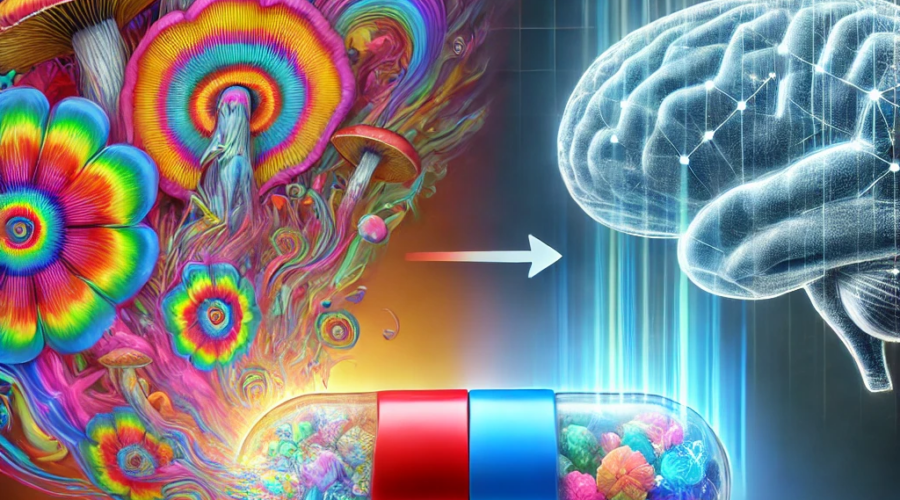
Imagine accessing the therapeutic benefits of psychedelics—without the mind-altering side effects. This is exactly what Psilera, a Tampa-based biotech firm, is working on with their new drug, PSIL-006. Designed to treat frontotemporal dementia (FTD), this innovative psilocybin-based drug skips the “trip,” offering the potential benefits of psychedelics without hallucinations.
New: Interested in Being Part of a Psychedelics-Focused Clinical Trial? Sign Up Here
A Major Safety Milestone Passed
In recent preclinical studies, PSIL-006 successfully passed a major safety milestone, moving it closer to human trials and, eventually, FDA approval. FTD impacts nearly 60 million Americans, and currently, there are no approved treatments for it. PSIL-006 could fill this critical gap in dementia care.
Why is this non-psychoactive version so important? Traditional psychedelics like MDMA, LSD, and psilocybin have always presented a challenge in clinical trials because the intense effects make it clear who received the real drug versus a placebo. With PSIL-006, the absence of the “trip” means more reliable double-blind studies—an essential step for FDA approval.
Looking for treatment? Find ketamine clinics closest to you as well as other psychedelic therapies in your area.
PSIL-006’s approach is truly groundbreaking. By targeting the same receptor as psychedelics (5-HT2A) but without causing hallucinations, it could offer life-changing treatments for those with mental health sensitivities or dementia.
RELATED: Do Shrooms Show Up On A Drug Test? Here’s a Complete Breakdown
Aaron Koenig, Chief Medical Officer at Delix Therapeutics, noted the importance of such innovations, explaining that many patients do not want to go through the “trip.” “Some patients are terrified when they go through these trips, and it’s not something they ever want to do again,” he says. This could open up a world where you can take a psychedelic-based medication at home without clinical supervision, making treatment more accessible for chronic conditions.
As clinical trials progress, PSIL-006 and similar treatments could reshape how we approach both mental health and dementia care, addressing a critical need in a country where millions face these challenges. These advancements hold tremendous potential, but careful research and rigorous testing are crucial as we push forward toward FDA approval.
See also: — our psilocybin retreats guide.
Non-Psychoactive Psychedelic Analogs: Where the Science Stands in 2025
Psilera’s PSIL-006 represents one approach to a challenge that multiple research groups are pursuing simultaneously: can you capture the therapeutic benefits of psychedelic compounds — neuroplasticity, BDNF stimulation, anti-inflammatory effects — while removing or reducing the subjective psychedelic experience? This approach is scientifically grounded but remains largely pre-clinical or early-clinical. Here is where the field stands.
Why “non-psychoactive” psilocybin is theoretically possible. Psilocybin’s therapeutic benefits are thought to derive from two broad mechanisms: (1) the subjective experience itself — the “mystical-type experience” that produces psychological insight and behavioral change; and (2) direct neurobiological effects — BDNF stimulation, synaptogenesis, anti-inflammatory gene expression changes — that may be independent of the conscious experience. If the second mechanism is real and separable, it opens the possibility of retaining neurobiological effects while modifying or eliminating the subjective experience through receptor selectivity engineering. PSIL-006 works by targeting psilocybin’s effects on non-serotonin receptors that drive neuroplasticity without fully activating the 5-HT2A receptors responsible for the psychedelic experience.
Other companies pursuing this approach. Psilera is not alone. Several drug development companies are working on non-psychedelic or reduced-psychedelic analogs: (1) Delix Therapeutics has developed “tabernanthalog” (TBG) and similar compounds derived from ibogaine that aim to capture neuroplasticity benefits without cardiac toxicity or psychedelic effects — their lead compounds showed striking synaptogenesis in pre-clinical models; (2) Eleusis has worked on low-dose, non-psychedelic psilocybin protocols for neuroinflammatory conditions; (3) Various academic groups are pursuing TrkB agonists (targeting the BDNF receptor directly) as non-psychedelic paths to similar synaptic plasticity effects. The convergence of multiple groups on this approach validates the underlying hypothesis, though no non-psychedelic analog has yet completed Phase 2 trials.
The frontotemporal dementia context: why FTD specifically? Frontotemporal dementia affects approximately 60,000 Americans (not 60 million — the article’s figure of “nearly 60 million” appears to reference broader dementia statistics). FTD is distinct from Alzheimer’s: it involves degeneration of the frontal and temporal lobes, producing changes in personality, behavior, and language rather than primarily memory loss. FTD occurs at younger ages (often 45–65) and has no FDA-approved treatments. The neurodegeneration mechanism in FTD involves TDP-43 protein aggregation, which compounds like PSIL-006 may affect through neuroplasticity and neuroprotective pathways. This makes FTD a logical early target for non-psychoactive psilocybin analogs: the unmet need is high, the patient population toleration of psychedelic side effects is lower given cognitive impairment, and the mechanism of action aligns with the disease biology.
Frequently Asked Questions
What is a non-psychoactive psilocybin analog?
A non-psychoactive psilocybin analog is a modified version of the psilocybin molecule (or a structurally related compound) designed to retain psilocybin’s neurobiological effects — primarily BDNF stimulation and synaptogenesis (formation of new synaptic connections) — while reducing or eliminating the subjective psychedelic experience. This is achieved through receptor selectivity engineering: modifying the compound to activate neuroplasticity-associated pathways without fully activating 5-HT2A receptors, which are primarily responsible for the visual, perceptual, and psychological alterations of the psychedelic experience. Psilera’s PSIL-006 is one such compound; Delix Therapeutics’ tabernanthalog (TBG) is another approach from a related direction (ibogaine analog). These are not simply “low-dose” psilocybin — they are structurally modified compounds with different receptor profiles.
Can psilocybin treat dementia?
No psilocybin compound has been approved for dementia treatment, and evidence from human trials is very early-stage. The scientific rationale is real: psilocybin stimulates BDNF, which supports neuron survival and plasticity; it reduces neuroinflammation; and it promotes synaptogenesis — all mechanisms that counteract aspects of neurodegeneration. However, there is a significant difference between “compounds with relevant mechanisms” and “proven treatments.” Full-dose psychedelic psilocybin is impractical for most dementia patients due to confusion risk and cognitive vulnerability. Non-psychoactive analogs like PSIL-006 are the more promising direction for dementia, but have not completed human trials. The most scientifically grounded near-term application of psilocybin in dementia is for depression and existential distress in patients with a dementia diagnosis — psilocybin-assisted therapy for this population is in early Phase 2 trials.
What makes frontotemporal dementia different from Alzheimer’s?
Frontotemporal dementia (FTD) and Alzheimer’s are distinct diseases with different mechanisms, presentations, and ages of onset. Alzheimer’s primarily involves amyloid-beta and tau protein accumulation, predominantly affecting memory and cognition, and typically presents after 65. FTD involves TDP-43 or FUS protein aggregation in the frontal and temporal lobes, producing changes in personality, behavior, language, and executive function — often at ages 45–65. FTD patients may be fully aware of their behavioral changes (particularly early) while retaining relatively intact memory. There are no FDA-approved treatments for FTD (whereas Alzheimer’s has lecanemab and donanemab with conditional approval). This therapeutic desert makes FTD a high-priority target for novel approaches.
Why would removing the “trip” make psychedelics better for dementia?
Several reasons: (1) Safety — full-dose psilocybin produces 4–6 hours of significant perceptual and cognitive alteration. For patients with dementia (who may already have confusion, disorientation, or behavioral changes), this creates real risk of distress, dangerous behavior, or severe adverse reactions. (2) Efficacy mechanism — if the neurobiological benefit (BDNF/synaptogenesis) is separable from the subjective experience, removing the experience doesn’t reduce the therapeutic mechanism relevant for neurodegeneration; (3) Scalability and consent — a non-psychoactive treatment is far more practical to administer, consent for, and monitor in a dementia care context than a full psychedelic session requiring specialized facilitation; (4) Regulatory path — a drug without psychedelic effects faces a simpler regulatory and scheduling challenge than one the FDA has to classify alongside psilocybin for psychiatric use.