Microdosing LSD: Why The Powerful Drug Can Change Your Life
Last reviewed and updated: June 1, 2026.
Key Takeaways
| What it is | 5–20mcg of LSD (vs. 75–150mcg recreational) — sub-perceptual dose targeting mood, creativity, and well-being improvements without psychedelic effects |
| Evidence quality | Growing but mixed — real pharmacological effects confirmed at 10mcg; placebo effect also significant; anxiety risk documented |
| Legal status | LSD is Schedule I federally in the U.S. with no state-level exceptions; entirely illegal to self-administer outside a clinical trial |
| Anxiety risk | Microdosing can worsen anxiety — specifically flagged by researchers for people whose primary symptom is anxiety rather than depression |
| Best legal alternative | Ketamine therapy (nationwide, legal) or enrollment in a psilocybin or LSD clinical trial for supervised legal access |
Microdosing psychedelics refers to the practice of taking tiny, “sub-perceptual” doses of a psychedelic substance. The dose is so small that no classic psychedelic effects take place, such as changes to your perception. Microdosing LSD is a popular form of this practice. Many people who microdose LSD find it offers a range of psychological benefits. These include an increase in positive mood, creativity, productivity, and life satisfaction, as well as less rumination.
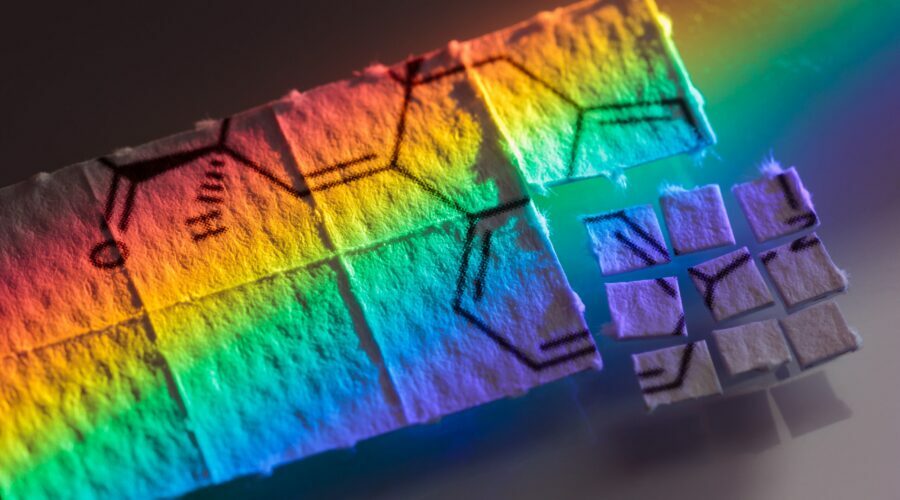
LSD tabs often come in doses of 100 micrograms (mcg). This precise amount allows users to divide the tab into sections that contain the microdose they want. A microdosage is usually 5-20mcg. Another way of microdosing LSD is something “volumetric dosing’” This involves putting a 100mcg LSD tab into a 100ml solution of distilled water or alcohol spirit. Then users can take out the preferred quantity. In this case, 1ml would be roughly equal to 1mcg of LSD.
When the trend of microdosing LSD first emerged, no studies on microdosing existed. But this has changed over the past several years. Some researchers have conducted self-report studies and placebo-controlled trials on microdosing LSD. These features alongside a wealth of anecdotal reports about the benefits of taking microdoses of LSD. Let’s explore these benefits in more depth.
RELATED: Is LSD Legal – Everything You Need To Know
People Claim Microdosing LSD Has Changed Their Lives
It isn’t just Silicon Valley workers who were claiming to benefit from microdosing LSD. Many ordinary people are trying to see if taking small quantities of LSD might improve their overall mental health. In online communities like the microdosing subreddit, the true extent of this is palpable. People report how microdosing LSD has helped them deal with issues like depression, generalized anxiety, and post-traumatic stress disorder (PTSD). A wealth of anecdotal reports reveal similar claims.
The author Ayelet Waldman has also touted the life-changing benefits of microdosing LSD. She does so in her highly popular book A Really Good Day: How Microdosing Made a Mega Difference in My Mood, My Marriage, and My Life (2017). In fact, Waldman believes that microdosing helped save her marriage. This was because, before microdosing, her poor mental health was putting a strain on her relationship with her husband. But due to the significant improvements to her well-being from microdosing, she was able to maintain healthier relationships.
RELATED: How Long Does LSD Last, And What Should You Expect During A Trip?
Self-Report Studies
Self-report studies — where participants fill out a questionnaire — have indicated a number of benefits to microdosing LSD. One 2019 study, published in the Journal of Psychoactive Drugs, found that volunteers reported increases in positive emotions and productivity. They also found it easier to interact with others. However, James Fadiman, who led this study, stressed that people whose major symptom is anxiety should not microdose. He believes this could worsen anxiety.
The results from this study were similar to a previous 2019 study on microdosing LSD published in PLOS One. In this earlier research, participants reported heightened levels of creativity, focus, connectedness, contemplation, happiness, productivity, and well-being. However, researchers discovered microdosing was associated with an increase in neuroticism. This is a personality trait that predicts the experience of negative emotions.
RELATED: How To Start Microdosing Psychedelics: A Beginner’s Guide
Placebo-Controlled Studies
The downside to self-report studies is that they are susceptible to the placebo effect. This is when a user expects a positive outcome from microdosing LSD and that expectation causes that outcome to occur. However, a handful of placebo-controlled studies on microdosing LSD now exist. These have tried to clarify whether the benefits of small doses of LSD are due to the drug alone.
Another 2020 placebo-controlled study of note is published in the journal European Neuropsychopharmacology,. It highlighted that microdosing LSD can lead to increases in positive mood, attention, friendliness, confusion, and anxiety. This illustrates that microdosing LSD might change your life in positive ways, as well as having negative effects as well.
This same study discovered that participants felt an increase in productivity when taking an LSD dosage of 5mcg and 10mcg. However, they experienced a reduction at the 20mcg dose. It should be noted, however, that these were subjective reports of productivity. The study did not measure if participants were able to work more efficiently. It also didn’t account for potentially higher output compared to participants who took the placebo.
Another 2020 study, published in the Journal of Psychopharmacology, demonstrated that 20mcg of LSD can effectively reduce pain perception. These effects were compared to a placebo. The placebo group did not cause participants to experience the same significant reduction in pain perception.
These studies indicate that microdosing LSD is more than just the placebo effect. Moreover, it seems that microdosing can provide a range of benefits, from improved mood to pain management.
RELATED: Can You Overdose On LSD? This Is What To Know
The Role of the Placebo Effect
The above placebo-controlled studies don’t mean that the placebo effect isn’t involved at all in microdosing. Indeed, more recent research shows that microdosing LSD may change your life because you expect it will.
A placebo-controlled study, published this year in the journal eLife, is telling in this respect. It suggests that the psychological benefits of microdosing are likely due to users’ expectations about taking a microdose. Balázs Szigeti, lead author and a research associate at the Centre for Psychedelic Research at Imperial College London, stated:
“Our findings confirmed some of the beneficial psychological effects of microdosing from anecdotal reports and observational studies, such as improved sense of wellbeing and life satisfaction. But we see the same improvements among participants taking placebos. This suggests that the improvements may not be due to the pharmacological action of the drug but can instead be explained by the placebo effect.”
Earlier 2021 research, published in Scientific Reports, tells a similar story. It likewise discovered that positive expectations predict the improved mental health outcomes that follow microdosing. Researchers noted that the placebo response was significant. They cautioned “against zealous inferences on its putative therapeutic value.” This isn’t to say that microdosing LSD is ineffective. Instead, its benefits may largely come down to the expectation that benefits will occur.
RELATED: How LSD Affects The Brain
Should You Microdose LSD?
Evidence on microdosing receives mixed responses. Countless anecdotal reports illustrate how microdosing LSD has helped to change people’s lives for the better. But when it comes to scientific research, many studies have failed to verify some of these benefits. More recent research suggesting that any improvement in mental health is likely the result of the placebo effect.
Microdosing LSD could positively impact your life. However, you should not expect the changes to be as significant as taking a larger dose in a therapeutic setting. The evidence is much more clear when it comes to the effectiveness of psychedelic therapy.
RELATED READING
- Microdosing For Anxiety: Important Info To Know Before Trying It
- What Is Psychedelic Therapy? Here’s What The Research Says
- Psychedelics Show Promise For A Range Of Mental Health Conditions
Where The Research on Microdosing LSD Stands in 2025
The body of research on microdosing LSD has grown considerably since the self-report studies referenced in this article. The emerging picture is more nuanced — and more honest about the limits of the evidence — than the early enthusiasm suggested.
The Placebo Effect Remains Difficult to Separate
A well-designed 2021 self-blinding study from Imperial College London’s Centre for Psychedelic Research, published in eLife, confirmed improvements in psychological well-being in microdosers — but found equivalent improvements in the placebo group. Lead researcher Balázs Szigeti concluded that the benefits are likely at least partially attributable to the expectation of benefit rather than the pharmacological action of the drug. This does not mean microdosing is ineffective; it means that the psychological benefits reported by most users are difficult to attribute cleanly to LSD alone. The expectation effect is real and meaningful — it just complicates the causal claim that “the drug is doing this.”
Dose-Response Patterns Are Emerging
More recent placebo-controlled work has begun to identify clearer dose-response patterns. A 2022 study published in Neuropsychopharmacology found that 10mcg of LSD produced measurable increases in positive affect and convergent creativity without perceptual distortion or impairment — what researchers call the “sweet spot” for microdosing. At 25mcg, mild perceptual effects emerged and performance on some cognitive tasks was impaired. This suggests the popular range of 5–20mcg has a real, drug-specific basis — and that exceeding it produces classic LSD effects rather than subtle microdosing benefits.
Legal Access Remains the Practical Barrier
LSD remains Schedule I federally in the United States, with no state-level exceptions or decriminalization measures comparable to those for psilocybin. Oregon and Colorado’s legal psychedelic programs cover psilocybin only — not LSD. Decriminalization of LSD possession has not been adopted by any major U.S. city as of 2025. Clinical trials for LSD-assisted therapy are ongoing (notably through MAPS and MindMed), but these are investigational contexts requiring formal enrollment — not access routes for personal microdosing. Anyone currently microdosing LSD in the United States is doing so in an entirely illegal context, with the legal risks that entails.
Frequently Asked Questions
What is the recommended microdose of LSD?
There is no clinical standard, since microdosing LSD is not approved for any condition. In research settings, microdoses are typically 5–20 micrograms (mcg) — compared to a recreational dose of 75–150mcg or more. A 2022 Neuropsychopharmacology study found 10mcg produced measurable benefits without perceptual effects, while 25mcg began to produce mild psychedelic effects and some cognitive impairment. The practical challenge is that LSD tabs are rarely measured precisely enough to reliably hit a 10mcg target, which is why volumetric dosing — dissolving a known-dose tab in a measured liquid and extracting fractions — is the most reliable self-administration method used by experienced microdosers.
Does microdosing LSD actually work, or is it just placebo?
The honest answer is: both, probably. Multiple placebo-controlled studies have found real pharmacological effects from sub-perceptual LSD doses — including measurable increases in positive mood, convergent creativity, and pain tolerance. But the same studies consistently find that the placebo group also improves, sometimes comparably. The current scientific consensus is that microdosing LSD has genuine pharmacological effects at appropriate doses, but that a meaningful portion of the psychological benefits reported by users is attributable to the expectation of benefit. This doesn’t negate the drug’s value; it just means the effect size attributable purely to the drug may be smaller than anecdotal reports suggest.
Can microdosing LSD worsen anxiety?
Yes — this is a documented risk, particularly for people whose primary symptom is anxiety rather than depression. Researcher James Fadiman, who conducted some of the earliest self-report microdosing studies, specifically cautioned against microdosing as an anxiety treatment. A 2020 European Neuropsychopharmacology study found that microdosing LSD increased anxiety at some doses. The general pattern in the literature is that microdosing tends to benefit people with depression-forward presentations more reliably than those with primarily anxiety-focused symptom profiles. If anxiety is your primary concern, the research supports more caution — and potentially seeking out ketamine therapy or a clinical psilocybin trial instead.
Is microdosing LSD legal anywhere?
LSD remains Schedule I federally in the United States with no state-level exceptions. Unlike psilocybin, LSD has not been decriminalized in any major U.S. city. In Europe, a handful of countries have decriminalized personal drug possession broadly (Portugal, the Netherlands), which extends to LSD, but legal possession is not the same as regulated access to pharmaceutical-grade product. Anyone microdosing LSD in the United States is operating entirely outside legal frameworks. The legal alternatives with the most comparable therapeutic profiles are ketamine therapy (nationwide, legal) and enrollment in an LSD or psilocybin clinical trial.